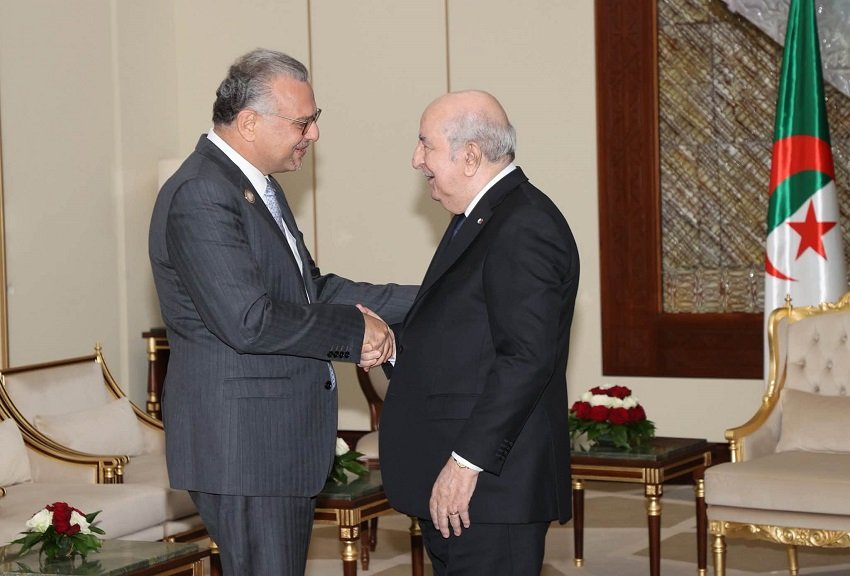
President Tebboune Holds High-Level Talks with Senior U.S. Adviser Masad Boulos
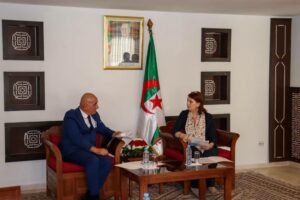
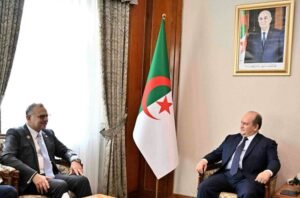
Algerian President Abdelmadjid Tebboune received Masad Boulos, senior adviser to U.S. President Donald Trump for African affairs and Arab and Middle Eastern affairs, in a high-level meeting underscoring the importance of political dialogue between Algiers and Washington and the growing relevance of regional and international issues to both countries.
The meeting comes amid continued diplomatic activity between Algeria and the United States, as both sides seek to maintain channels of consultation on issues of mutual interest. For Algeria, the engagement also reflects its efforts to consolidate its position as an influential regional actor with a role in addressing political, security and development challenges across Africa and the broader Arab and Middle Eastern region.
The discussions take place against the backdrop of rapidly changing geopolitical dynamics, with regional conflicts, security concerns, economic interests and shifting international alliances placing increasing importance on direct dialogue between key regional and global players.
Senior Algerian Officials Attend the Talks
The meeting was attended by a number of senior Algerian officials, highlighting the political and diplomatic significance attached to Boulos’ visit.
Among those present was Brahim Merad, Minister of State in charge of the General Inspectorate of State Services and Local Authorities, alongside Ahmed Attaf, Minister of State and Minister of Foreign Affairs, the National Community Abroad and African Affairs.
Amar Abba, adviser to the President of the Republic for diplomatic affairs, also attended the meeting.
The composition of the Algerian delegation reflects the broad scope of the issues likely to be addressed through the high-level engagement, particularly those involving foreign policy, regional developments and Algeria’s diplomatic priorities.
It also demonstrates the importance Algeria attaches to maintaining structured communication with Washington at a time when developments in Africa and the Middle East are increasingly interconnected with wider international strategic calculations.
U.S. Representation Underscores Importance of the Visit
The U.S. side was represented by Mark Shapiro, Chargé d’Affaires at the U.S. Embassy in Algiers, and Sarah Knight, who is responsible for diplomatic affairs, alongside senior adviser Masad Boulos.
The presence of senior diplomatic representatives reinforces Washington’s interest in maintaining consultations with Algiers over a range of regional and international issues.
Boulos’ portfolio, which encompasses Africa as well as Arab and Middle Eastern affairs, gives his engagement with Algeria particular significance. The country occupies a strategic position between the Mediterranean, the Sahel and the wider African continent, while maintaining longstanding diplomatic relationships across the Arab world.
For Washington, dialogue with Algiers offers an opportunity to exchange views with a country that has traditionally emphasized sovereignty, political dialogue and negotiated solutions to regional crises.
Algeria’s Role as a Regional Diplomatic Actor
Over recent years, Algeria has sought to strengthen its role as an active diplomatic player on a number of regional and international fronts.
Its foreign policy has traditionally been built around principles including respect for national sovereignty, non-interference in the internal affairs of states and the peaceful settlement of disputes. These principles have shaped Algeria’s approach to several sensitive regional issues and have contributed to its reputation as a country capable of maintaining dialogue with diverse political actors.
Algiers’ geographic position also adds to its strategic importance. Its proximity to the Sahel, its Mediterranean position and its links with the Arab world place it at the intersection of several major geopolitical and security challenges.
This has increasingly made Algeria a significant interlocutor for international powers seeking a deeper understanding of developments across North Africa, the Sahel and the wider Middle East.
Algeria-U.S. Relations and Prospects for Cooperation
Relations between Algeria and the United States encompass political, economic and security dimensions, alongside consultations on regional and international developments.
While the two countries do not necessarily share identical positions on every foreign-policy issue, sustained diplomatic engagement provides a framework for managing differences while identifying areas of common interest.
Regular high-level contacts can also help expand bilateral cooperation and create opportunities for deeper coordination on issues ranging from regional security and counterterrorism to economic development and investment.
The latest meeting therefore represents more than a routine diplomatic encounter. It comes at a time when geopolitical shifts are prompting both Washington and regional capitals to reassess existing partnerships and explore new mechanisms for cooperation.
For Algeria, maintaining dialogue with the United States forms part of a broader foreign-policy strategy aimed at preserving its diplomatic autonomy while engaging major international powers on issues affecting its immediate neighborhood and wider strategic interests.
Focus on Africa and the Arab and Middle Eastern Region
The visit by Masad Boulos carries particular weight because of the breadth of his responsibilities within the U.S. administration.
Africa is undergoing profound political, economic and security transformations, from instability in parts of the Sahel to growing competition over natural resources, infrastructure, trade routes and strategic influence.
At the same time, the Arab world and the Middle East remain at the center of international attention, with conflicts, political transitions, security challenges and economic realignments continuing to shape the regional landscape.
Against this backdrop, Algeria’s perspective carries particular relevance. The country has extensive experience in African diplomacy and maintains strong political ties across the Arab world, while consistently advocating dialogue and negotiated solutions to regional disputes.
The convergence of these areas within Boulos’ portfolio makes Algiers an important destination for consultations on developments that extend well beyond the immediate bilateral relationship.
A Meeting That Reinforces Political Dialogue
President Tebboune’s reception of Masad Boulos underscores the continuation of high-level political communication between Algeria and the United States.
It also reflects the willingness of both sides to sustain consultations on issues of shared concern at a time of significant geopolitical uncertainty.
For Algeria, such engagements provide an opportunity to articulate its positions on regional developments and reinforce its role as a diplomatic actor capable of engaging with major international powers.
For Washington, maintaining direct communication with Algiers provides access to the perspective of a strategically positioned North African country with longstanding diplomatic experience in Africa and the Arab world.
The meeting ultimately highlights the continued importance of Algeria-U.S. relations within a broader regional context. As geopolitical competition intensifies and the boundaries between African, Arab and Middle Eastern security issues become increasingly interconnected, sustained political dialogue is likely to remain an essential instrument for both sides.
The Tebboune-Boulos meeting therefore carries significance beyond the immediate protocol of a presidential reception. It represents another step in maintaining a high-level channel between Algiers and Washington and comes at a moment when regional developments are placing renewed emphasis on diplomacy, consultation and strategic engagement.
Share this content:

إرسال التعليق