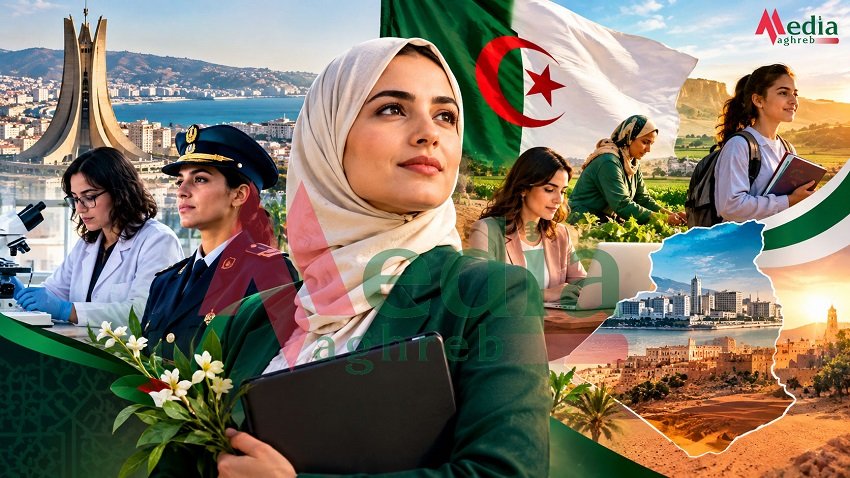
Women’s Empowerment in Algeria: From Legal Recognition to Broader Participation
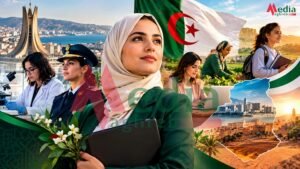
The issue of women’s empowerment in Algeria is no longer limited to social policies related to family affairs, care, and protection. It has gradually become part of a broader debate on economic development, social justice, and the effectiveness of state institutions. Algerian women are increasingly present in sectors such as education, healthcare, the judiciary, public administration, scientific research, the military, security, and the economy. Their participation in public and political life, as well as in entrepreneurial activities, has also become one of the indicators used to assess society’s ability to harness its human resources.
The importance of this process stems from Algeria’s position as a pivotal country in the Maghreb, with significant geographical, political, security, and economic links to the Sahel region. Challenges related to development, poverty reduction, social vulnerability, employment opportunities, and social stability make women’s integration into economic and social life an issue that extends beyond national borders and is closely linked to the future of the wider region.
Algeria’s policy toward women is based on a range of constitutional and legal provisions, government programmes, and official institutions whose responsibilities span national solidarity, family affairs, employment, vocational training, higher education, agriculture, industry, trade, and local government. However, measuring progress in this field cannot be limited to the number of laws adopted or programmes announced. It must also take into account the extent to which these initiatives produce tangible results for women in cities, villages, .border areas, the south, and the High Plateaus
The Constitutional and Legal Framework for Protecting Women’s Rights
The Algerian Constitution enshrines the principle of equality in rights and duties among citizens and provides for the protection of women’s fundamental rights. It also establishes the state’s commitment to promoting women’s political rights and expanding their opportunities to participate in public life. This constitutional framework provides a legal foundation for public policies concerning women, although translating general principles into tangible outcomes remains dependent on implementing legislation, programmes, resources, and monitoring mechanisms.
Algeria’s legal framework includes provisions addressing the protection of women from violence, criminalising certain forms of abuse within the family, and regulating the professional and social rights of working women. It also includes amendments introduced to the Family Code over recent years. Algerian legislation allows women to engage in professional and commercial activities and benefit from various employment and financing mechanisms. At the same time, debate continues over issues related to substantive equality, economic rights, access to the labour market, and the balance between professional and family responsibilities.
The importance of this legal framework lies in the foundation it provides for state institutions. However, implementation remains a decisive factor, particularly in areas where women face challenges associated with poverty, inadequate transportation, limited services, a lack of legal information, or restricted access to opportunities. In this context, legal empowerment cannot be separated from economic and social empowerment, because having rights on paper does not necessarily guarantee the ability to exercise them in everyday life.
The Ministry of National Solidarity: The Government Institution Responsible for Women and Family Affairs
The Ministry of National Solidarity, Family and Women’s Affairs plays a central role in implementing social policies targeting women, girls, and vulnerable groups. It also contributes to the development of programmes aimed at improving women’s living conditions, particularly those of rural women, women with disabilities, and women facing difficult social and economic circumstances.
The ministry’s areas of intervention include social assistance programmes, support for disadvantaged groups, contributions to family protection, and assistance for women facing challenging circumstances. It also coordinates with social institutions affiliated with the sector and is involved in initiatives aimed at promoting women’s rights, supporting women’s integration into society, and preparing national reports on women and family affairs.
The ministry’s role is particularly important in rural and inland areas, where the challenge of women’s empowerment is not always related to a lack of willingness to work or produce. Instead, it may be connected to inadequate transportation, limited access to financing, a shortage of training opportunities, difficulties reaching markets, or a lack of care facilities and social services. Social protection can therefore serve as an initial gateway through which women move gradually from dependence toward economic independence.
Within the Maghreb and the Sahel region, this type of policy is especially important in addressing disparities between different areas. Women’s empowerment cannot be confined to major cities; it requires programmes that reach villages, remote communities, and border areas while taking into account the economic and social characteristics of each region.
Employment and Vocational Training: A Pathway to Economic Independence
Employment is one of the most important foundations of women’s empowerment in Algeria. For this reason, the responsibilities of the Ministry of National Solidarity intersect with those of the Ministry of Labour and Social Security, the Ministry of Vocational Training and Education, and the Ministry of Higher Education and Scientific Research, as well as employment agencies and institutions supporting economic integration.
Employment and vocational training policies aim to improve young people’s integration into the labour market, develop professional skills, support job seekers, and provide training and retraining opportunities. Women benefit from these programmes in principle, although their actual access to them may be influenced by social and geographical factors, including the types of specialisations available, the location of training centres, the nature of jobs offered, transportation challenges, and family responsibilities.
General trends in labour markets indicate that higher levels of education among women do not automatically lead to a comparable increase in their economic participation. Several factors may contribute to this gap, including limited access to suitable jobs, a mismatch between educational specialisations and market requirements, unpaid care responsibilities, and unequal employment opportunities between urban and rural areas.
Consequently, efforts to promote women’s economic empowerment require integrated policies that go beyond theoretical training. Such policies must link vocational education to real employment opportunities, provide support during the transition into the labour market, ensure a safe professional environment, and offer women opportunities for career development and advancement into leadership positions.
Supporting Women Entrepreneurs and Encouraging Economic Activity
Supporting women entrepreneurs has become an important component of Algeria’s economic empowerment policies, particularly as the state seeks to diversify the economy and promote small and medium-sized enterprises, start-ups, and self-employment. Women, like other business owners, can benefit from mentoring, financing, and training mechanisms provided by public agencies and institutions specialising in supporting the creation of businesses and economic activities.
Women’s economic empowerment includes encouraging them to establish micro-enterprises, develop handicraft and productive activities, benefit from training in management, marketing, accounting, and digitalisation, and move from small-scale individual activities toward projects capable of surviving and expanding.
However, the challenge is not limited to launching a business. It also concerns the ability of that business to remain viable in the market. Many women require continued support after receiving initial financing, including assistance in reaching customers and markets, benefiting from e-commerce, developing brands, and navigating administrative and tax procedures. Access to financing, ownership of assets, and the ability to provide collateral also remain issues that require greater attention within economic empowerment programmes.
This approach is particularly important in the Maghreb, where small women-led businesses can contribute to stimulating local economies, creating jobs, preserving traditional industries, supporting agricultural and handicraft products, and opening channels for trade between countries in the region. The impact of such enterprises could also extend into the Sahel region if they become connected to regional value chains and cross-border trade.
Rural Women: Economic Empowerment Linked to Food Security
Rural women occupy a special position in Algeria’s development programmes because of their role in agriculture, livestock farming, traditional food processing, handicrafts, and home-based productive activities. Women in rural areas often perform important economic functions, even when their work is not clearly reflected in official statistics or formally registered as paid employment.
Efforts to empower rural women involve several sectors, including the Ministry of Agriculture and Rural Development, the Ministry of National Solidarity, the vocational training sector, local authorities, and civil society organisations and cooperatives. Relevant measures may include training in production and food-processing techniques, support for cooperatives, promotion of local products, improved access to financing and markets, and better working and production conditions.
The impact of these programmes extends beyond improving women’s incomes. They can also contribute to strengthening local food security, reducing economic migration from rural areas, retaining populations in their communities, preserving traditional knowledge, and transforming rural products into goods that can be marketed on a wider scale.
Rural women, however, need a support system that goes beyond initial financing. Such a system should include transportation, storage, marketing, insurance, social protection, and digital training. The success of any programme in this field also requires the involvement of women beneficiaries in identifying priorities, rather than relying exclusively on centralised programmes that may not always reflect the differences between northern Algeria, the south, the High Plateaus, and border regions.
Education and Healthcare: A Foundation for Expanding Opportunities
It is impossible to discuss women’s empowerment in Algeria without examining the role that investment in education and healthcare has played in expanding women’s presence in society. The expansion of educational opportunities, particularly higher education, has helped strengthen the participation of Algerian women in a wide range of scientific and professional fields. It has also enabled many women to enter positions in which female representation had previously been limited.
Higher education, healthcare, and scientific research are prominent areas of women’s participation in Algeria. Nevertheless, the challenge is not limited to access to education. It also concerns the transition of female graduates into quality employment, their advancement into leadership positions, and their participation in scientific, administrative, and economic decision-making.
In the healthcare sector, women’s empowerment is also linked to ensuring that women and girls have access to appropriate health services, particularly in remote areas, strengthening health awareness, supporting maternal and child health, and reducing regional disparities. Mental health services and protection from violence are also increasingly important components of any comprehensive policy aimed at improving women’s quality of life.
These areas require coordination among the ministries responsible for education, higher education, health, and national solidarity. They also require accurate and updated data capable of measuring gender-based and regional disparities and helping direct resources toward the groups most in need.
Political Participation and Decision-Making
Algerian women have made significant progress in political participation through their presence in elected councils, public administration, and state institutions, as well as through the appointment of women to ministerial and leadership positions in various sectors. Legal and political measures designed to support women’s representation have also contributed to expanding their presence in some elected institutions.
However, political participation should not be measured solely by the number of seats or positions held by women. It also concerns their ability to influence public policy, access leadership roles, participate in influential committees, and become involved in political parties, local councils, and civil society organisations.
Local participation is particularly important because municipal and provincial councils deal directly with issues affecting women’s daily lives, including school transportation, healthcare services, urban planning, social facilities, and support for local economic activities. Women’s access to local decision-making positions can therefore contribute to placing their concerns among development and planning priorities.
Across the Maghreb, women’s political participation remains a shared issue, although experiences vary from one country to another depending on electoral systems, party legislation, and social conditions. Strengthening women’s involvement in decision-making can also add an important dimension to regional discussions on development, stability, and crisis management in the Sahel region.
Combating Violence and Strengthening Social Protection
Combating violence against women is a fundamental component of empowerment policies. Women who lack safety within the family, workplace, or public sphere face significant difficulties in continuing their education, pursuing employment, or participating fully in social life.
Responsibility for combating violence against women is shared among the justice, interior, national solidarity, and health sectors, as well as security services, judicial institutions, and social support bodies. An effective response includes reporting and protection mechanisms, assistance for survivors, psychological, social, and legal support, serious handling of complaints, and preventive and awareness-raising initiatives.
Social protection remains an essential factor in this area, particularly for women who support their families, face economic vulnerability, or live in areas lacking specialised services. Strengthening women’s financial independence can also help them make safer decisions when confronting violence or exploitation.
International experience demonstrates that legislation alone is insufficient without institutions capable of enforcing it, trained personnel, adequate resources, accessible services, and effective coordination between government sectors and civil society.
Digitalisation and the New Economy: Emerging Opportunities for Women
Digitalisation and the technology-based economy are opening new opportunities for Algerian women, particularly in remote work, e-commerce, digital services, online marketing, and the creation of start-ups. However, benefiting from these opportunities requires efforts to address the digital divide between regions and social groups.
Women need practical programmes in digital skills, online business management, digital marketing, cybersecurity, and the use of financial platforms. They also need improved access to internet services, devices, and digital infrastructure. This issue is particularly important for women in rural and inland areas, where digital work can ease some of the restrictions associated with mobility and distance from markets.
Digitalisation can also help government institutions improve women’s access to information and services and simplify procedures related to training, financing, employment, and social protection, provided that digital platforms are user-friendly and accessible to groups with limited technological skills.
From a regional perspective, digitalisation could serve as a bridge for developing women-led cooperation networks across the Maghreb, opening opportunities to market products and services across borders and exchange expertise in entrepreneurship and the social economy.
Challenges Facing the Empowerment Process
Despite the range of programmes and institutions involved, women’s empowerment in Algeria continues to face several challenges. These include the gap between legal provisions and implementation, regional disparities, women’s limited participation in certain economic sectors, difficulties in transitioning from education to quality employment, and the continued burden of unpaid family care responsibilities.
The success of government programmes also requires stronger coordination among ministries, public institutions, and local authorities, as well as more unified data on women and the introduction of clear indicators for measuring results. It is not sufficient to count the number of women benefiting from programmes or the number of training sessions completed.
Public policies also require regular evaluation to answer a number of essential questions: How many women secured stable employment after completing training? How many women-led businesses survived beyond the initial financing stage? To what extent have women in rural and border areas benefited from these programmes? Have protection and support services reached the most vulnerable women? And how significant is women’s participation in decision-making positions?
These questions have become increasingly important in light of the transformations taking place in Algeria and across the region, from changes in labour markets to challenges related to food security, migration, and climate change. These issues have a direct impact on women, particularly in rural areas and the Sahel region, where economic and social pressures often overlap.
Toward a More Integrated Policy for Women’s Empowerment
Moving from supporting women to genuinely empowering them requires the development of an integrated public policy that positions women as partners in development rather than merely beneficiaries of social programmes. This means linking education to employment, vocational training to investment, social protection to economic independence, and political participation to meaningful influence over decision-making.
It also requires strengthening women’s presence in emerging sectors such as the green economy, renewable energy, technology, and manufacturing. In addition, tailored programmes are needed for women in rural areas, the south, the High Plateaus, and border regions, alongside access to financing, business support, and markets.
The state has a fundamental responsibility to provide the legal, institutional, and financial framework. However, the success of these policies also requires the involvement of the private sector, universities, civil society organisations, trade unions, and local authorities, as well as the active participation of women themselves in designing and evaluating programmes.
Ultimately, women’s empowerment in Algeria is not an isolated social issue. It is directly linked to the future of the national economy, social cohesion, and the country’s ability to address regional challenges. The more opportunities women have in education, employment, financing, and decision-making, the greater Algeria’s ability to harness its human resources, strengthen its position within the Maghreb, and develop more effective approaches to development and stability in the Sahel region.
The real challenge in the coming phase is not simply to announce more programmes, but to ensure that their benefits reach women in every region, transform legal rights into practical opportunities, and turn constitutional equality into measurable economic, social, and political participation. Women’s empowerment is not a privilege granted to a particular social group; it is a long-term investment in the ability of the state and society to achieve sustainable development.
Share this content:
إرسال التعليق