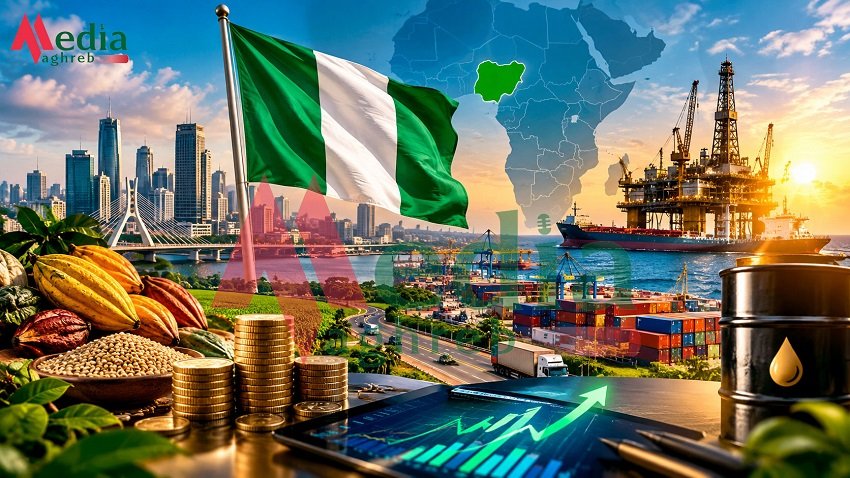
Nigeria’s Economy: Oil, Reforms and the Future of an African Economic Powerhouse
Nigeria occupies a pivotal position on the economic map of Africa, not only because of its vast oil wealth, but also because of its large population, expansive domestic market, and significant commercial and financial influence in West Africa. While the country faces challenges related to inflation, currency exchange rates, and the rising cost of living, the government is seeking to reshape its economic model by reducing dependence on oil and creating greater opportunities for productive sectors, industry, and services.
Nigeria’s economic experience takes on particular significance against the backdrop of the transformations unfolding across the Sahel region and West Africa, where food security, energy, trade, and investment intersect with efforts to build economies capable of withstanding global pressures. Although Nigeria is not geographically part of the Sahel in the strictest sense, it remains an influential regional economic power in the wider area. Developments in its economy also have repercussions for markets, trade routes, and investment flows across the African continent.
This report examines the size of Nigeria’s economy, the role of oil, monetary and fiscal reforms, inflationary pressures, opportunities for economic diversification, and Nigeria’s position in regional and international trade. It also explores issues of particular relevance to investors and markets in North Africa and the broader Maghreb region.
Nigeria: An Economic Powerhouse Beyond West Africa
Nigeria’s economic significance stems from an exceptional combination of demographic, natural, and productive assets. It is one of the largest economies in Africa, with a vast population that provides a substantial consumer market, alongside oil and gas resources and a growing services sector. However, the size of an economy does not necessarily translate into improved living standards for all its citizens—a challenge that remains at the forefront of the country’s policy agenda.
Nigeria’s importance extends beyond its national borders. The country plays a prominent role in the West African economy and has the potential to become a major hub for trade, services, and finance across the continent. The stability of its economy is also indirectly linked to the ability of neighboring countries to expand regional trade and overcome the obstacles hindering the movement of goods and capital throughout the region.
Nigeria’s Economic Growth: Indicators of Improving Activity
Official data showed that Nigeria’s economy recorded year-on-year growth of 4.43% in the second quarter of 2026, compared with growth of 3.89% in the preceding quarter. This performance reflected an improvement in the contributions of both the oil sector and non-oil activities, suggesting that economic activity continued to recover despite the pressures generated by structural reforms and rising living costs.
These figures come at a time when the government is working to strengthen fiscal and monetary stability, increase public revenues, and improve the economy’s ability to absorb external shocks. However, assessing the strength of the recovery requires more than examining growth rates. It also involves considering per capita income, employment opportunities, price levels, and the extent to which economic activity is benefiting households and businesses.
The International Monetary Fund’s published projections for Nigeria point to real GDP growth of 4.1% in 2026, alongside an expected 16% increase in average consumer prices, according to the estimates displayed on its country page. Differences between international institutions’ forecasts and quarterly economic data highlight the importance of distinguishing between realized growth and annual projections, while also underscoring the need to monitor official data updates before drawing definitive conclusions about the country’s economic trajectory.
Oil and Gas: Strategic Wealth and a Source of Volatility
The oil and gas sector remains one of the central pillars of Nigeria’s economy, providing a major source of foreign exchange, government revenue, and export earnings. However, the dependence of public finances and the external sector on oil revenues leaves the country vulnerable to fluctuations in global prices, disruptions to production, and changes in international demand for fuel and energy.
Nigeria is seeking to address this structural challenge by increasing oil output and improving resource-management efficiency, while simultaneously developing refining and petrochemical activities. Boosting production and reducing losses associated with oil theft, leakages, and inadequate infrastructure are viewed as important measures that could strengthen government revenues and ease pressure on the country’s external accounts.
In April 2026, statements attributed to Nigeria’s finance minister indicated that oil production had risen to approximately 1.8 million barrels per day. The government linked this development to an improvement in the fiscal space available for implementing public policies. However, the sustainability of these gains will depend on the energy sector’s ability to maintain production levels and attract infrastructure investment, rather than relying solely on higher prices or temporary improvements in supply.
The Dangote Refinery: From Fuel Imports to Export Ambitions
The Dangote oil refinery project represents one of the most significant industrial developments in Nigeria in recent years. Located near Lagos, the refinery embodies an effort to transform oil wealth from an exported raw material into refined products that can be consumed domestically and marketed abroad. This development carries considerable economic significance, as it aims to reduce the country’s fuel-import bill, increase domestic value addition, and create stronger links between the energy sector and the transport, industrial, and logistics industries.
According to data published in June 2026, the refinery began production in January 2024 following an investment estimated at approximately $20 billion. Earlier International Monetary Fund estimates indicated that its production capacity stood at around 650,000 barrels per day. These figures illustrate the scale of the country’s industrial ambitions, although subsequent reports have cited different figures for the refinery’s announced operating capacity. The latest official disclosures should therefore be consulted when conducting a precise investment assessment.
In September 2026, attention surrounding the refinery intensified following reports that a stake in the facility was being offered to the public through Nigeria’s capital market. Reports indicated that the project was moving toward a share offering valued at approximately $1.6 billion, alongside plans to finance a future expansion that could raise its production capacity to 1.4 million barrels per day. This development reflects two parallel trends: the expansion of energy infrastructure and the growing role of domestic capital markets in financing major industrial projects.
The significance of refining extends beyond reducing imports. If reliable crude oil supplies and stable transport and energy costs can be secured, the refining industry could support petrochemicals, fertilizers, and engineering services. It could also strengthen Nigeria’s presence in West Africa’s fuel markets, where reliable supplies and more efficient infrastructure remain essential. Ultimately, the success of this transformation will depend on consistent production and competitiveness—not simply on the size of the refinery.
Economic Reforms: Addressing Long-Standing Imbalances
Since 2023, the Nigerian government has embarked on a broad package of economic reforms. Key measures have included the removal of petrol subsidies and changes to fuel-pricing mechanisms, alongside greater liberalization of the foreign-exchange market and tighter monetary policy. These measures were designed to ease pressure on the national budget, reduce distortions in the currency market, and improve the economy’s ability to attract foreign exchange and investment.
However, the reforms have carried a direct social cost. Rising fuel prices and periods of depreciation in the local currency have increased transportation and production costs, as well as the prices of goods. Nigeria’s experience demonstrates that addressing fiscal and monetary imbalances may be necessary to achieve medium-term stability, but such efforts must be accompanied by effective social-protection programs to prevent the cost of reform from becoming a lasting burden on lower-income households.
According to an International Monetary Fund assessment issued in June 2026, the removal of fuel subsidies, tighter monetary policy, foreign-exchange liberalization, and efforts to reduce direct deficit financing helped address certain fiscal vulnerabilities, improve foreign-exchange market performance, and rebuild external reserves. Maintaining these gains, however, will require continued fiscal discipline, improved public-debt management, and stronger confidence in economic institutions.
Inflation and the Cost of Living: The Other Side of the Recovery
Inflation is one of the issues exerting the greatest influence on Nigeria’s economic life. Its consequences cannot be measured solely by increases in the consumer price index; they must also be assessed in terms of the erosion of purchasing power and real incomes. When food, transport, and energy prices rise faster than household incomes, improvements in gross domestic product may not translate rapidly into better living standards.
World Bank data indicate that Nigeria’s inflation rate declined from 33.2% in 2024 to 23% in 2025, according to the statistical series presented in its economic assessment. The Bank also noted, however, that inflation remained elevated and that poverty rates were estimated to have increased in 2025. This highlights the gap between improvements in certain macroeconomic indicators and the continuing pressures faced by households.
Food security emerges as a critical factor in the future of Nigeria’s economy and the economies of the Sahel region and West Africa. Agriculture is linked not only to domestic production, but also to the cost of inputs, fertilizers, and seeds, as well as the efficiency of transportation and storage systems and farmers’ access to financing. Disruptions along this chain can push food prices higher and increase pressure on foreign exchange if the need for imports grows.
The World Bank maintains that continued economic growth should be accompanied by expanded support programs targeting the most vulnerable households, alongside investment in human capital, infrastructure, and public services. This issue is particularly important for Nigeria because the size of its domestic market will not automatically translate into sustainable consumer demand unless real incomes improve and employment opportunities expand.
Non-Oil Sectors: Services Drive Economic Diversification
Despite the continued centrality of the energy sector, Nigeria’s economy has experienced notable expansion in services, particularly telecommunications, financial technology, banking, real estate, and commercial activities. These sectors offer potential pathways for reducing the country’s exposure to oil-price fluctuations, especially when their growth is accompanied by higher productivity, formal job creation, and improved access to finance.
World Bank data indicate that services—particularly information and communications technology, finance, and real estate—were the main drivers of Nigeria’s economic growth during 2025, alongside a relative improvement in agricultural and construction activities. This points to a broadening of the country’s economic base, although the contribution of different sectors to employment and income remains uneven across regions and social groups.
Agriculture remains a vital component of Nigeria’s economy, providing food, employment, and support for food-processing industries. Nevertheless, agricultural activities face obstacles associated with inadequate transport and storage infrastructure, high input costs, limited access to finance, and the effects of insecurity in certain production areas. Increasing agricultural output therefore requires more than access to land; it demands integrated value chains capable of transforming crops into higher-value manufactured products.
In the industrial sector, Nigeria is seeking to expand domestic production and reduce its reliance on imports, drawing on the size of its market and substantial investments in cement, fertilizers, energy, and manufacturing. This approach could create opportunities for African companies operating in equipment, engineering services, transport, and distribution. However, progress remains contingent on reliable electricity supplies, an improved business environment, and access to foreign exchange for raw materials and machinery.
Financial Technology: A Digital Economy Expanding Across Africa
Nigeria offers a notable example of financial-technology development, as the spread of digital services and electronic-payment applications has reshaped the relationship between individuals, businesses, and financial institutions. A growing user base, combined with the presence of start-ups specializing in payments, money transfers, and digital banking, has strengthened Nigeria’s position as one of Africa’s important centers for financial innovation.
Financial technology has gained additional importance amid efforts to expand financial inclusion, facilitate transfers, reduce transaction costs, and support small and medium-sized enterprises. Nevertheless, the sector faces challenges involving digital infrastructure, transaction security, regulatory oversight, and the ability of large segments of the population to access the internet and formal financial services.
The impact of the digital economy also extends to trade relations between Nigeria and North African countries. Digital services could open new avenues for cooperation in cross-border payments, e-commerce, software services, and supply-chain management solutions. Turning this potential into substantial trade flows, however, requires regulatory harmonization, financial facilitation, and reliable communications networks connecting African markets.
Nigeria and the Sahel Region: Interconnected Economic Interests
Nigeria does not geographically belong to the Sahel region in the narrowest sense. It is primarily located in West Africa, extending from the Gulf of Guinea in the south toward areas bordering the Sahelian belt in the north. Nevertheless, its geographic position and considerable demographic and economic weight make it an important participant in the trade, security, and logistics dynamics associated with the Sahel region.
Trade flows between Nigeria and neighboring countries are affected by security disruptions, transportation costs, difficulties at border crossings, and differences in trade regulations. These factors influence the prices and availability of goods while limiting businesses’ ability to establish stable regional supply chains. Improving roads and border crossings, as well as streamlining customs procedures, could strengthen the movement of goods between Nigerian markets and those of neighboring countries.
Economic cooperation between Nigeria and North African countries—including Egypt, Algeria, Morocco, and Tunisia—offers opportunities in energy, logistics, food industries, telecommunications, and manufacturing. Turning these opportunities into concrete projects, however, requires feasibility studies, trade agreements, financing mechanisms, and careful assessments of the political and security risks that could affect long-term investment.
The African Continental Free Trade Area: An Opportunity to Expand Markets
The African Continental Free Trade Area offers Nigeria an opportunity to strengthen its non-oil exports, benefit from the continent’s vast market, and develop industries that serve consumers across multiple countries rather than relying exclusively on domestic demand. The success of this approach will depend on the ability of Nigerian companies to compete in terms of quality and cost while meeting the required standards.
In a report published in August 2026, the World Bank stated that deepening trade integration in Africa requires moving beyond formal agreements to develop practical systems for customs, transport, payments, energy, and digital services. It also pointed to weak market connectivity and the persistence of regulatory barriers as major obstacles to fully realizing the continent’s trade potential.
For Nigeria, strengthening intra-African trade could create opportunities to market food products, pharmaceuticals, chemicals, building materials, and digital services. Partnerships with companies in the Maghreb could also facilitate knowledge transfer and the development of joint production chains. However, progress will depend on addressing challenges involving finance, transportation, and energy, while ensuring that producers can meet regional demand consistently.
Foreign Investment and the Local Currency: A Test of Economic Confidence
Nigeria’s investment appeal is influenced by its ability to provide a stable business environment, including clear regulatory rules, the ease of repatriating profits, access to foreign currency, an efficient judicial system, and reliable electricity supplies. Monetary and fiscal reforms can improve certain macroeconomic indicators, but they may also increase operating costs in the short term, requiring companies to reassess their investment strategies.
The International Monetary Fund has indicated that Nigeria’s economic reforms have contributed to improved foreign-exchange market performance and the country’s return to international financing markets. However, the need to manage fiscal risks and strengthen external reserves remains. Investor confidence will continue to depend on the consistency of government policies and the authorities’ ability to implement reforms without being derailed by short-term volatility.
The naira, Nigeria’s national currency, is a central factor in the investment and trade equation. Exchange-rate stability helps businesses plan import and production costs, while sharp fluctuations make it difficult to price goods and services, particularly in sectors that rely on imported inputs. This underscores the importance of striking a balance between exchange-rate flexibility and the economic stability required for private-sector growth.
Public Debt and Government Finances: The Need for Spending Discipline
The Nigerian government faces the dual challenge of increasing public revenues and financing growing needs in infrastructure, healthcare, education, and energy, while preventing debt-servicing costs from reaching levels that constrain development spending. This balancing act is particularly important in a large economy that requires substantial investment to improve productivity and create employment opportunities.
International assessments indicate that improvements in government revenues and the external position do not eliminate fiscal pressures associated with debt servicing and borrowing costs. Higher revenues alone cannot guarantee better economic performance unless they are accompanied by more efficient spending and the allocation of resources to projects with clear productive and social returns.
The management of oil resources remains a key factor in public-finance stability. As the government’s ability to collect non-oil revenues improves and the tax base expands fairly, the national budget becomes less exposed to shocks caused by falling crude-oil prices or declining production. This is one of the essential conditions for building a more diversified economy in Nigeria and across Africa.
Structural Challenges Hindering Economic Transformation
Despite its significant growth opportunities, Nigeria’s economy continues to face structural obstacles, including inadequate electricity supplies, uneven infrastructure quality, limited access to finance for businesses, high poverty rates, and disparities in development between regions. These factors affect companies’ ability to improve productivity and limit the economy’s capacity to transform population growth into sustainable productive strength.
International assessments emphasize that a sustainable economic recovery cannot depend on monetary policy alone. It also requires investment in education, healthcare, skills development, and infrastructure, alongside improvements in the business environment and stronger competition. Economic growth that fails to translate into employment, higher incomes, and essential public services remains vulnerable to social inequalities that can undermine long-term development.
Security and climate-related risks also continue to affect economic activity, particularly in areas that depend on agriculture or suffer from inadequate transport networks and public services. These challenges require the government and the private sector to adopt policies aimed at strengthening the economy’s resilience to shocks, rather than simply responding to their consequences after they occur.
Nigeria’s Economic Outlook: Growth Opportunities and the Cost of Reform
Nigeria is entering an economic phase characterized by both expanding opportunities and interconnected risks. Growth in services, expanding industrial investment, improving oil production, and the development of refining capacity could all support GDP growth, increase revenues, and open new markets. Achieving these outcomes, however, requires reforms to be pursued in a balanced manner, ensuring that fiscal stability does not come at the expense of improvements in living standards.
The International Monetary Fund’s projections indicate that Nigeria’s real economic growth rate could rise from 4% in 2025 to 4.1% in 2026 and 4.3% in 2027, according to its Article IV consultation report issued in June 2026. These projections remain conditional on continued fiscal and monetary discipline, improved production conditions, and the country’s ability to contain external risks.
The World Bank, meanwhile, has emphasized that macroeconomic stability provides a foundation for expanding investment and achieving more inclusive growth. It has also stressed that improving household incomes and reducing poverty require additional efforts in human capital development and public services. The success of Nigeria’s economic transformation, therefore, should not be measured solely by the size of GDP or the volume of investment inflows, but by the country’s ability to turn these resources into tangible and sustainable development.
Conclusion: Nigeria at the Heart of Africa’s Economic Transformation
Nigeria possesses the foundations needed to maintain its position as a major economic force in Africa, thanks to the size of its domestic market, its natural resources, its expanding services sector, and its industrial potential. Yet the path toward a more diversified and stable economy requires the country to address shortcomings in energy, transport, and financing, raise productivity, broaden its public-revenue base, and improve living standards.
Nigeria’s experience demonstrates that economic reform cannot succeed through fiscal and monetary decisions alone. It requires an integrated framework linking macroeconomic stability with social development, industrial production, and regional trade. As the Sahel region and African markets undergo rapid transformation, Nigeria’s ability to harness its resources and expand its economic partnerships will remain an important factor in shaping its own future and the broader trajectory of economic integraiont across the continent.
Share this content:









إرسال التعليق