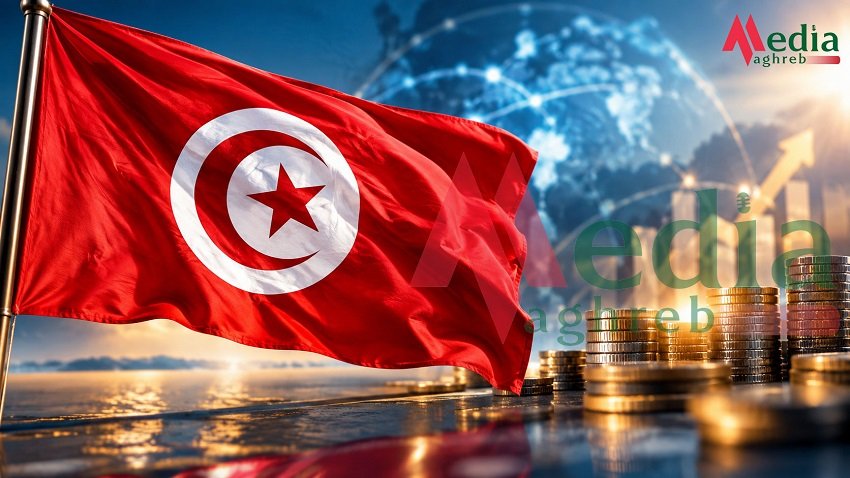
Tunisia’s Economy in 2026: A New Test Between Growth Opportunities and Financing Challenges
Tunisia is entering a decisive stage in its economic development as it seeks to consolidate a gradual recovery while addressing structural challenges that continue to constrain growth. The country possesses several economic advantages, including its strategic position in the Maghreb, proximity to European markets, a diversified industrial base, a well-established tourism sector and significant potential in renewable energy and the digital economy. At the same time, financing pressures, limited private investment, unemployment, productivity constraints and the difficult international economic environment remain major factors shaping the country’s prospects.
For Tunisia, the coming period will therefore be less about achieving short-term growth alone and more about determining whether the economy can build a sustainable growth model capable of attracting investment, creating jobs and strengthening its position within the Maghreb, Sahel Africa and the wider African continent.
Tunisian Economic Growth: A Gradual Recovery Still Below Potential
Tunisia’s economic recovery has continued, although growth remains moderate compared with the country’s broader economic potential. The World Bank reported that the economy grew by 1.4% in 2024 after recording no growth in 2023, while economic output remained below its pre-pandemic level. The institution has also highlighted financing difficulties, regulatory barriers and a challenging policy environment as factors limiting stronger and more sustainable growth.
More recent figures indicate that economic activity continued to expand in 2026. Tunisia’s economy grew by 2.3% year-on-year in the second quarter of 2026, although this represented a slowdown compared with the 3.4% recorded during the same period of 2025. The figures point to continued recovery, but also underline the difficulty of maintaining stronger momentum.
The African Development Bank projects Tunisian economic growth at around 2.1% in 2026 and 2.8% in 2027, with tourism and the recovery of industrial exports among the factors supporting expansion. However, weak private investment, labor-market rigidities and limited productivity gains remain important constraints.
This trajectory places Tunisia at an important crossroads. The challenge is not simply to restore growth, but to generate growth that is sufficiently broad and productive to improve employment, strengthen public finances and encourage domestic and foreign investment.
Tourism: A Major Economic Engine Regaining Momentum
Tourism remains one of Tunisia’s most important sources of foreign currency and economic activity. The sector has demonstrated renewed momentum as international tourism gradually returns to the country, supporting hotels, restaurants, transport, retail and a wide range of related services.
Tourism revenues reached approximately 4.4 billion Tunisian dinars by the end of July 2026, representing an increase of about 4.5% compared with the same period a year earlier. The performance highlights the sector’s continuing contribution to Tunisia’s economic recovery.
The opportunity extends beyond traditional beach tourism. Tunisia has the potential to expand cultural, medical, ecological, desert and business tourism, while improving the quality and value of tourism services. Diversifying the tourism offer could help reduce the sector’s dependence on traditional seasonal patterns and increase revenue generated per visitor.
Investment in airports and transport infrastructure is also becoming increasingly important. A major expansion plan for Tunis-Carthage Airport, estimated at around 3 billion dinars, aims to increase annual passenger capacity from roughly 5 million to 18.5 million by 2031.
The European Union: Tunisia’s Most Important Trading Partner
Tunisia’s geographical proximity to Europe remains one of its strongest economic advantages. The European Union continues to represent the country’s largest trading partner, making access to European markets a central element of Tunisia’s industrial and export strategy.
In 2025, the EU accounted for approximately 59.5% of Tunisia’s total trade. Around 73.2% of Tunisian exports were directed toward EU markets, while approximately 49.6% of Tunisia’s imports originated from the bloc.
This relationship provides Tunisia with an important platform for integration into European supply chains, particularly in sectors such as automotive components, electrical equipment, textiles, mechanical industries and other manufacturing activities.
The challenge is to move beyond traditional export structures and increase the domestic value added generated by Tunisian production. Greater integration into higher-value segments of European supply chains could contribute to productivity gains, technology transfer and better-skilled employment.
Tunisian Industry: An Opportunity to Strengthen Value Chains
Industry remains one of the most significant pillars of Tunisia’s economy. The country has developed manufacturing capabilities that connect it with European and regional markets, particularly through export-oriented production.
Tunisia’s industrial proximity to Europe gives companies operating in the country an opportunity to benefit from shorter supply chains and geographical proximity compared with production centers located farther from European markets.
The strategic question is whether Tunisia can use this advantage to attract new investment in higher-value manufacturing and advanced industrial activities rather than relying predominantly on labor-intensive production.
Greater investment in technology, automation, research and development and workforce training could help Tunisia strengthen its position in regional and international value chains.
Phosphate: An Old Resource Seeking a New Economic Role
Phosphate remains one of Tunisia’s historically important natural resources, although production has faced significant challenges in recent years.
The government has set ambitious targets to restore the sector. Tunisia aims to increase phosphate production to approximately 14 million metric tons by 2030, almost five times current production levels, in an effort to revive a sector that has traditionally generated significant export revenues and foreign currency.
Achieving such targets would require improvements in production capacity, logistics, infrastructure and operational efficiency, as well as greater stability in the sector.
If successfully implemented, the revival of phosphate production could contribute not only to exports but also to the broader industrial ecosystem surrounding mining, processing, transportation and chemical production.
Renewable Energy: A Strategic Opportunity for Tunisia
Energy represents another major area of opportunity for the Tunisian economy. Tunisia’s geographical characteristics provide significant potential for solar and other renewable-energy projects, while the country’s proximity to Europe could create opportunities for future energy partnerships and exports.
The European Bank for Reconstruction and Development has identified energy transition and climate resilience as key priorities for Tunisia during its 2026–2031 country strategy, with particular emphasis on scaling renewable energy.
Expanding renewable energy could have several economic effects. It could reduce dependence on imported fossil fuels, improve energy security, attract international investment and create new industrial and technological activities.
For Tunisia, the green economy could therefore become more than an environmental policy. It could become part of a broader economic strategy linking energy, industry, investment and technological development.
Financing and Public Debt: The Constraint on Faster Growth
Financing remains among the most significant challenges facing Tunisia’s economy. Limited access to external financing has increased pressure on domestic financial resources and complicated the government’s ability to meet its financing requirements.
Tunisia planned exceptional central-bank financing of up to approximately $3.7 billion for 2026 amid limited access to external funding. The financing requirements and increased reliance on domestic borrowing have raised concerns about pressure on the domestic financial system and the availability of credit for private-sector investment.
The issue is particularly important because private investment is essential for sustainable economic growth. If public financing requirements absorb a large share of available domestic resources, companies may face greater difficulty obtaining financing for expansion and new projects.
The financing challenge therefore extends beyond public debt. It directly affects the investment environment, business expansion and the economy’s ability to generate new productive capacity.
Inflation: Lower Pressure Does Not Mean the Problem Is Over
Inflation remains another factor influencing household purchasing power and business costs.
The African Development Bank expects inflation in Tunisia to average around 5.7% in 2026 before declining to approximately 5.4% in 2027. Monetary policy is expected to remain focused on maintaining price stability and supporting the stability of the Tunisian dinar.
Although inflationary pressures have eased from previous peaks, persistent price increases continue to affect consumers and businesses. Higher input costs can also influence industrial competitiveness, particularly for companies operating in highly competitive export markets.
Maintaining price stability will therefore remain an important component of efforts to strengthen economic confidence and encourage investment.
Unemployment and Productivity: The Quality of Growth Challenge
One of Tunisia’s most persistent economic challenges is unemployment, particularly among young people and highly educated workers.
Available data have shown that unemployment has remained significantly higher among young people and university graduates than among the broader working population. This highlights a structural mismatch between labor-market demand and the skills available within the workforce.
For Tunisia, economic growth must therefore be assessed not only by GDP figures but also by its ability to create productive employment.
Investment in technology, vocational education, advanced manufacturing, digital services and research could help bridge part of the gap between the education system and labor-market requirements.
The Digital Economy: Growth Less Dependent on Natural Resources
The digital economy represents an opportunity that differs from traditional sectors such as tourism, agriculture and mining.
Tunisia possesses a relatively developed pool of technology professionals and has the potential to expand software development, outsourcing, artificial intelligence, fintech, cybersecurity and digital services.
Unlike resource-intensive industries, digital activities can generate export revenues while requiring relatively limited physical infrastructure. They can also connect Tunisian companies directly with international markets across Europe, the Maghreb, the Sahel Africa region and the wider African continent.
Developing the digital economy could therefore help Tunisia diversify its export base and create new employment opportunities for highly educated young people.
Infrastructure: Investment That Could Change Tunisia’s Competitive Position
Infrastructure remains fundamental to Tunisia’s economic competitiveness.
Investment in airports, ports, roads, logistics networks and digital infrastructure can reduce transportation costs and improve the ability of Tunisian companies to connect with international markets.
The planned expansion of Tunis-Carthage Airport illustrates the scale of infrastructure investment being considered. Increasing capacity to 18.5 million passengers annually by 2031 could strengthen Tunisia’s position as a tourism, business and transportation hub.
Similar investment in ports and logistics infrastructure could strengthen Tunisia’s role as a gateway linking Europe with the Maghreb and, potentially, wider African markets.
Tunisia and the Maghreb: An Economic Integration Opportunity
Tunisia occupies a strategic position within the Maghreb, with direct economic links to Algeria and Libya and close proximity to European markets.
Greater regional integration could create opportunities in trade, energy, logistics, manufacturing, tourism and digital services.
For Tunisia, stronger economic connections with neighboring Maghreb countries could help diversify markets and reduce excessive dependence on any single external market.
Regional supply chains could also create opportunities for complementary production, particularly in industries where different Maghreb economies possess distinct capabilities.
Tunisia and Sahel Africa: Expanding Toward New Markets
Although Tunisia is geographically part of North Africa and the Maghreb rather than the Sahel belt itself, its economic position gives it opportunities to develop stronger commercial links with economies across Sahel Africa.
The expansion of trade and investment toward African markets could provide Tunisian companies with new opportunities beyond their traditional European markets.
This is particularly relevant for companies operating in pharmaceuticals, healthcare, financial services, telecommunications, education, technology, construction and professional services.
The African continent therefore represents an important potential market for Tunisia as it seeks to diversify its external economic relationships.
Foreign Investment: An Opportunity Dependent on the Business Environment
Foreign investment can play an important role in Tunisia’s economic transformation by bringing capital, technology, management expertise and access to international markets.
However, attracting larger volumes of productive investment depends on the broader business environment. Regulatory barriers, financing constraints, administrative procedures and uncertainty can influence investors’ decisions.
The World Bank has identified regulatory and financing challenges as factors constraining stronger private investment and sustainable growth in Tunisia.
Improving the investment climate would therefore be closely linked to Tunisia’s ability to convert its geographical advantages and skilled workforce into new productive projects.
Tunisia’s Growth Outlook: Opportunities Exist, but Reform Will Shape the Outcome
Tunisia enters the coming period with a combination of significant opportunities and substantial economic constraints.
The African Development Bank’s growth projections of 2.1% for 2026 and 2.8% for 2027 indicate continued expansion, but the projected pace remains moderate. Tourism, industrial exports and investment in emerging sectors could support growth, while weak private investment, productivity constraints and financing difficulties could limit its acceleration.
The country’s economic opportunities are distributed across several sectors: tourism, manufacturing, phosphate, renewable energy, digital services, logistics and the broader green economy.
The central challenge is to connect these opportunities through a coherent economic strategy capable of attracting investment, improving productivity and generating sustainable employment.
Tunisia at a Critical Economic Crossroads
Tunisia’s economy has significant assets that can support a stronger growth trajectory. Its geographical position, proximity to Europe, membership in the Maghreb economic space, industrial capabilities, tourism sector, human capital and renewable-energy potential give the country several avenues for expansion.
At the same time, financing pressures, public debt, inflation, unemployment, weak private investment and productivity challenges remain substantial obstacles.
The future of the Tunisian economy will therefore depend not simply on the recovery of individual sectors, but on the country’s ability to transform these opportunities into a more diversified and productive economic model.
For the Maghreb, Sahel Africa and the wider African continent, Tunisia has the potential to play a broader economic role through trade, investment, technology, tourism, energy and professional services. Turning that potential into measurable economic gains, however, will depend on investment conditions, infrastructure, financial stability and the pace of structural reforms.
Share this content:



إرسال التعليق