African Union and Côte d’Ivoire Strengthen Partnership for Agenda 2063
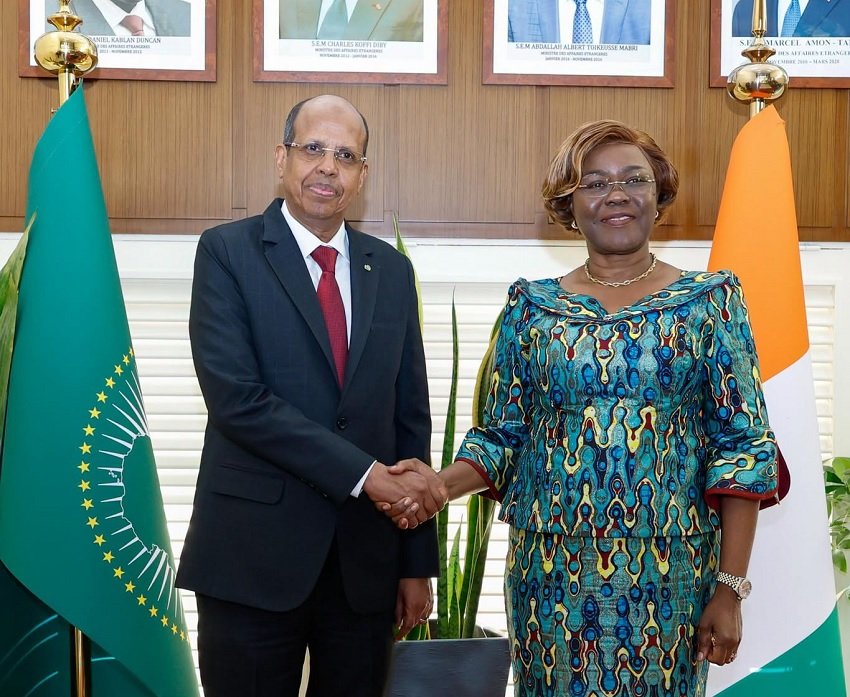
ABIDJAN — African Union Commission Chairperson Mahmoud Ali Youssouf met with Côte d’Ivoire’s Minister of Foreign Affairs, African Integration and Ivorians Abroad, Nialé Kaba, in Abidjan on Tuesday afternoon to discuss ways to strengthen cooperation between the African Union and the West African country.
The meeting provided an opportunity to review prospects for closer collaboration and exchange views on key strategic priorities affecting the continent. Discussions focused on sustainable financing for African Union programmes, regional economic integration, infrastructure development, water and health security, and reforms aimed at strengthening Africa’s representation within the international financial system.
The talks reflect the importance of reinforcing partnerships between the African Union and its member states as the continent works to address economic and development challenges. They also highlighted the need to coordinate national, regional and continental initiatives to support shared objectives and advance the implementation of Agenda 2063, the African Union’s long-term development framework.
Through continued dialogue and cooperation, both sides reaffirmed the importance of aligning efforts around the continent’s strategic priorities and improving the capacity of African institutions to deliver sustainable development outcomes.
African Union Praises Côte d’Ivoire’s Commitment to Continental Development
During the meeting, Youssouf commended Côte d’Ivoire for its commitment to African development and its support for implementing Agenda 2063 under the leadership of President Alassane Ouattara.
Côte d’Ivoire’s engagement with continental development priorities forms part of the broader effort to strengthen cooperation among African Union member states and support programmes designed to promote economic progress, regional integration and sustainable growth.
Agenda 2063 provides a strategic framework for Africa’s long-term aspirations, including deeper integration, stronger economic performance, improved living conditions and a more peaceful and prosperous continent. Achieving these objectives requires sustained cooperation among member states, regional organisations and continental institutions.
The discussions in Abidjan underscored the importance of translating these shared ambitions into practical initiatives. Such efforts depend on effective coordination, the mobilisation of resources and the implementation of policies that respond to the continent’s economic and social priorities.
The meeting also highlighted the value of maintaining strong partnerships between the African Union and national governments to support the delivery of continental programmes and ensure that development priorities remain connected to the needs of African populations.
Mobilising Domestic Resources for Sustainable African Union Financing
Sustainable financing was a central issue during the discussions, with particular attention given to mobilising domestic resources to support the African Union’s programmes and activities.
The focus reflects the need to establish more reliable funding arrangements that allow the organisation to implement its priorities consistently and reduce excessive dependence on external financing. Strengthening domestic resource mobilisation is therefore an important component of efforts to improve the financial sustainability of continental initiatives.
The discussions also addressed reforms to the African Union’s financing arrangements and the need to improve the mechanisms used to mobilise and allocate resources. Sustainable funding is essential to maintaining the continuity of programmes, supporting regional projects and enabling the organisation to respond to emerging challenges.
For African countries, financing remains closely connected to the ability to deliver infrastructure projects, strengthen essential services, expand productive activities and create employment opportunities. Improving the availability and sustainability of financial resources can help support these objectives while strengthening the capacity of African institutions to implement long-term development plans.
The meeting highlighted the importance of continued dialogue on financing reforms and stronger coordination among member states to ensure that continental priorities receive appropriate and sustained support.
Stronger Coordination Between the African Union and Regional Economic Communities
Youssouf also stressed the importance of improving coordination and coherence between the African Union and the continent’s Regional Economic Communities (RECs).
These regional organisations play an important role in advancing economic cooperation, supporting integration and coordinating initiatives among neighbouring countries. Closer alignment between their activities and the African Union’s broader objectives can help reduce fragmentation and strengthen the implementation of continental programmes.
The challenges facing African countries often extend across national borders, making cooperation at regional and continental levels particularly important. Issues such as infrastructure connectivity, trade, financing and sustainable development require coordinated responses that take account of shared interests and complementary priorities.
Greater coordination can also facilitate the exchange of experience, improve the use of available resources and strengthen the links between national development plans and regional strategies. By improving institutional cooperation, African countries can work towards more coherent approaches to addressing common economic and social challenges.
The discussions in Abidjan therefore emphasised the importance of reinforcing partnerships between the African Union and the Regional Economic Communities as part of broader efforts to advance integration and achieve the objectives of Agenda 2063.
Water and Health Security Among the African Union’s 2026 Priorities
Water and health issues received particular attention during the meeting, reflecting their importance to sustainable development, population well-being and regional cooperation. Both areas have been highlighted within the African Union’s priorities for 2026.
Water security is closely linked to public health, food production, economic activity and environmental sustainability. Reliable access to water and effective management of water resources are essential for communities, agriculture and industry, while cross-border water challenges require cooperation between countries that share natural resources.
Strengthening regional collaboration can support more effective approaches to water management, encourage the exchange of expertise and help African countries address common pressures on water resources.
Health security is similarly important to social and economic development. Stronger cooperation in health-related areas can contribute to improving living conditions, strengthening public health systems and increasing the capacity of communities and institutions to respond to health challenges.
By placing these issues within the broader discussion on continental cooperation, the two sides highlighted the need to connect development strategies with the essential needs of African populations. Progress in water and health security can also support wider economic objectives by contributing to social stability, productivity and more sustainable development.
Advancing Economic Integration, Transport and Energy Connectivity
The meeting also highlighted the need to accelerate African economic integration through improved infrastructure and connectivity, particularly in the transport and energy sectors.
Infrastructure is a key factor in strengthening economic links between countries, facilitating the movement of goods and people, and supporting the development of regional markets. Better transport connections can help businesses access new markets, while stronger energy infrastructure can support industrial activity, investment and economic diversification.
The discussions underlined the importance of developing infrastructure that responds to the continent’s broader integration objectives. Improved connectivity can help reduce barriers to trade, support cross-border economic activity and create more favourable conditions for investment.
Energy cooperation is also an important part of this agenda, given its role in supporting production, industrial development and access to essential services. Stronger regional connections can help African countries pursue shared infrastructure priorities and improve the links between their economies.
These efforts are closely connected to the African Union’s broader ambition to build a more integrated continental economy in which countries can benefit from expanded trade, stronger production networks and improved access to regional markets.
Boosting Intra-African Trade and Regional Value Chains
Another important area of discussion was the need to strengthen intra-African trade and develop regional value chains capable of supporting industrial growth and economic diversification.
Expanding trade between African countries can help broaden market opportunities for businesses, encourage investment and improve the movement of goods and services across borders. It can also create opportunities for producers to reach larger markets and participate in regional production networks.
Developing regional value chains would enable countries to cooperate across different stages of production, processing and distribution. This approach can help African economies make better use of their respective resources and capabilities while strengthening economic links between national markets.
The discussions connected these priorities with the need to promote the local processing of raw materials, expand industrial capacity, create employment opportunities and increase value added within African economies.
Rather than relying primarily on the export of unprocessed commodities, countries can seek to strengthen domestic manufacturing and processing activities, allowing a greater share of the economic benefits associated with natural resources to remain within the continent.
Achieving these objectives requires coordinated policies, adequate infrastructure, investment in skills and stronger cooperation among businesses and governments. Regional value chains can provide a framework for linking production capabilities across borders and supporting more diversified and resilient economies.
Local Processing and Industrialisation to Create Jobs
The emphasis on local processing and industrial development reflects a broader effort to increase the contribution of productive sectors to Africa’s economic growth.
Processing raw materials within the continent can create opportunities for manufacturing, improve the value of exported products and stimulate demand for related services, including transport, logistics and technical expertise.
Industrialisation can also contribute to economic diversification by expanding the range of goods produced locally and reducing excessive dependence on a limited number of commodities. The development of manufacturing activities can support employment creation and encourage the growth of businesses connected to regional and continental markets.
The success of these efforts depends on several interconnected factors, including reliable infrastructure, access to finance, technical skills and a business environment capable of attracting productive investment.
The meeting’s focus on these issues underlined the importance of integrating industrial development into broader African cooperation strategies. By connecting infrastructure investment, trade facilitation and regional value chains, African countries can strengthen their capacity to generate value from local resources and create wider economic opportunities.
These priorities are also closely aligned with Agenda 2063’s long-term objectives of supporting economic transformation, expanding productive capacity and promoting more inclusive development across the continent.
Institutional Reforms and Africa’s Representation in Global Finance
Youssouf further stressed the importance of continuing institutional reforms within the African Union and improving the representation of African interests in the international financial architecture.
The issue is significant for African countries seeking a stronger voice in global financial discussions and greater consideration of their economic circumstances and development priorities.
Improving Africa’s representation involves strengthening the continent’s capacity to participate in international financial decision-making and ensuring that African perspectives are effectively reflected in discussions concerning financing, investment and economic development.
The talks also highlighted the importance of developing reliable credit assessments of African economies, with support for stronger African expertise in this field.
Credit assessments can influence how financial institutions and investors evaluate economic conditions, risks and financing opportunities. Their outcomes may affect borrowing conditions and the cost of accessing capital, making the quality and credibility of assessments an important concern for governments and businesses.
Strengthening African analytical capacity and developing expertise in credit evaluation can contribute to a more informed understanding of national economic conditions. It can also support efforts to ensure that assessments reflect relevant local and regional circumstances.
The discussions therefore linked institutional reform with the broader objective of improving Africa’s position within the international financial system and strengthening the continent’s capacity to mobilise resources for development.
Côte d’Ivoire Welcomes the African Credit Rating Agency
For her part, Nialé Kaba welcomed the establishment of the African Credit Rating Agency (AfCRA), an initiative intended to strengthen African financial expertise and promote a fairer assessment of the continent’s creditworthiness.
The agency forms part of broader efforts to develop financial assessment capabilities within Africa and improve the continent’s participation in the evaluation of its own economies.
The development of African expertise in credit rating is relevant to ongoing discussions about how economic performance, financial risks and investment prospects are assessed. Building specialised capabilities can help broaden the analytical resources available to governments, financial institutions and investors.
The initiative also reflects the importance of strengthening African institutions and supporting approaches that take account of the economic conditions and characteristics of countries across the continent.
By welcoming AfCRA, Kaba expressed support for efforts to expand African financial expertise and promote credit assessments that provide a more balanced understanding of the continent’s economic potential.
The agency’s establishment was discussed within the wider context of financial reform, sustainable financing and Africa’s representation in the international financial architecture. These issues are interconnected, as stronger analytical capabilities can contribute to more informed financial decisions and support the continent’s broader development ambitions.
Renewed Commitment to Agenda 2063 and a More Prosperous Africa
At the conclusion of their discussions, Youssouf and Kaba reaffirmed their commitment to strengthening cooperation between the African Union and Côte d’Ivoire in pursuit of Agenda 2063’s objectives.
Their meeting brought together several priorities central to Africa’s development agenda, including sustainable financing, coordination between continental and regional institutions, water and health security, economic integration, infrastructure development, industrialisation and financial reform.
The discussions also underscored the relationship between these priorities. Sustainable financing supports the implementation of development programmes, while infrastructure and regional trade can strengthen economic integration. Local processing and industrialisation can generate greater value from African resources, and stronger financial institutions can help improve access to investment and development capital.
Continued cooperation between the African Union and its member states remains important to advancing these objectives and translating strategic commitments into practical initiatives.
The meeting in Abidjan reaffirmed the shared goal of contributing to a more balanced, peaceful and prosperous Africa through stronger partnerships and coordinated action.
As the continent continues to pursue the ambitions set out in Agenda 2063, African Union cooperation remains an important framework for bringing together national, regional and continental efforts to address common challenges and support sustainable development.
Share this content:











إرسال التعليق