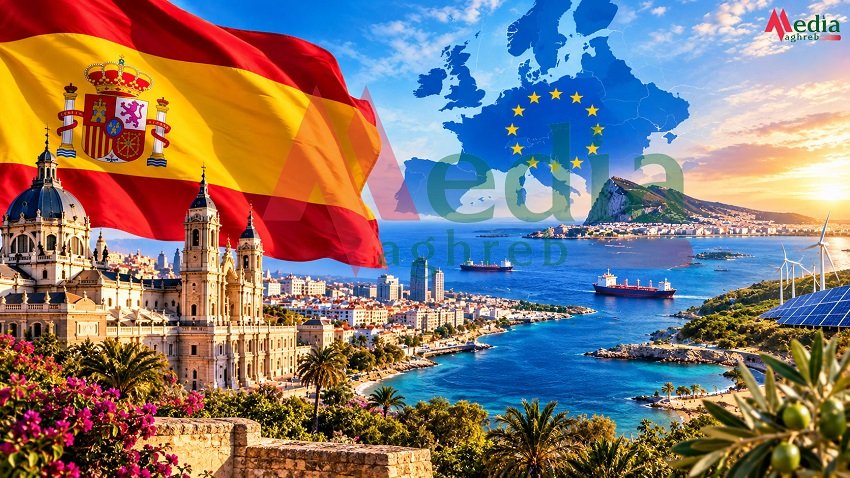
Spain’s National Day: A Rich History, Economic Transformation and a Renewed Role in Europe and the Mediterranean
Every year on October 12, Spain celebrates its National Day, an occasion that extends beyond official ceremonies to offer an opportunity to reflect on the history of a European country whose national identity has been shaped by centuries of political, social and cultural transformation. Spain evolved from a collection of competing kingdoms into a modern constitutional state and subsequently became an influential member of the European Union and the North Atlantic Treaty Organization. The significance of this occasion is further reinforced by Spain’s geographical position at the crossroads of Europe and North Africa, its control of the northern shores of the Strait of Gibraltar, one of the world’s most important maritime passages, and its extensive human, commercial and political ties with the countries of the Maghreb. Understanding Spain’s National Day therefore involves more than revisiting historical milestones. It also requires examining Madrid’s role in contemporary issues, including security, energy, migration, trade and regional cooperation, in a region where European, African and Mediterranean interests increasingly intersect.
The Significance of October 12: From Historical Memory to National Identity
October 12 is associated with one of the most consequential milestones in modern world history: Christopher Columbus’s arrival in the Americas in 1492, following an expedition sponsored by the Spanish monarchy in pursuit of a new maritime route to Asia. That voyage marked the beginning of an extensive period of contact between Europe and the Americas, followed by Spanish colonial expansion that left profound consequences for language, culture, religion and economic development. It was also associated with territorial conflicts, the exploitation of resources and violence against Indigenous populations. As a result, the date carries contrasting meanings. Within Spain’s national memory, it represents the country’s historical and cultural reach, while in parts of the Americas it is discussed in the context of colonialism, Indigenous rights and the reassessment of the past. This dual significance makes the occasion more than a national celebration, reflecting the complexities of a historical legacy in which maritime and cultural achievements coexist with experiences of domination and conflict.
The modern official observance developed during the twentieth century. The celebration was formally established on October 12, 1918, during the reign of King Alfonso XIII, before Spain’s National Day was regulated under Law 18/1987. The current legal framework links the date to the historical formation of the Spanish state and its evolution from a collection of kingdoms and political traditions into a unified national entity that continues to preserve considerable cultural and linguistic diversity. The occasion therefore serves not only as a reminder of a historical event but also as an expression of belonging to a country whose regions possess distinct languages, traditions and identities, all operating within a contemporary constitutional and institutional framework.
Madrid’s Celebrations: State Institutions and National Representation
The central celebrations take place in Madrid, where the traditional military parade and ceremonies involving the armed forces, security services and state institutions are attended by King Felipe VI, Queen Letizia, members of the royal family and senior officials. The participation of military and civilian institutions reflects the structure of the Spanish state and provides an opportunity to reaffirm national unity and the continuity of the constitutional system. The celebrations take place against a backdrop of growing public attention to security, defence and Spain’s position within the European and Atlantic frameworks, issues that have gained importance amid geopolitical changes across Europe and the Mediterranean. In the 2026 observance, Madrid hosted the central ceremonies and traditional parade, bringing together the armed forces, security services and public institutions in the presence of the royal family.
The ceremonial display, however, does not eliminate domestic debates over the meaning and boundaries of Spanish national identity. Spain is not linguistically or culturally homogeneous. Regions such as Catalonia, the Basque Country and Galicia have deeply rooted historical and linguistic identities, while political views differ over the distribution of powers between the central government and the autonomous communities. These differences are reflected in debates over political representation, regional financing, the use of regional languages and the broader concept of national unity. Spain’s National Day is therefore an occasion that extends beyond the celebration of national symbols to a wider question: how can a state preserve a shared national identity while respecting internal diversity? This remains a challenge for several European countries with strong regional traditions and distinct historical identities.
From Monarchy to Modern Democracy
Spain underwent profound political transformations during the twentieth century, leaving a lasting impact on its institutions and society. The country experienced the Second Republic and then the Spanish Civil War between 1936 and 1939. The conflict ended with the victory of General Francisco Franco’s forces and the establishment of a regime that remained in power until his death in 1975. Spain subsequently entered a period of political transition that led to the restoration of democratic institutions and the adoption of the 1978 Constitution. The Constitution established the foundations of a parliamentary monarchy, affirmed rights and freedoms, and organised the distribution of powers between state institutions and the autonomous communities. This transition represented a decisive turning point in contemporary Spanish history, enabling the reconstruction of political life around multiparty competition, elections and constitutional institutions.
Spain’s political system is based on a parliamentary monarchy in which the monarch serves as head of state, while the government exercises executive authority under the Constitution. Legislative responsibilities are carried out through the Parliament, which consists of the Congress of Deputies and the Senate. The monarch does not exercise unrestricted executive powers; rather, the Constitution defines the role within an institutional framework, while the government derives its political authority through the parliamentary process. This structure has helped consolidate democratic governance following the dictatorship, although political disagreements continue over economic and social policies and the relationship between the central government and the autonomous communities. Spain’s experience demonstrates that institutional stability does not mean the absence of political competition or crises. Instead, it depends on the ability of institutions to manage disagreements within established legal and political rules.
Spain in the European Union: From Integration to Influence
Spain’s accession to the European Communities in 1986 marked a turning point in its political and economic development. Membership strengthened the country’s integration into European markets and expanded opportunities for trade, investment and infrastructure development. European integration also enabled Spain to participate in shaping common policies on trade, climate, energy, mobility and security, while deepening its economic ties with other European countries. Since adopting the euro as part of the single-currency area, Spain’s economic policy has also become connected to a broader European framework that requires financial and monetary coordination and exposes the country to economic decisions affecting other member states. For Madrid, Europe remains a central arena for commercial and diplomatic interests, as well as a platform for expanding its international influence.
In foreign policy, Spain combines its membership in the European Union and NATO with a particular focus on the Mediterranean, North Africa and Latin America. Its geographical position gives it a significant role in maritime security, efforts to combat smuggling networks, the management of irregular migration and cooperation against cross-border threats. The presence of the Spanish cities of Ceuta and Melilla on the North African coast also gives relations with Morocco a direct border dimension, alongside their economic and security components. This geography requires policymakers in Madrid to address European and African issues simultaneously, as border protection intersects with trade, human mobility and security cooperation.
The Spanish Economy: Strong Growth and Persistent Challenges
Spain is one of Europe’s major economies, supported by a diverse combination of services, industry, tourism, agriculture, renewable energy and trade. Transport, logistics, food production, automotive manufacturing and financial services all play important roles, while tourism remains one of the country’s leading sources of economic activity, employment and revenue. Domestic demand, investment and employment have supported growth in recent years, but the economy remains exposed to fluctuations in energy prices, slower external markets and changes in financing costs. Structural challenges involving productivity and regional disparities also remain important considerations for policymakers.
According to the European Commission’s economic forecasts published in May 2026, Spain’s real gross domestic product was expected to grow by 2.4% in 2026, following growth of 2.8% in 2025, before slowing to 1.9% in 2027. The forecasts pointed to continued support from household consumption and investment, alongside improvements in the labour market, while energy prices and geopolitical developments remained potential sources of risk. These indicators suggest that the Spanish economy retains considerable momentum, but its performance cannot be separated from the international environment, particularly developments affecting energy costs, trade and demand in some foreign markets.
Despite economic improvements, unemployment remains a major policy challenge, particularly among young people and groups facing difficulties transitioning from education into employment. Eurostat data published in June 2026 indicated that Spain’s unemployment rate stood at 10.5% in 2025, the highest among EU member states according to the indicator reported for that year. Assessing Spain’s economic performance therefore requires looking beyond headline growth rates to consider the quality and stability of jobs, housing costs, regional disparities and the extent to which economic expansion translates into higher household incomes and improved living standards.
Tourism and Renewable Energy: Two Pillars of Economic Transformation
Tourism occupies a prominent position in the Spanish economy, supported by a diverse range of destinations, including historic cities, beaches, islands and mountain regions, as well as museums, festivals and heritage sites. Spain benefits from an extensive transport network and broad air connectivity with European and international markets, making it a leading destination for travellers. However, the sector’s significant economic weight also creates challenges involving seasonal employment, pressure on infrastructure in tourist areas, rising housing costs in some cities and the need to balance tourism activity with environmental protection and the sustainable use of local resources. The debate over sustainable tourism has consequently become an increasingly important part of Spain’s economic and social policy discussions.
In the energy sector, Spain has substantial potential in solar and wind power. Its geographical and climatic conditions, together with European policies, have encouraged investment in renewable energy sources. This gives the country opportunities to strengthen energy security and reduce dependence on fossil fuels, while creating prospects for industrial and technological cooperation with other countries, including North African states that also possess extensive solar and wind resources. Fully realising this potential, however, requires investment in electricity networks, energy storage and cross-border interconnections. It also demands economic planning that preserves industrial competitiveness and limits price volatility for consumers.
The bilateral relationship extends beyond migration to trade, industry, infrastructure and investment. Official Spanish figures show that Morocco was Spain’s third-largest export destination in 2024, with Spanish exports valued at approximately €12.859 billion. Spanish imports from Morocco amounted to around €9.834 billion. These figures reveal a degree of economic interdependence that extends beyond traditional trade into interconnected production chains across several sectors. They also make stable bilateral relations important for companies and investors on both sides of the Mediterranean. Cooperation surrounding the 2030 FIFA World Cup, which Spain, Morocco and Portugal will jointly host, also offers opportunities to develop transport, services, tourism and infrastructure, although the extent of the benefits will depend on implementation, coordination and financing.
Algeria and Spain: Energy as a Gateway to Renewed Momentum
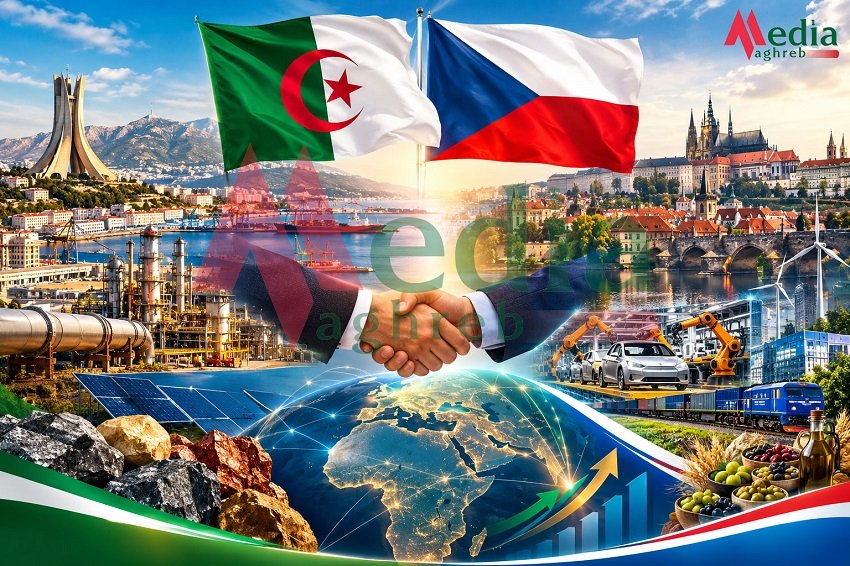
Relations between Algeria and Spain carry strategic significance, particularly in energy, trade, industrial cooperation and shared Mediterranean interests. Algeria is a major supplier of natural gas to the Spanish market, giving bilateral relations a dimension that extends beyond conventional commercial exchanges to encompass energy security and Europe’s broader energy balances. In July 2026, the Spanish government announced an agreement to move towards a new phase in relations with Algeria, including plans to hold the eighth high-level bilateral meeting in October and encourage Spanish companies to participate in the modernisation of Algeria’s energy and industrial sectors. The announced direction reflects an intention to broaden cooperation into infrastructure, services, food industries and digital innovation, rather than limiting the relationship to gas and energy alone.
Energy cooperation has gained additional importance amid changes in the European gas market and the need to diversify supplies, develop infrastructure and expand investment in low-emission technologies. Algerian and Spanish companies could benefit from opportunities in engineering services, maintenance and energy-related industries, alongside electricity projects, renewable energy and digital transformation. Expanding the partnership, however, requires stable commercial and financial frameworks, continued political dialogue and a clear investment environment. The significance of bilateral relations therefore extends beyond meeting current energy needs to building long-term economic interests capable of adapting to changing markets and European policies.
The Mediterranean: Shared Interests Requiring a Broader Approach
Geography gives Spain a prominent role in relations between Europe and North Africa. The Mediterranean connects ports, markets and interdependent supply chains, while the Strait of Gibraltar remains a maritime passage of international importance. This location makes maritime transport, commercial shipping security, marine environmental protection and cooperation against organised crime important policy priorities. Historical, linguistic and commercial links between the two shores also offer opportunities for cooperation in education, tourism, scientific research and cultural industries. Realising these opportunities, however, requires addressing economic disparities, developing joint projects with tangible benefits and avoiding an approach that reduces relations between the two shores to migration or political competition.
The Western Sahara issue remains among the questions influencing regional diplomatic calculations because it is linked to the positions of Maghreb countries and their relations with European partners. Spain’s policy shift in 2022 represented an important milestone in its relations with Morocco, but it did not eliminate the complexities of the issue within the United Nations framework or the differences among the parties concerned. From a regional perspective, resolving disputes and strengthening channels of dialogue among North African countries remain important to expanding economic cooperation, trade connectivity and energy and transport projects. Greater trust among partners can improve the region’s capacity to address security and development challenges, including migration, in a more sustainable manner.
Culture and Language: An Influence Beyond Europe
The Spanish language is one of the country’s most significant sources of international influence. Spoken by hundreds of millions of people worldwide, it connects Spain to extensive cultural and educational networks across Latin America and supports its international presence in literature, the arts, cinema, music and sport. This reach reflects a long historical process, but it is not confined to the past. Today, Spanish is also a tool for academic exchange, commercial communication, tourism and international cooperation. Universities, research centres and cultural institutes contribute to expanding these links, creating opportunities for student exchanges, language learning and collaborative creative projects between Spain and its partners in Europe, Africa, the Arab world and beyond.
This cultural influence is inseparable from debates over the interpretation of colonial history and how the past should be presented in educational curricula, museums and national commemorations. While many people view October 12 as an occasion to celebrate Spanish culture and the linguistic connections that span continents, others call for greater recognition of the suffering associated with colonial expansion and for Indigenous perspectives to receive more attention in historical narratives. Engaging seriously with these debates does not require erasing history or reducing it to a single judgment. Instead, it requires understanding the historical context, the diversity of experiences and the lasting consequences. In this sense, the occasion can become an opportunity for broader historical and cultural dialogue about memory, identity and how societies engage with their past.
Spain’s National Day: Between Historical Symbolism and the Demands of the Future
Ultimately, Spain’s National Day brings together the remembrance of the past and reflection on the present, combining the symbolism of the state with the challenges of politics, economics and society. Spain has moved from periods of profound historical upheaval to democratic governance and extensive European integration, yet it continues to face questions concerning sustainable growth, employment opportunities, regional diversity, energy security, migration management and its role within the European Union. At the same time, its position at the gateway to the Mediterranean remains a central factor in its relations with Morocco, Algeria and the wider region, where commercial, energy and security interests intersect with human and cultural ties.
The occasion takes on broader significance when viewed as an opportunity to understand a country that does not operate in an isolated European environment, but is directly connected to developments on the southern shore of the Mediterranean. Cooperation between Spain and the countries of the Maghreb could open practical opportunities in renewable energy, trade, industry, education, tourism and transport. However, realising that potential requires sustained dialogue and a realistic approach to political, border-related and humanitarian differences. Between a substantial historical legacy and the demands of a changing future, Madrid’s ability—and that of its regional partners—to turn geographical proximity into a balanced partnership will remain an important factor in promoting stability and prosperity on both sides of the Mediterranean.
Share this content:
إرسال التعليق