Algeria Advances Local Manufacturing, Drug Control and Railway Development
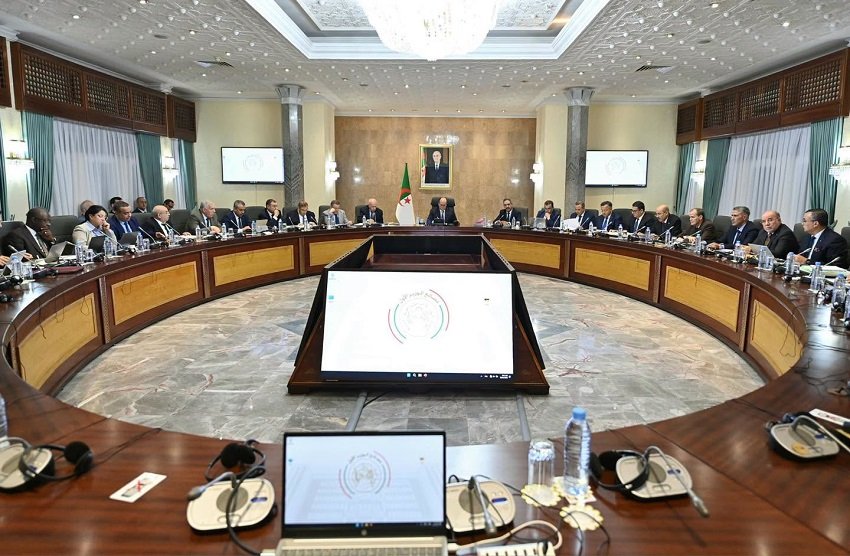
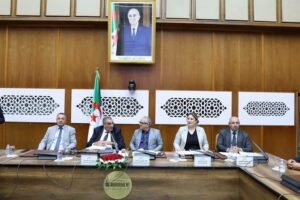
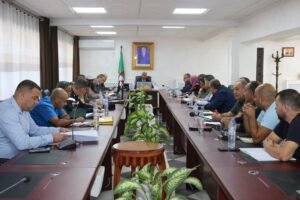
Algeria’s government, chaired by Prime Minister Sifi Ghrieb on Wednesday, October 21, 2026, held a meeting to review a series of strategic issues related to industrial development, the fight against drugs and psychotropic substances, and the advancement of major railway infrastructure projects.
The meeting addressed three key areas of national policy: establishing a new mechanism to calculate and assess local integration rates in vehicle and mobile phone manufacturing, evaluating the implementation of Algeria’s National Strategy for the Prevention of and Fight Against Drugs and Psychotropic Substances for 2025–2029, and continuing field preparations for the railway line linking El Menia and Tamanrasset.
The discussions reflect the government’s focus on strengthening domestic industrial capabilities, adapting public policies to emerging challenges associated with organized crime, and accelerating strategic infrastructure projects in line with the directives of the President of the Republic.
Through these measures, the government aims to improve the contribution of local production to the national economy, strengthen institutional coordination in drug prevention and enforcement, and support the development of transport networks connecting Algeria’s northern and southern regions.
New Mechanism to Measure Local Industrial Integration
The government opened its session by examining a proposed mechanism for calculating and assessing local integration rates in the manufacturing of heavy and light vehicles, as well as mobile phones.
The proposed mechanism is intended to establish a clearer and more accurate method for determining the actual material components and industrial operations carried out within Algeria. This approach seeks to distinguish genuine domestic industrial activity from production models that rely primarily on assembling imported components.
By defining the contribution of locally sourced materials, components and manufacturing processes, the mechanism is expected to provide a more reliable basis for assessing the degree of local integration achieved by industrial operators.
The initiative is also designed to support the localization of these industries, increase domestic integration rates and reduce the country’s import bill.
These objectives form part of a broader effort to strengthen Algeria’s industrial base and develop production capabilities that generate greater domestic economic value. Increasing the proportion of locally manufactured components and processes can help expand the role of national suppliers, support industrial employment and encourage the development of related economic activities.
The government emphasized that the proposed framework represents a new approach to measuring industrial integration, with a focus on the actual substance of manufacturing operations rather than assembly activities alone.
Moving Beyond Traditional Assembly Toward Genuine National Industries
During the meeting, the government stressed that the new mechanism should contribute to building genuine national industries that go beyond conventional assembly-based production.
The approach is intended to encourage industrial operators to develop more substantial local manufacturing activities and strengthen the foundations required for sustainable industrial growth.
A central element of this policy is the development of partnerships capable of expanding domestic production and improving the technological capabilities of Algerian manufacturers. The government also highlighted the importance of ensuring technology transfer, developing professional skills and strengthening the national subcontracting network.
Technology transfer is particularly relevant to the development of industrial sectors that depend on specialized manufacturing processes, technical expertise and advanced production systems. Establishing effective partnerships can create opportunities for Algerian businesses to acquire new capabilities and gradually increase their participation in more complex stages of production.
At the same time, developing professional skills is essential to ensuring that local industries can operate more efficiently, meet production requirements and support the expansion of domestic manufacturing.
The government also underlined the role of subcontracting networks in increasing local integration rates. A stronger network of domestic suppliers can enable manufacturers to source a greater proportion of their components and industrial inputs locally, while creating opportunities for smaller companies to participate in national and international supply chains.
In this context, the proposed mechanism for assessing industrial integration is intended to help establish a more substantive manufacturing model, improve local production capacity and reduce dependence on imported finished products and components.
Vehicle and Mobile Phone Manufacturing Under Greater Focus
The sectors covered by the proposed integration mechanism include both heavy and light vehicle manufacturing and mobile phone production.
These industries involve multiple production stages and supply-chain requirements, making it important to determine which components and processes are genuinely carried out within the country.
For heavy and light vehicles, the mechanism is expected to provide a framework for assessing the actual contribution of domestic industrial operations. In mobile phone manufacturing, it similarly aims to identify the material components and manufacturing activities undertaken locally.
The government’s emphasis on these sectors reflects the importance of establishing clear criteria for measuring industrial performance and encouraging manufacturers to deepen their local production activities.
By improving the assessment of integration rates, the authorities seek to create conditions that support the localization of manufacturing, the development of domestic suppliers and a reduction in import expenditure.
However, the government’s statement did not specify the final calculation formula, detailed weighting criteria or implementation timetable for the proposed mechanism. Further official information would therefore be needed to establish the precise technical requirements that industrial operators will be expected to meet.
Government Reviews the National Drug-Control Strategy for 2025–2029
Following its discussions on industrial development, the government examined the progress made in implementing Algeria’s National Strategy for the Prevention of and Fight Against Drugs and Psychotropic Substances for the 2025–2029 period.
The review forms part of the follow-up to decisions issued by the President of the Republic concerning the need to address the spread of drugs and psychotropic substances through a comprehensive and coordinated national strategy.
The government assessed the strategy’s implementation after one year since its launch, while also considering the strengthening of the institutional framework associated with its execution.
The review was intended to evaluate progress achieved during the initial implementation period, examine the results of field operations and identify areas where further adjustments may be required.
The government’s approach places particular emphasis on adapting prevention and enforcement policies to changes in criminal activity, strengthening coordination between the institutions involved and improving the effectiveness of interventions at the local and national levels.
The evaluation also highlights the importance of maintaining a comprehensive response that combines prevention, deterrence and support for those affected by drug-related problems.
Prevention, Deterrence and Support at the Core of the Strategy
During the meeting, officials presented field results achieved under the strategy’s action plan, which is based on three main pillars: anticipation, deterrence and support.
The anticipation component focuses on identifying emerging risks and responding to developments that may contribute to the spread of drugs and psychotropic substances. Early intervention and preventive action are important elements in reducing the potential impact of these threats.
The deterrence component concerns efforts to strengthen responses to drug-related offences and address the activities of criminal networks involved in the trafficking and distribution of prohibited substances.
The support component reflects the importance of providing appropriate care and assistance within the broader national response, ensuring that the strategy is not limited to enforcement measures alone.
The government stressed that the action plan must continue to evolve in response to changes in organized crime. This includes adapting operational approaches to emerging patterns of criminal activity and ensuring that the institutions responsible for implementation remain responsive to new challenges.
The review of the strategy after its first year therefore represents an opportunity to assess the progress achieved, identify operational requirements and strengthen the effectiveness of measures designed to prevent drug use and combat trafficking.
Monthly Government Evaluation to Monitor Effectiveness
One of the key measures highlighted during the meeting was the need to subject the strategy’s effectiveness to monthly evaluation at government level.
This regular assessment is intended to strengthen oversight of implementation, monitor the progress of planned measures and support the timely adjustment of the action plan when necessary.
Monthly evaluation can also provide a framework for identifying operational challenges and improving coordination among the institutions involved in prevention, enforcement and support activities.
The government emphasized that the action plan must remain adaptable to changes in organized crime, rather than relying on a fixed approach that may become less effective as criminal methods evolve.
The focus on regular evaluation underscores the importance of monitoring results and maintaining accountability throughout the implementation of the 2025–2029 strategy.
The government also called for stronger field-based and community-level action, recognizing that effective drug prevention requires engagement beyond central institutions and law enforcement agencies.
Civil Society and International Cooperation in the Fight Against Drugs
The government stressed the importance of involving civil society as an integral part of the national effort to combat drugs and psychotropic substances.
Community organizations and other civil society actors can contribute to prevention and awareness initiatives, support local engagement and help communicate the risks associated with drug use.
The emphasis on community-level action reflects the need to bring preventive efforts closer to the population and strengthen cooperation between public institutions and the communities they serve.
The government also highlighted the importance of international cooperation in addressing the problem.
Given the cross-border dimensions of organized crime and drug trafficking, cooperation with international partners remains an important component of efforts to respond to evolving criminal networks.
The meeting therefore reinforced the need for a coordinated strategy combining field operations, institutional cooperation, community participation and international engagement.
The objective is to strengthen the national response, limit the spread of drugs and psychotropic substances, and improve the ability of the relevant institutions to adapt to emerging challenges.
Railway Development From Tamanrasset Toward El Menia
In the final part of the meeting, the government reviewed the continuation of field procedures related to the construction of the relevant sections of the railway line connecting El Menia and Tamanrasset.
According to the government’s statement, the project will begin from Tamanrasset, in accordance with instructions issued by the President of the Republic during the most recent Council of Ministers meeting.
The decision establishes Tamanrasset as the starting point for the relevant implementation process, reflecting the directives issued at the presidential level concerning the railway project.
The review focused on continuing the field procedures associated with the construction of the sections concerned, as part of the government’s follow-up on the development of strategic railway infrastructure.
The railway connection is part of broader efforts to strengthen transport links across Algeria and improve connectivity between the country’s northern and southern regions.
Developing railway infrastructure can support the movement of passengers and goods, improve logistical connections and contribute to economic activity in the regions served by the network.
The government’s review of the project demonstrates the continued attention given to major infrastructure initiatives and the importance of translating strategic decisions into practical implementation measures.
The statement did not provide further details about construction costs, completion dates or the precise timetable for individual sections. These aspects will depend on subsequent official announcements and implementation updates.
Three Priorities Within Algeria’s National Development Agenda
The government meeting chaired by Prime Minister Sifi Ghrieb brought together three distinct policy priorities: strengthening local manufacturing, reinforcing the national response to drugs and psychotropic substances, and advancing railway infrastructure development.
In the industrial sector, the proposed mechanism for calculating local integration rates seeks to establish a more accurate assessment of domestic production and encourage manufacturing activities that go beyond traditional assembly.
In the field of drug prevention and enforcement, the government reviewed the first year of the 2025–2029 national strategy and emphasized monthly evaluation, adaptation to organized crime, stronger community-level action and international cooperation.
Meanwhile, the review of railway development procedures reaffirmed the instruction that the relevant sections of the El Menia–Tamanrasset railway project should begin from Tamanrasset.
Together, these discussions reflect the government’s continued focus on industrial development, public safety and strategic infrastructure as interconnected components of Algeria’s broader development agenda.
The meeting also highlighted the importance of implementation, monitoring and institutional coordination in translating national policy priorities into practical results.
Share this content:







إرسال التعليق