Mauritania Approves 2027 Finance Bill and Introduces Major Health Regulations
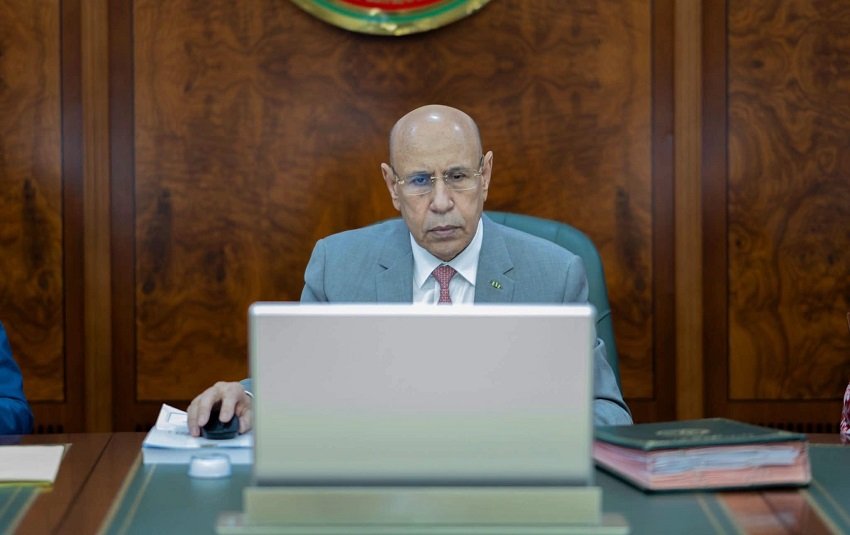
Mauritania’s Council of Ministers met on Wednesday, October 21, 2026, under the chairmanship of President Mohamed Ould Cheikh El Ghazouani, approving the draft Finance Bill for 2027 and examining a series of regulatory measures designed to strengthen the country’s healthcare system, develop domestic pharmaceutical manufacturing and improve oversight of medical and health-related products.
The meeting also included presentations by the Minister of Foreign Affairs, African Cooperation and Mauritanians Abroad on the international situation, and by the Minister of the Interior, Decentralization and Local Development on the domestic situation.
In addition to the budget proposal, the Council examined several draft decrees covering medical devices, local pharmaceutical manufacturing, hazardous and controlled substances, the optical technician profession, dietary and nutritional products, and chemical reagents used in medical testing.
The meeting concluded with a special appointment within the Ministry of Energy and Petroleum, naming Akhrambali Mohamed Lahbib as Director General of the Mauritanian Hydrocarbons Company.
The decisions reflect the government’s priorities in public financial management, economic development, healthcare regulation and the strengthening of national production capacity.
Mauritania 2027 Budget: Economic Growth and Fiscal Stability
The draft Finance Bill for 2027 has been prepared within the framework of President Mohamed Ould Cheikh El Ghazouani’s national programme, “My Ambition for the Nation,” implemented through the government’s general policy and the Accelerated Growth and Shared Prosperity Strategy for 2016–2030.
The proposal was developed on the basis of the Medium-Term Budgetary Programming Document for 2027–2029, approved by the Council of Ministers on July 1, 2026.
It also follows the new budgetary rule established under Article 46, as amended, of Organic Law No. 2026-019, dated June 1, 2026, and its implementing decree, No. 2026-090, dated June 3, 2026.
The rule is based on maintaining the primary balance excluding extractive revenues within a limit of 3.5% of nominal gross domestic product. This framework is intended to reinforce fiscal discipline while supporting investment and protecting public finances against external shocks.
Against an international backdrop still affected by the consequences of the conflict in the Middle East, the government’s budget assumptions anticipate real national economic growth of 5% in 2027, with average growth of 4.3% over the 2027–2029 period.
The projected inflation rate stands at approximately 3.3%.
These assumptions provide the economic basis for estimating government revenues and expenditure, determining the available budgetary space and aligning public spending with the country’s medium-term fiscal objectives.
Revenue, Expenditure and the Projected Budget Surplus
Under the draft Finance Bill, total revenues and grants are projected at 152.11 billion new ouguiyas, while total expenditure and net lending are estimated at 145.91 billion new ouguiyas.
This produces a projected overall budget surplus of 6.20 billion new ouguiyas.
The proposed financial framework is designed to comply with the new budgetary rule while preserving the government’s capacity to finance priority programmes and strategic infrastructure investments.
The budget follows a sequential approach to applying the fiscal rule. Revenue estimates are first established using macroeconomic assumptions, after which the budgetary space compatible with the targeted primary balance excluding extractive revenues determines the overall expenditure ceiling.
For 2027, the primary balance excluding extractive revenues, including grants, is projected at a deficit of 21.03 billion new ouguiyas, equivalent to 3.5% of GDP.
For comparison, the corresponding projected deficit for 2026 stands at 22.18 billion new ouguiyas, or 4.0% of GDP.
These figures are presented within the government’s effort to maintain fiscal discipline while continuing to finance priority development programmes.
The distinction between the overall budget surplus and the primary balance excluding extractive revenues is important because the two indicators measure different aspects of the public finances. The overall balance includes the broader revenue and expenditure framework, while the primary balance excluding extractive revenues is used to assess compliance with the fiscal rule.
Major Investment Programmes for Nouakchott and Nouadhibou
The government intends to use the 2027 budget framework to advance priority programmes aimed at transforming national infrastructure and improving living conditions.
Among the major initiatives is the second phase of the Nouakchott Development Programme, estimated at 11.59 billion new ouguiyas.
The programme forms part of the broader effort to develop the capital’s infrastructure and support improvements in urban living conditions.
Another major initiative is the Emergency Programme for Universal Access to Basic Development Services at the local level, allocated 26.4 billion new ouguiyas for the 2025–2027 period.
The programme focuses on expanding access to essential services and supporting local development through targeted interventions.
The Council also highlighted the Development Programme for the Dakhlet Nouadhibou region for 2026–2029, approved in July 2026, with a total financial allocation of approximately 39.6 billion new ouguiyas.
The programme includes several infrastructure and public-service components intended to support the region’s economic development.
Of the total allocation, 25.44 billion new ouguiyas is designated for infrastructure supporting productive sectors, including a deep-water port and a wastewater treatment plant serving the fisheries sector.
A further 4.63 billion new ouguiyas is allocated to water and sanitation, while 3.06 billion new ouguiyas is earmarked for roads and transport.
The programme also includes 3.03 billion new ouguiyas for urban modernisation.
The government further identified the second phase of the emergency programme for universal access to basic local development services as part of its priority investment agenda.
Together, these initiatives are intended to strengthen infrastructure, improve access to essential services and support economic activity across key urban and regional centres.
Fiscal Risks and Safeguards Against External Shocks
The government acknowledged that the economic and budgetary outlook remains exposed to several external and domestic risks.
A renewed or prolonged escalation of tensions in the Middle East could lead to sustained increases in energy prices, delay the process of reducing inflation and raise the cost of government subsidies.
Other risks include a possible decline in gold prices, unexpected disruptions to gas production, a rapid reduction in grants allocated to projects, lower availability of concessional financing and investment execution falling below expectations.
These factors could affect government revenues, increase expenditure pressures or delay the implementation of planned development projects.
To mitigate such risks, the budgetary framework includes several safeguards.
The first is an expenditure ceiling derived from the new fiscal rule, which is intended to limit spending within the framework of the targeted primary balance.
The second is the existence of a liquidity buffer in the consolidated Treasury account held at the Central Bank of Mauritania.
The third is the contribution to the National Oil Revenue Fund.
These mechanisms are intended to strengthen the government’s ability to respond to financial pressures and protect the sustainability of public finances.
The proposed budget therefore seeks to balance continued investment in development with the need to preserve macroeconomic stability and maintain resilience in the face of external shocks.
New Rules for Medical Devices and Health Supplies
Beyond the Finance Bill, the Council of Ministers examined a draft decree establishing procedures governing the manufacture, importation, storage, dispensing and advertising of medical devices.
The proposed framework introduces a four-category risk classification system for medical devices: Classes 1, 2A, 2B and 3. The system is inspired by internationally recognised standards, particularly those associated with the World Health Organization, and includes provisions relating to in vitro diagnostic medical devices.
The decree also establishes procedures for obtaining approval or authorisation to place medical devices on the market. These procedures are separate from those applicable to medicines and are intended to reflect the specific characteristics of medical devices.
The draft further defines conditions for opening domestic manufacturing establishments, importing medical devices and operating wholesale distribution businesses.
It also establishes permitted sales channels for the general public and introduces a monitoring system designed to track incidents associated with medical devices after they have entered the market.
This post-market surveillance mechanism is intended to improve oversight of product safety and support the identification of problems arising from the use of medical devices.
The decree places responsibility for inspecting establishments and activities involving medical devices under the authority of the General Inspectorate of Health.
Through these provisions, the government seeks to strengthen regulatory oversight throughout the medical-device supply chain, from manufacturing and importation to distribution and post-market monitoring.
Regulatory Framework for Local Pharmaceutical Manufacturing
The Council also examined a draft decree establishing procedures for submitting and reviewing applications to open pharmaceutical establishments dedicated to local medicine manufacturing.
The proposal defines the technical standards applicable to these establishments, the procedures for creating a committee to review applications, the committee’s composition and its responsibilities.
It also establishes requirements relating to good manufacturing practices.
The draft decree implements Article 33, as amended, of Law No. 2025-042, dated November 26, 2025, which amended and supplemented Law No. 2010-022, dated February 10, 2010, concerning pharmacy.
According to the government’s presentation, the new regulatory framework is intended to address an existing regulatory gap affecting domestic production of medicines and other health products.
A central objective is to develop a pharmaceutical industry capable of helping ensure the availability of medicines, reducing dependence on imports and contributing to Mauritania’s health sovereignty.
The decree covers the scope of domestic production and establishes procedures for submitting and examining applications to create pharmaceutical manufacturing establishments.
It also defines the applicable technical requirements and provides for a committee responsible for reviewing applications, including its structure and functions.
In addition, the proposal sets out the foundations for good manufacturing practices for medicines intended for human use.
It also addresses the relationship between local pharmaceutical production and medicine imports, establishing a regulatory basis for managing these two sources of supply.
The proposed framework is intended to support a more structured domestic pharmaceutical sector while strengthening oversight of manufacturing standards and product availability.
Controls on Hazardous, Toxic and Narcotic Substances
Another draft decree examined by the Council concerns the manufacture, importation, storage, prescribing, classification, use and dispensing of hazardous, toxic and narcotic substances.
The proposal implements Article 66, as amended, of Law No. 2025-042, dated November 26, 2025, concerning pharmacy.
It introduces scientific definitions needed to interpret the relevant provisions and establishes a classification system aligned with the principles of international conventions signed and ratified by the Islamic Republic of Mauritania.
The decree sets out conditions for manufacturing and importing these substances, including their use for non-medical purposes.
It also establishes requirements for storage, preservation and labelling, as well as rules governing prescriptions and dispensing when the substances are used for medical purposes.
Additional provisions address the use of these substances in scientific research and the procedures for their disposal, including the disposal of precursor substances.
The proposed framework is intended to establish clearer rules for handling materials that require specialised oversight because of their potential risks.
By covering the full chain from manufacture and importation to storage, use and disposal, the decree seeks to strengthen regulatory control and align national procedures with relevant international commitments.
New Standards for the Optical Technician Profession
The Council also reviewed a draft decree defining the conditions for practising the optical technician profession.
The proposal distinguishes between two professional categories in accordance with the legislation governing pharmacy.
The first is the optician, responsible for manufacturing, adapting and supplying products designed to correct visual defects in accordance with a medical prescription.
The second is the optometrist, whose responsibilities include non-medical procedures for examining and measuring the refractive properties of the eye.
The draft establishes the conditions for entering the profession and creates a National Register of Optical Technicians.
It also defines the requirements for opening and operating optical supply shops, together with the professional activities permitted within the scope of each category.
Further provisions establish professional obligations, particularly concerning the maintenance of registers and the preservation of records and files.
The decree also addresses situations involving incompatibility in professional practice and establishes a system of supervision and penalties for violations of its provisions.
The proposed rules are intended to clarify professional responsibilities, strengthen oversight and establish a more structured framework for optical services and businesses.
Regulation of Dietary and Nutritional Products
The government examined another draft decree governing the manufacture, importation, storage, distribution, advertising and quality control of nutritional and dietary products.
The proposal defines the different categories of products covered by the framework and establishes the regulatory principles applicable to each category.
It also specifies the documents required when applying for authorisation to establish manufacturing facilities.
Additional provisions cover import conditions, product registration procedures, promotion and advertising, storage and distribution.
The draft introduces a quality-control system comparable in principle to those applied to medicines and other health products.
The objective is to protect the population against potential risks associated with nutritional and dietary products by strengthening oversight throughout their commercial and distribution channels.
The framework is intended to establish clearer requirements for businesses operating in this sector and improve the ability of the relevant authorities to monitor product quality.
By regulating manufacturing, importation, advertising and distribution within a common framework, the decree seeks to reinforce consumer protection and improve the management of products that may affect public health.
New Controls for Medical Diagnostic Reagents
The Council also examined a draft decree establishing conditions for the manufacture, importation, marketing, distribution and quality control of chemical reagents used in medical testing.
The proposed framework introduces a classification system based on the risk levels associated with these chemicals.
It also provides for the creation of a technical evaluation committee and establishes a monitoring system for chemical substances used in medical examinations.
According to the government’s presentation, the measures are intended to prevent diagnostic errors associated with inadequate analytical performance.
Medical diagnostic reagents play an important role in laboratory testing, and their performance can influence the reliability of test results.
The proposed controls therefore seek to strengthen the assessment and monitoring of these products, while establishing procedures governing their entry into the market and distribution.
The creation of a technical evaluation committee is intended to provide an institutional framework for assessing the relevant products and supporting the implementation of quality-control requirements.
The draft forms part of the broader package of health regulations considered at the meeting, alongside the measures concerning medical devices, pharmaceutical manufacturing and other health-related products.
Foreign Affairs and Domestic Affairs Briefings
In addition to the legislative and regulatory measures, the Minister of Foreign Affairs, African Cooperation and Mauritanians Abroad presented a statement on the international situation.
The Minister of the Interior, Decentralization and Local Development also delivered a briefing on the domestic situation.
The government statement did not provide further details on the content of either presentation.
Their inclusion in the meeting agenda reflects the Council of Ministers’ broader responsibility for reviewing developments affecting the country’s internal affairs and international relations alongside its economic and regulatory priorities.
New Director General Appointed to the Mauritanian Hydrocarbons Company
The meeting concluded with a special appointment within the Ministry of Energy and Petroleum.
Akhrambali Mohamed Lahbib was appointed Director General of the Mauritanian Hydrocarbons Company.
The appointment was announced as part of the Council of Ministers’ final decisions.
The company operates within the hydrocarbons sector, which is relevant to Mauritania’s public revenues and wider economic outlook. The appointment comes as the government’s 2027 budget framework identifies potential fluctuations in gold prices, gas production and other external factors as risks that could affect the country’s financial position.
The official statement did not provide further details regarding the appointee’s professional background or the timing of the transition.
A Broad Agenda for Economic Stability and Healthcare Regulation
The October 21 meeting brought together the approval of the 2027 Finance Bill, a series of regulatory initiatives affecting the healthcare sector, briefings on international and domestic developments, and a senior appointment in the hydrocarbons industry.
The proposed budget combines a projected overall surplus of 6.20 billion new ouguiyas with continued investment in urban development, essential services and regional infrastructure.
At the same time, the proposed health regulations seek to strengthen oversight of medical devices, pharmaceutical manufacturing, hazardous substances, optical services, dietary products and diagnostic reagents.
The appointment at the Mauritanian Hydrocarbons Company adds an institutional decision in a sector that remains relevant to the country’s economic and fiscal outlook.
Together, the measures illustrate the government’s stated commitment to fiscal discipline, sustainable investment, stronger healthcare regulation and the development of national productive capacity.
The Finance Bill and draft decrees were approved or examined as described in the official Council of Ministers statement. Their subsequent implementation will depend on the applicable legislative and regulatory procedures.
Share this content:











إرسال التعليق