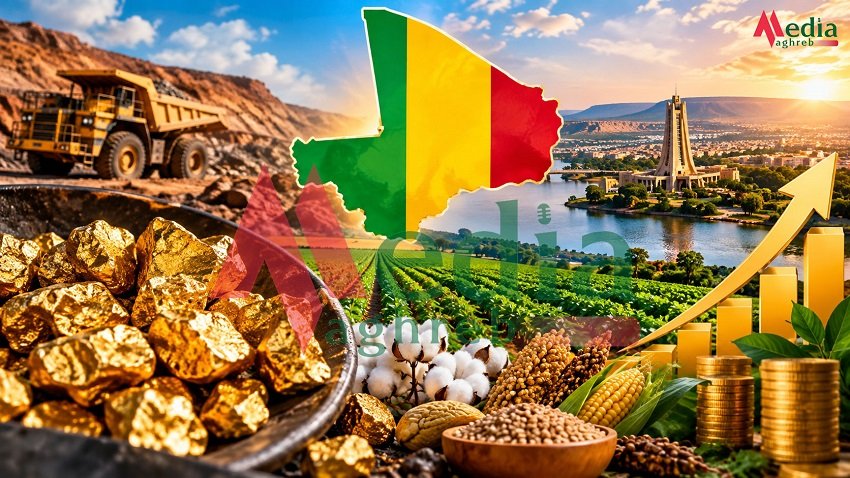
Mali’s Economy Between Gold Wealth and Stability Challenges: Growth Opportunities at the Heart of the Sahel
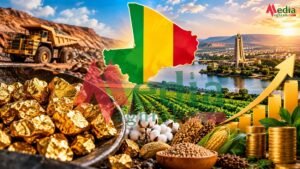
Mali occupies a pivotal position on the economic map of the Sahel, not only because of its vast territory and mineral wealth, but also due to its links to regional trade networks and its borders with a number of West African countries. While gold represents a major source of foreign currency and export revenues, the country faces challenges related to security, energy, infrastructure and financing. These factors directly affect the economy’s ability to achieve sustainable growth and transform natural wealth into broad-based development opportunities.
Looking at Mali’s economy from a broader perspective also reveals that the country’s future is closely linked to the transformations taking place across Africa, from the restructuring of supply chains to the growing importance of strategic minerals and the expansion of intra-African trade. Therefore, assessing Mali’s economic performance requires combining macroeconomic growth indicators, developments across productive sectors, and the regional environment in which the country operates within the Sahel and West Africa.
Mali’s Economy 2026: Gold Wealth Amid Growth and Economic Transformation Challenges
At the heart of the Sahel, Mali faces a complex economic equation combining abundant natural resources, extensive areas suitable for agricultural development, and a geographical position connecting West Africa with vast areas of the Sahara. Although the country has the fundamentals needed to strengthen its position within the African economy, turning these assets into sustainable growth remains dependent on its ability to address production, energy, transport and financing imbalances, alongside security conditions that affect economic activity. This equation has become particularly important as Sahel countries search for economic models that rely more heavily on local resources and regional value chains.
The latest available estimates indicate some variation among international institutions regarding the pace of growth of Mali’s economy. This divergence is linked to the timing of the estimates and assumptions concerning agricultural and mining output as well as trade conditions. The African Development Bank reported that Mali’s real economy grew by 5.6% in 2025, compared with 5% in 2024, driven by improvements in agriculture, extractive industries and services. By contrast, the World Bank provided a more conservative estimate for GDP growth in 2025, at around 4.1%, amid the impact of supply challenges and declining gold production. These differences highlight the importance of treating growth rates as estimates subject to revision rather than necessarily identical final figures.
Published estimates on the World Bank’s portal expect Mali’s average real growth to stand at around 5% in 2026 and 2027, with this performance attributed to expansion in lithium production, agriculture and telecommunications. However, these prospects remain conditional on the country’s ability to maintain production and trade flows, secure the inputs required for economic activity, and contain pressures associated with rising import and energy costs. Therefore, discussions about growth in Mali cannot be separated from the nature of the risks facing the Sahel economy as a whole.
Gold in Mali: A Strategic Sector and Major Source of Foreign Currency
Gold is one of the main pillars of Mali’s economy and occupies a central position in the country’s exports and revenues associated with the mining sector. Gold wealth has helped make Mali an important player in West Africa’s mining landscape, but it has also exposed economic performance to fluctuations related to production, mineral prices and relations between the state and mining companies. This equation has become particularly visible amid reforms aimed at increasing the state’s share of mining revenues and strengthening domestic benefits from natural resources.
During 2025, Mali’s gold sector witnessed tensions between the authorities and Barrick Mining over the implementation of new mining legislation and operating arrangements at the Loulo-Gounkoto complex, one of the company’s major assets in the country. The dispute led to the suspension of operations linked to the complex and raised concerns over the revenues Mali could generate from gold production. These developments reflect a broader challenge facing Sahel countries: the attempt to redefine relations between governments and foreign companies in a way that ensures greater returns for the state without undermining the continuity of investment and production.
In June 2025, Mali began constructing a gold refinery near the capital, Bamako, with Russian support and a planned processing capacity of up to 200 tonnes annually. The move is part of an effort to shift a greater share of gold processing operations into the country instead of exporting raw or unrefined gold abroad. If the project enters operation in line with its stated objectives, it could create opportunities to develop processing-related activities and logistics services. However, the success of this approach will depend on operational efficiency, governance and the ability to secure regular supplies of the metal.
The importance of gold is not limited to industrial mining. Artisanal mining provides income for broad segments of the population and plays an important role in some rural areas. However, accidents at artisanal mining sites have prompted authorities to tighten oversight of the activity and suspend some licenses granted to foreign companies in this field. These developments raise questions concerning occupational safety, labor regulation, environmental protection and the state’s ability to integrate artisanal activity into the formal economy. Such challenges intersect with the experiences of a number of mineral-rich African countries.
Lithium: A New Opportunity to Diversify the Sahel Economy
While gold has historically been a key pillar of Mali’s economy, lithium is opening a new path for the country in the market for minerals associated with industrial transformation and clean energy. The African Development Bank has identified the start of lithium production as one of the factors supporting the performance of extractive industries in 2025. The World Bank has also linked its growth projections for 2026 and 2027 to increased lithium production, reflecting the resource’s growing importance to the Malian economy.
Lithium’s importance lies in its industrial applications, particularly in the manufacturing of batteries and energy-storage systems, as well as certain applications related to electric vehicles. However, possessing the raw material does not automatically mean controlling the entire value chain. Broader economic benefits require investment in infrastructure, processing, transport and technical skills, as well as clear regulatory frameworks. From the perspective of the African economy, Mali’s experience raises an important question about whether mineral-producing countries can move beyond exporting resources toward developing higher-value industries and services within the continent.
These transformations are taking place alongside a restructuring of the mining landscape across the Sahel, where governments are seeking greater control over natural resources and renegotiating investment terms. At the same time, international companies remain concerned about the business environment, contract stability and the ability to operate mines efficiently. This equation confirms that the future of mining in Mali and West Africa will be shaped by the balance between the state’s financial interests, investment requirements, and the ability to manage political, security and operational risks.
Agriculture in Mali: A Pillar of Production and an Opportunity for Food Security
Agriculture holds a fundamental position in Mali’s economy, not only as a productive activity but also as an important source of income and employment opportunities in rural areas. Agricultural output grew by 7.9% in 2025, according to African Development Bank data, making the sector one of the main drivers of the improvement in GDP that year. This performance gives agriculture a central role in any strategy aimed at reducing dependence on extractive resources and strengthening the economy’s ability to absorb shocks.
The importance of agriculture extends beyond Mali’s borders to the issue of food security in the Sahel, a region facing recurring challenges related to climate, water resources, infrastructure and markets. Developing agricultural production, storage, transport and food processing provides an opportunity to increase value added within the local economy, reduce post-harvest losses and strengthen food supplies in regional markets. Improving distribution chains could also support trade among West African countries, provided a favorable environment exists for transport, financing and commercial exchange.
However, Malian agriculture remains exposed to multiple risks, including weather fluctuations, the cost of agricultural inputs and difficulties in accessing markets and financing. Therefore, increasing the sector’s productivity is not simply a matter of expanding cultivated areas; it also requires investment in irrigation, suitable seeds, extension services, storage and food-processing industries. Such an approach would link agriculture with other sectors of Mali’s economy and give it a greater role in job creation and income diversification.
Services and Telecommunications: A Potential Path to Broaden the Economic Base
Economic growth in Mali is not limited to agriculture and mining. Services play an increasingly important role in economic activity, particularly in transport, hospitality and telecommunications. The African Development Bank reported that the transport and hospitality sectors grew by 4.5% in 2025, while the World Bank identified telecommunications among the sectors that could support Mali’s economic growth in 2026 and 2027. These indicators reveal the importance of service activities in supporting trade and consumption and connecting regions and markets.
Telecommunications are particularly important in the Sahel, where digital services can help expand access to financial services, improve the flow of information, support small businesses and facilitate certain commercial transactions. However, benefiting from this path requires expanding telecommunications infrastructure, improving connectivity, strengthening digital skills and ensuring that lower-income groups and remote areas can access services. In the broader context of the African economy, digitalization represents one of the paths that can help resource-constrained economies overcome some of their traditional geographical limitations.
Public Finance and Financing: Constraints Affecting the Growth Path
Mali’s economy faces challenges in financing public spending and investment amid high borrowing costs and limited access to some sources of financing. An International Monetary Fund report published in September 2025 stated that the authorities had reduced the fiscal deficit from 3.6% of GDP in 2023 to 2.6% in 2024, but financing conditions remained costly and constrained. The report noted that interest rates in the regional market were often approaching 10%, while the government was able to raise only around two-thirds of its planned financing in the regional market during 2024, equivalent to approximately CFA 975 billion.
These pressures mean that the government’s ability to finance infrastructure, public services and development projects is affected by borrowing costs and liquidity availability. Higher financing costs may also have repercussions for the private sector, particularly small and medium-sized enterprises that require credit to expand their activities. This highlights the importance of developing more diversified financing mechanisms, strengthening domestic revenues and improving spending efficiency in order to support fiscal stability and create greater room for productive investment across sectors of Mali’s economy.
Mali at the Heart of the Sahel: Economic Geography Between Opportunities and Constraints
Geography imposes a set of structural challenges on Mali’s economy. The country is landlocked, which makes it dependent on transport networks and trade corridors connecting it to ports and external markets. This issue becomes increasingly important given the economy’s reliance on energy and intermediate-goods imports, as well as the need for efficient transport channels for gold and agricultural and mineral exports. The World Bank has highlighted pressures related to import costs, including energy costs, and projected the current-account deficit to widen to 6.5% of GDP in 2025, according to its published estimate.
These challenges are directly connected to neighboring economies in the Sahel and West Africa. Mali depends on trade and logistics relationships with countries that have access to seaports, including Ghana, Côte d’Ivoire and Senegal, depending on available routes and operating conditions. Fuel-supply disruptions in 2026 highlighted Mali’s vulnerability to energy flows from coastal countries after Ghana’s state-owned fuel distributor reduced supplies to Mali amid domestic supply pressures. These developments demonstrate the importance of diversifying trade corridors and strengthening energy security in landlocked economies.
Infrastructure is important not only for transporting goods, but also for its ability to connect agricultural and mining production areas with manufacturing and consumption centers. The more efficient roads, storage networks and logistics services become, the more some of the costs limiting the competitiveness of Malian products in regional markets can be reduced. In the context of economic integration in Africa, improved connectivity between Sahel countries, ports and commercial centers in West Africa could support intra-African trade, provided practical and stable arrangements are available for the movement of goods and trucks.
Foreign Investment and the Reshaping of the Mining Sector
Mali’s investment environment is undergoing a notable transformation in the mining sector, as authorities seek to reconsider the rules governing the exploitation of natural resources. This trend has emerged through disputes over mining contracts and the management of major mines, as well as measures aimed at increasing the state’s share of revenues. These changes form part of a broader trend across Sahel countries, where governments are seeking to strengthen their role in managing resources while foreign companies face new demands related to taxation, local ownership and operating conditions.
Reorganizing the mining sector carries potential opportunities to increase public revenues, develop mineral-related industries and improve the local economy’s benefits from natural wealth. However, achieving these objectives requires clarity in legal rules, contract stability, effective dispute-resolution mechanisms and the ability of state institutions to monitor production and exports. The equation is not only about the size of resources, but also about the economy’s ability to attract long-term investment that maintains production and creates new opportunities in services and manufacturing.
In this context, developing local value chains in gold, lithium and other mineral resources becomes particularly important. Local processing could create additional opportunities in engineering services, transport, maintenance and training, but it requires energy and water infrastructure, skilled human resources and access to markets. From the perspective of the African economy, the challenge facing Mali is not very different from that confronting other mineral-rich African countries: how can geological wealth be transformed into industrial value, employment opportunities and sustainable revenues?
Security and Stability: A Decisive Factor in the Future of Mali’s Economy
The security situation remains one of the factors affecting economic activity in Mali and the Sahel, given its potential repercussions on trade flows, investment, agricultural production and the operation of mining facilities. International economic reports have addressed the challenges facing the country, including the impact of security disruptions and floods on growth prospects, as authorities seek to maintain economic activity and attract investment. These circumstances confirm that economic performance does not depend solely on financial indicators, but is also affected by the ability of producers, transport operators and investors to operate in a stable environment.
Security risks affect the economy through multiple channels, including higher insurance and transport costs, difficulty accessing certain agricultural and mining areas, disruptions to supply chains and the diversion of part of public resources toward emergency needs. Small businesses and local markets can also be affected by these conditions to varying degrees. Therefore, improving Mali’s economic environment is linked not only to financial and investment reforms, but also to strengthening institutions’ ability to protect productive activity and provide basic services in areas affected by instability.
This issue also has a regional dimension in Africa, as the economies of the Sahel are interconnected through trade routes, border markets and the movement of labor and goods. Any disruption along one trade corridor may affect neighboring countries that depend on the same route to secure imports or market their exports. Consequently, supporting regional economic integration and improving cross-border infrastructure could help reduce some of the effects of shocks and strengthen the ability of local economies to adapt to crises.
Mali’s Economy and Economic Integration in Africa
Mali operates within a regional economic space historically linked to trade in West Africa, shared monetary and financial networks, and regional institutions that influence the movement of goods and capital. These connections provide opportunities to expand markets for agricultural and mineral products, develop logistics services and improve access to financing. However, benefiting from these opportunities depends on the ability of countries to reduce trade costs, facilitate transit and improve the reliability of transport, energy and telecommunications networks.
In the broader African context, economic integration stands out as one of the proposed paths for reducing dependence on the export of raw materials to external markets. Revitalizing intra-African trade, developing joint production chains and improving links between production areas and consumption centers could provide opportunities to expand the industrial and services base. These objectives are particularly important for Sahel countries, which need practical solutions to overcome the geographical and logistical constraints affecting the competitiveness of their economies.
For the Maghreb countries, developments in Mali’s economy are closely linked to broader economic transformations across Africa, particularly in energy, transport, mining and trans-Saharan trade. The Sahel provides potential space for developing trade and investment links between the northern and western parts of the continent, although taking advantage of these opportunities requires consideration of security conditions, infrastructure and regulatory frameworks in each market. This regional connectivity remains an economic opportunity conditioned by the ability of the relevant parties to build viable projects and establish stable trade flows.
What Are the Promising Sectors in Mali in the Coming Period?
Available economic indicators show that the sectors that could play a role in the future of Mali’s economy are not limited to a single activity, but include a range of fields linked to production, services and value chains. Agriculture, lithium and telecommunications are among the leading sectors identified by international estimates as potential growth drivers, while gold retains its strategic importance amid continued challenges related to production and investment.
Agriculture and Food Processing
Increasing productivity, developing irrigation and storage, and linking production to processing and regional trade.
Lithium and Minerals
Expanding production and exploring opportunities for processing and services linked to mineral value chains.
Gold and Regulated Mining
Improving governance and safety while increasing local value from production and processing.
Telecommunications and Digital Services
Expanding digital infrastructure and supporting trade, financial services and small businesses.
Transport and Logistics
Improving connectivity between production areas, markets and trade corridors in West Africa.
This classification reflects sectors with potential or drivers identified in international estimates and does not constitute an investment ranking or a guarantee of returns.
Can Mali’s Economy Transform Its Resources into Sustainable Growth?
Mali’s economy is entering the next phase with a range of important fundamentals, foremost among them its gold resources, agricultural potential and the beginning of expanded lithium production, alongside growth opportunities linked to telecommunications and services. International estimates point to the economy’s ability to achieve growth of around 5% in 2026 and 2027, with forecasts varying according to developments in production and economic conditions. However, these prospects do not mean that structural challenges have been overcome; rather, they reflect the possibility of achieving growth conditional on improvements in the factors supporting economic activity.
The most important issue for Mali is how to transform growth generated by extractive and agricultural sectors into broader-based development that benefits households, workers and local businesses. This requires directing part of the revenues toward infrastructure, education, training and basic services, while strengthening the economy’s capacity for manufacturing and services development. Improving the business environment and providing clear investment rules could also help support long-term production, provided the country’s financial, security and logistical challenges are taken into account.
In the Sahel, Mali’s experience is important beyond its national borders because it reflects shared challenges facing countries with significant natural resources that are simultaneously seeking to diversify their economies and improve their integration into regional markets. Across Africa, the success of such efforts is linked to countries’ ability to develop local value chains, expand intra-African trade, improve infrastructure and strengthen investment in human capital. From this perspective, the future of Mali’s economy will remain closely connected to the interaction between its domestic wealth and the transformations taking place across the wider African economy.
Between abundant resources and a challenging operating environment, the coming period appears to be a test of Mali’s ability to build a more diversified and resilient economy. Mineral wealth can provide significant revenues, agriculture can support production and employment, and telecommunications can open new horizons for modern services. However, achieving a meaningful development impact requires coordinated policies, sustainable investment and institutions capable of managing resources efficiently. Ultimately, the value of economic growth is not measured solely by its annual rate, but by its ability to broaden the production base, improve employment opportunities and strengthen economic integration across the Sahel and Africa.
Share this content:



إرسال التعليق