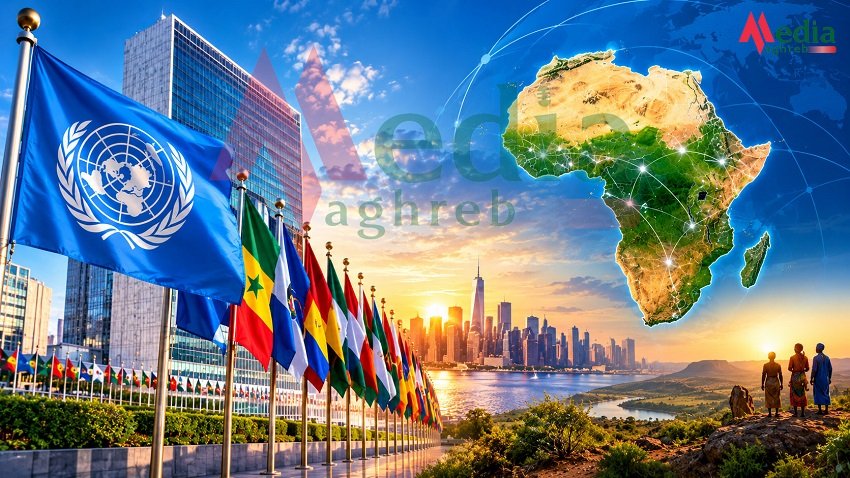
United Nations and Africa: Diplomatic Efforts to Strengthen Sahel Security and Advance Development
The 81st session of the United Nations General Assembly in New York is taking place against a highly complex international backdrop, where security and peace crises intersect with development challenges, climate change, and the restructuring of multilateral cooperation. The significance of the meetings extends beyond the official speeches delivered by heads of state and government, encompassing bilateral discussions and side meetings that enable countries and regional institutions to present their priorities and negotiate issues that are often difficult to resolve in plenary sessions. The current session is being held under the theme “Recovering Trust and Reigniting Global Solidarity: Accelerating Action on the 2030 Agenda and its Sustainable Development Goals towards Peace, Prosperity, Progress and Sustainability for All,” placing the effectiveness of multilateral action at the center of international debate.
For Africa, these diplomatic engagements carry particular significance because they create opportunities to connect local and regional concerns with the international agenda through the African Union and its partners, as well as through the direct diplomatic participation of African states. The Sahel region and the Maghreb stand out within a geographically interconnected space shaped by security, economic, and humanitarian challenges that transcend national borders. Addressing these issues requires cooperation between African institutions, the United Nations, and international partners. Against this backdrop, discussions concerning Africa cannot be separated from the broader debate over the continent’s representation in international institutions, financing mechanisms, and support for political solutions and regional mediation.
The African Union in New York: From Diplomatic Presence to a More Influential Role
The African Union entered the General Assembly meetings with a clear focus on strengthening the continent’s voice within the international system, while raising issues related to institutional reform and African representation in global decision-making centers. African Union Commission Chairperson Mahmoud Ali Youssouf indicated that the African delegation’s participation was focused on strengthening Africa’s representation in the multilateral system, while highlighting the continent’s responsibility for peace and security, economic integration, and development transformation. These priorities give the New York meetings a dimension that goes beyond protocol, allowing African states to advocate for international partnerships that respond to their long-term interests and development needs.
The importance of this approach is reflected in meetings between the African Union and the United Nations, where discussions extend beyond immediate crises to encompass the institutional framework governing cooperation between the two organizations. During a high-level meeting held on the margins of the General Assembly, the two sides discussed support for African-led solutions to African challenges, the strengthening of mediation and conflict prevention, and the provision of resources for peace and security efforts. The discussions also addressed developments in the Sahel, Libya, Sudan, South Sudan, Somalia, and the Democratic Republic of the Congo, reflecting the wide range of issues requiring coordination between regional and international organizations.
This trajectory carries particular importance for the Sahel region, where security considerations intersect with development conditions, governance challenges, and humanitarian pressures. Responding to conflicts cannot be limited to military intervention or peacekeeping arrangements; it also requires preventive diplomacy, political processes capable of building trust, and resources that help states and communities address the consequences of instability. From this perspective, cooperation between the African Union and the United Nations represents one of the frameworks through which the future of regional stability can be discussed, while recognizing the specific political and social contexts of individual countries.
The Sahel: Regional Security Amid Expanding Crises
The Sahel’s security agenda cannot be separated from the transformations taking place within the international security system, particularly as the need grows for political solutions and regional mediation capable of addressing ongoing conflicts and their impact on populations and economies. Discussions connected to the General Assembly highlight the capacity of African institutions to lead conflict-prevention efforts, as well as the role the United Nations can play in providing political, logistical, and financial support within agreed frameworks. The effectiveness of any such process remains dependent on its connection to local realities and its ability to bring relevant parties together around viable and implementable solutions.
Developments in the Sahel also affect its broader surroundings, including North Africa and the wider Saharan region, making regional cooperation an important component of any approach aimed at achieving long-term stability. International and regional discussions demonstrate that border management, migration, food security, and development cannot be treated as entirely separate issues, as they interact with one another and require coordination at multiple levels. In this context, bilateral meetings on the margins of the General Assembly can provide opportunities to exchange assessments and propose cooperative initiatives, without replacing the political and institutional processes specific to each issue.
From an economic perspective, linking stability in the Sahel to development opportunities, infrastructure investment, and stronger institutional capacity remains essential. The high-level meeting between the African Union and the United Nations highlighted debt challenges, financing sustainability, and reform of the international financial architecture, all of which affect African countries’ ability to implement development policies. For the region, creating a more stable environment for investment, trade, and essential services requires an approach that goes beyond emergency financing and supports states in building more resilient economic and social institutions.
The Maghreb: Regional Diplomacy and Cross-Border Challenges
The Maghreb represents a fundamental component of discussions surrounding security and development in North Africa, given its geographical position and connections to the Saharan region, the Sahel, and the Mediterranean. United Nations meetings provide an opportunity to address these issues within a broader framework based on cooperation between states and regional institutions, particularly on matters related to regional security, political mediation, and international coordination. This framework becomes increasingly important amid multiple crises that require sustained dialogue between relevant parties, while preserving national decision-making and the distinct nature of individual political processes.
Within this context, Algerian Minister of State for Foreign Affairs, the National Community Abroad, and African Affairs Ahmed Attaf held talks in New York with United Nations Under-Secretary-General for Peace Operations Jean-Pierre Lacroix. The discussions addressed developments in the Sahel and Sahara region, Algeria’s role in supporting peace and stability, and the challenges facing peacekeeping operations. These talks demonstrate the continued presence of regional security issues within bilateral diplomatic engagements, as well as the importance of coordination over the future of peace operations and ways to strengthen their effectiveness amid changing operational environments.
The value of such meetings extends beyond the statements issued after their conclusion. They also lie in the diplomatic channels they provide, allowing parties to clarify positions, discuss sensitive matters in a more focused setting, and build areas of understanding around shared priorities. The ultimate outcomes of these discussions remain dependent on whether they translate into subsequent steps, whether through international institutions, regional frameworks, or direct communication between governments.
Libya and Sudan: The Intersection of Crises and African Stability Priorities
The situations in Libya and Sudan were among the issues addressed during the high-level meeting between the African Union and the United Nations. This reflects the interconnected nature of crises across North Africa and the eastern part of the continent, as well as broader efforts to support peace. Addressing these situations requires coordination among different political initiatives and attention to the humanitarian, economic, and security consequences of prolonged conflict. In this context, the two sides emphasized the importance of coordination concerning Libya and Sudan, alongside identifying countries and populations most exposed to food insecurity and developing appropriate response measures.
Sudan carries particular importance in international discussions because of the ongoing war and its humanitarian consequences, which have prompted repeated diplomatic efforts to pursue ceasefire arrangements and de-escalation. During the General Assembly meetings, media reports indicated that the United States was linking the issuance of an entry visa for Sudanese army commander Abdel Fattah al-Burhan to a position on a proposed ceasefire. This development reflects the interaction between political mediation and diplomatic pressure. Such efforts remain part of a complex process in which regional and international positions intersect with the calculations of conflict parties, while the protection of civilians and humanitarian access remain central to any serious discussion of Sudan’s future.
The consequences of the Sudanese crisis extend beyond the country’s borders, affecting stability in the Horn of Africa, placing pressure on neighboring states, and intensifying humanitarian challenges. In this regard, the Executive Secretary of the Intergovernmental Authority on Development (IGAD) traveled to New York to participate in the General Assembly proceedings, with an agenda focused on supporting peace in Sudan, strengthening cooperation, and addressing climate-related challenges. This illustrates the importance of regional frameworks in connecting international diplomatic efforts with African cooperation mechanisms, particularly in areas where security crises overlap with environmental and economic pressures.
The African-European-United Nations Partnership: Development and Security on a Shared Agenda
A high-level trilateral meeting bringing together the African Union, the United Nations, and the European Union was held in New York, focusing on strengthening cooperation in peace, security, and sustainable development, alongside issues concerning the Horn of Africa, the Red Sea, and maritime security. This partnership is significant because of the interconnectedness of regional security, supply chains, trade, and financing, as well as the need to develop mechanisms for addressing crises before they generate wider pressures on communities and economies.
The discussions also addressed reform of the international financial architecture and Africa’s development financing needs, including mechanisms such as guarantees, blended finance, and the rechanneling of Special Drawing Rights toward multilateral development banks. This process forms part of the broader debate over how African countries can finance development projects and strengthen their capacity to withstand economic and climate-related shocks. These discussions cannot be separated from the needs of the Sahel and the Maghreb, where food security, access to financing, and investment in infrastructure remain influential factors in economic and social stability.
On food security, the trilateral meeting highlighted cooperation in climate-smart agriculture, improvements to fertilizer supply chains, and the development of early-warning systems using satellite technology. These areas represent potential fields of cooperation between international expertise and African capabilities, particularly in regions facing climate variability and challenges related to agricultural production and market access. At the same time, the success of such programs requires sustainable financing and institutional cooperation that reflects local conditions, rather than relying solely on broad declarations that fail to translate into implementation.
Sustainable Development in Africa: From International Commitments to Local Implementation
The United Nations agenda in New York has not been limited to security issues. The Sustainable Development Goals have also been a central focus of international engagement, with participation from countries and institutions concerned with development. The African Union has emphasized its commitment to the 2030 Agenda and its alignment with Agenda 2063, while highlighting the challenges facing implementation and the need for more effective international cooperation. This connection provides African development with a political and institutional framework linked to national and regional planning, as well as efforts to improve services and expand economic opportunities.
These priorities are directly connected to the challenges facing the Maghreb and the Sahel, where balanced development, better public services, employment opportunities, and infrastructure investment remain important components of addressing economic and social vulnerability. Investment in education, healthcare, and digital transformation can also strengthen communities’ capacity to withstand crises, provided that such investment forms part of long-term policies that account for local disparities and rely on institutions capable of implementation and monitoring. From this perspective, international meetings acquire their real value when they open the way for practical partnerships rather than remaining confined to political statements.
Africa and International Financing: Seeking Partnerships That Respond to Regional Priorities
The financing agenda has emerged as a common element linking development, security, and climate issues within United Nations discussions. African countries do not face security challenges independently of their economic conditions, while governments’ ability to implement social programs and infrastructure projects is influenced by international financing conditions and the pressures generated by global crises. In this context, the African Union raised issues related to debt sustainability and reform of the international financial system during its meetings with the United Nations, alongside efforts to maximize the value Africa derives from its natural resources, including strategically important minerals.
These discussions open the door to a broader examination of the future of international cooperation with Africa. The issue is not limited to the volume of available resources, but also includes the conditions governing their allocation and the ability of national and regional institutions to convert financing into productive and sustainable projects. In the Sahel, this challenge is linked to the need to support local development and strengthen resilience in the face of conflict and climate change. In the Maghreb, it is connected to opportunities for economic cooperation, regional connectivity, and infrastructure development. The practical benefits of these processes remain dependent on the design of programs that reflect national needs, institutional capacities, and implementation requirements.
Women, Peace, and Security: A Social Dimension of African Diplomatic Engagement
Among the issues addressed by the African Union on the margins of the General Assembly was the Women, Peace and Security agenda. A high-level meeting discussed the importance of women’s full and effective participation in political efforts to resolve crises, with a focus on the situation in the eastern Democratic Republic of the Congo. This approach reflects an expanding understanding of peacebuilding that recognizes the role of communities, local leaders, and women in building trust and supporting settlements, rather than reducing peace efforts to formal negotiations among political and military actors.
This perspective is particularly relevant to Africa, where prolonged conflicts require attention to their impact on local communities and the expansion of opportunities for participation in mediation and reconstruction processes. The participation of women, young people, and representatives of affected communities can support the legitimacy of political settlements when accompanied by clear mechanisms for consultation, accountability, and follow-up. This does not mean that community participation alone can resolve political and security complexities, but it represents one component of sustainable peace when integrated into genuine political and institutional processes.
Bilateral Meetings: The Diplomacy of Detail Beyond the General Assembly Hall
Bilateral meetings held on the margins of the General Assembly provide participants with opportunities to discuss specific issues in greater detail than is possible during general debates. These meetings bring together government officials, leaders of international institutions, and representatives of regional organizations, and may address security, development, economic cooperation, or humanitarian challenges. According to official statements published during the current session, New York witnessed meetings between the President of the General Assembly and African officials, including Algeria’s foreign minister, alongside engagements with international officials and institutions involved in regional affairs.
The importance of these channels lies in their ability to connect regional issues with institutions that possess political, financial, or technical tools for addressing them. Discussions concerning peacekeeping operations differ in nature from meetings focused on development, trade, or financing, but their consequences may intersect in their impact on national stability. Accordingly, assessing the outcomes of bilateral meetings should not depend solely on closing statements. It should also involve monitoring whether these engagements lead to coordination mechanisms, specific initiatives, or practical steps that can be evaluated.
For the Maghreb and the Sahel, coordination between regional institutions and the United Nations remains an important element in managing issues that extend beyond national borders. However, the existence of multiple initiatives does not necessarily guarantee their alignment, as states and international actors may differ in their priorities and assessments of crises. This underscores the importance of sustained diplomacy that facilitates the exchange of positions, reduces misunderstandings, and identifies areas of common ground, while respecting national sovereignty and relevant international commitments.
The Sahel and the Maghreb: The Need for a Balanced Regional Vision
The United Nations agenda reveals a fundamental reality: the challenges facing Africa do not operate within isolated national boundaries. Food security is linked to climate conditions, climate affects agriculture and water resources, security instability places pressure on economies and public services, and peace efforts require sustained financing and institutional cooperation. This interconnectedness makes it difficult to address the challenges of the Sahel and the Maghreb through a single-dimensional approach that focuses on one aspect while excluding other contributing factors.
In this context, the partnership between the African Union, the United Nations, and the European Union forms part of an effort to coordinate policies and resources around shared issues, including maritime security, food security, climate change, and financing. Achieving tangible results, however, requires clarity in responsibilities, alignment between international initiatives and national programs, and continuous evaluation of progress. Regional cooperation derives its effectiveness not from the number of meetings held, but from its capacity to translate understandings into measures that serve communities and support stability.
The future of the Sahel and the Maghreb remains closely linked to the ability of regional and international stakeholders to develop approaches that account for differences in countries’ political, economic, and social conditions. Solutions proposed for one crisis may not be directly applicable to another region, while external initiatives require alignment with local priorities if they are to deliver sustainable impact. Consequently, strengthening African institutions, expanding mediation, supporting development financing, and broadening community participation represent complementary pathways that can contribute to improving responses to regional challenges, without reducing them to isolated security or financial solutions.
The United Nations and Africa: A Test of the Ability to Turn Meetings into Results
The current session of the General Assembly is taking place at a time when the international system faces questions about its capacity to respond to multiple crises and the effectiveness of international institutions in managing political, economic, and climate-related transformations. This context gives African countries an opportunity to present their priorities within the global debate, while also placing before them the challenge of following up on commitments and ensuring that dialogue continues after high-level meetings conclude.
For the Sahel, the Maghreb, and Africa as a whole, the significance of diplomatic activity in New York lies in what it can produce in terms of practical cooperation on peace, development, financing, food security, and regional stability. The value of bilateral meetings and regional engagements ultimately depends on their ability to support viable political and economic solutions, create broader spaces for coordination, and strengthen cooperation between governments, continental institutions, and international partners. Amid increasingly interconnected challenges, the priority is not simply to convene meetings, but to establish follow-up mechanisms that sustain work on the issues raised and translate understandings into outcomes that benefit populations.
The developments in New York confirm that Africa remains present in discussions on reforming the international system, peace and security, sustainable development, financing, and climate change. Yet diplomatic presence is only one step in a longer process requiring sustained coordination between the African Union, its member states, and international partners. As challenges in the Sahel continue and their repercussions extend into the wider Maghreb and the continent, the importance of building cooperation based on regional priorities becomes increasingly clear—cooperation that balances the imperatives of stability with development needs and communities’ aspirations for a more secure and resilient future.
Share this content:







إرسال التعليق