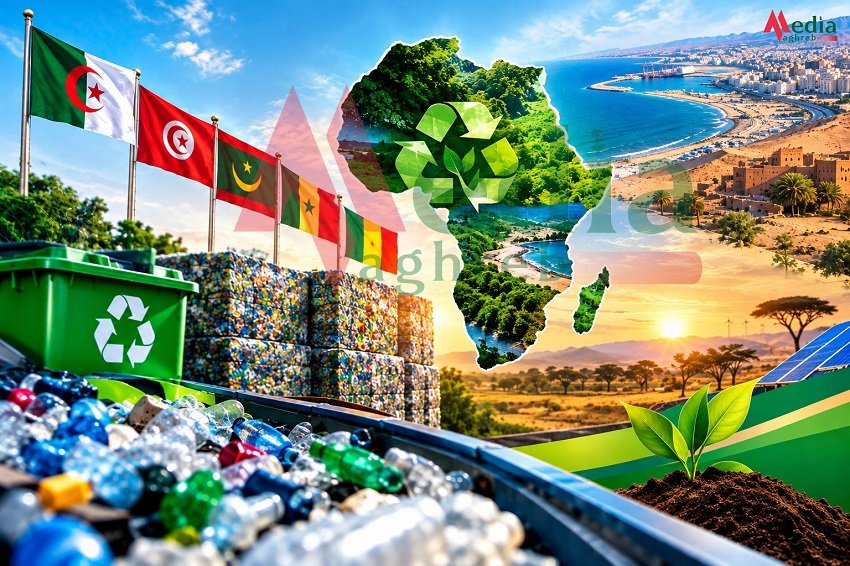
REVADE 2026 in Algeria: Turning Waste into a New Economic Opportunity Across the Maghreb and the Sahel
Waste management in Algeria is increasingly moving beyond the traditional concept of urban cleanliness, waste collection and disposal to become an economic, industrial and investment issue centered on transforming materials traditionally regarded as environmental burdens into resources that can be recovered, recycled and reintegrated into production cycles.
This shift is reflected in the tenth edition of the International Exhibition for Waste Recovery and Valorization, REVADE 2026, held in Algiers from October 6 to 8 under the theme “A Sustainable Circular Economy: Challenges and Prospects.” The event places the circular economy at the center of discussions about the future of waste management in Algeria and the wider region.
The significance of this year’s edition is also reflected in the profile of its participants. The exhibition brings together public institutions, economic operators, investors, project developers, startups and foreign companies, alongside the International Labour Organization. International participation includes companies and institutions from Germany, Italy, China, Belgium, Rwanda and Oman, giving the event a dimension that extends beyond the Algerian market toward the exchange of expertise and technologies and the development of partnerships in waste sorting, treatment, recycling, material recovery, energy recovery and circular-economy solutions.
From Waste Collection to an Integrated Industry
What stands out in the philosophy of REVADE 2026 is that waste is no longer viewed simply as the final stage of the consumption cycle. Instead, it is increasingly being treated as the starting point for a new economic chain.
The model promoted by the circular economy begins with waste collection and transportation, continues through selective sorting, treatment facilities and engineered landfills, and extends to processing, recycling and the production of secondary raw materials. This is at the heart of the circular-economy concept, which seeks to keep products and materials within the economic cycle for as long as possible instead of following a traditional “use and dispose” model.
This transformation carries important economic implications for Algeria and the countries of the Maghreb and Sahel. Building a modern waste-valorization industry requires more than companies that collect waste. It requires an integrated ecosystem involving technology, financing, logistics, training, research and entrepreneurship.
Once recyclable materials become part of industrial supply chains, waste management can evolve from a limited service activity into an important component of the green economy. This direction is increasingly aligned with Africa’s broader efforts to develop circular economic models and generate greater value from domestic resources.
Algeria Bets on Technology and Digitalization in Waste Management
The modernization of Algeria’s waste-management system is increasingly linked to digital tools. The Environment Ministry has announced a national digital platform designed to monitor waste management and valorization, developed in coordination with the High Commission for Digitalization.
The initiative reflects a broader shift toward data-driven management. In a complex sector such as waste management, digital systems can help track collection routes, monitor treatment facilities, connect waste producers with recycling operators and improve oversight of recovered materials.
Modernizing Algeria’s waste-management sector is also connected to regulatory development and the need to strengthen the technical capabilities of those operating treatment and engineered-landfill facilities.
In April 2026, Algeria’s Ministry of Environment and Quality of Life launched a national training program for managers of waste-treatment and valorization facilities, alongside the presentation of the national digital platform for monitoring waste management and valorization. The move highlights a crucial point: the success of the circular economy depends not only on equipment and infrastructure, but also on skilled professionals capable of operating facilities and managing waste as part of an efficient economic cycle.
REVADE as a Gateway for Cooperation Between Algeria and the Sahel
The importance of REVADE becomes even clearer when viewed within the broader framework of environmental and economic cooperation between Algeria and the Sahel.
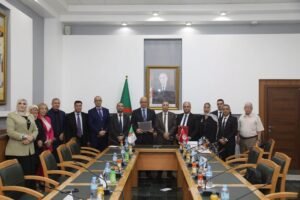
In May 2026, the environment ministers of Mauritania and Chad visited Algeria to learn about the Algerian experience in waste valorization, including visits to facilities in Blida Province. The move demonstrates that waste management is emerging as an area for practical cooperation between Algeria and the countries of the Sahel, particularly as governments seek solutions adapted to different urban conditions, infrastructure levels, financial resources and local needs.
The Sahel, in particular, requires flexible and locally adaptable solutions. Waste management cannot depend on a single model applicable to every city and region. International experience increasingly points to the need for systems adapted to infrastructure levels, financial capacity and social conditions.
This is particularly relevant to the Sahel, where solutions must combine technological simplicity, operational sustainability, community participation and private-sector involvement.
The Sahel Has an Opportunity to Turn an Environmental Challenge into an Economic Activity
African experience shows that the circular economy can become a development instrument rather than merely an environmental policy. The African Development Bank describes the circular economy as a model based on reducing waste, extending the life of products, reusing, repairing, refurbishing and recycling materials, thereby creating new economic activities.
This approach has growing importance across Africa as governments seek development models that make better use of local resources, create employment and generate greater domestic value.
The relationship between Algeria and the Sahel could therefore develop beyond the exchange of expertise toward the creation of regional markets and solutions, particularly in waste-sorting equipment, treatment, plastic recycling, paper recycling, metal recovery, organic waste processing and electronic waste management.
Algerian startups could find new markets in the Sahel, while companies in Sahel countries could benefit from technologies, expertise and partnerships emerging within the Algerian market. Such integration would support the creation of African value chains instead of treating waste as a separate local problem in every country.
The Maghreb as a Natural Market for Environmental Solutions
Within the broader Maghreb, waste management is one of the areas that could support greater economic and technological cooperation, particularly as major cities face common challenges related to urban growth, changing consumption patterns and increasing demand for municipal services.
The development of a regional recycling industry capable of sorting waste, recovering materials and producing recycled raw materials could create new opportunities for specialized companies, particularly where investment frameworks and public-private partnerships are strengthened.
International approaches to waste management increasingly emphasize that improving waste systems is not simply about increasing collection. It requires prevention, reuse, source separation, recycling and, where appropriate, energy recovery, alongside sustainable financing mechanisms and clearly defined responsibilities among producers, local authorities and communities. These principles could provide a common foundation for stronger waste-management policies across the Maghreb while respecting each country’s specific economic and social conditions.
Africa Is Redefining the Value of Waste
At the continental level, waste can no longer be separated from the debate over industrialization and sustainable development. The African Development Bank has supported programs aimed at integrating circular-economy principles into national policies, financing small and medium-sized enterprises operating circular business models and strengthening human capacity.
Recent African initiatives have increasingly connected circularity with innovation and entrepreneurship, confirming that waste can become an entry point for creating companies, products and new markets.
The diversity of African experiences offers practical models that could be adapted across the Maghreb and the Sahel. Circular-economy programs supported by African development institutions have included small businesses transforming glass into construction materials, developing packaging from plant fibers and creating other products based on recovered resources.
These examples demonstrate that the circular economy does not necessarily require large-scale industrial operations from the outset. It can begin with innovative small businesses if they have access to knowledge, finance and reliable markets.
From Plastic to Electronic Waste: A Wider Map of Opportunities
Among the issues requiring increasing attention across Africa are plastic waste, electronic waste, industrial waste and hazardous materials. Digitalization and industrial development are increasing the importance of managing used electronic equipment, batteries and components that may pose environmental risks if improperly handled, while simultaneously containing materials with economic value.
Developing specialized systems for collection, dismantling, processing and material recovery can therefore become an important part of Africa’s circular-economy strategy.
African environmental programs have emphasized the importance of preventing pollution at its source, improving the management of chemicals and hazardous waste and strengthening international cooperation and knowledge exchange. This approach is particularly relevant to the Sahel, where limited infrastructure in some areas can make hazardous-waste management more challenging, increasing the importance of regional cooperation, technology transfer and professional training.
The Circular Economy Needs Financing and Real Markets
Turning waste into wealth cannot be achieved simply by organizing exhibitions or announcing strategies. The sector requires long-term investment, clear regulations, markets capable of absorbing recycled materials and financing mechanisms that encourage private-sector participation.
International analysis of Africa’s circular economy has identified weak awareness, limited coordination, insufficient markets and financing constraints among the obstacles to wider adoption. This makes institutional reform an essential part of environmental reform.
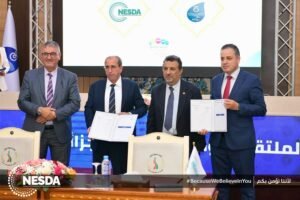
In this respect, REVADE 2026 provides an important platform by bringing public institutions, companies, investors, technology providers, project developers and startups together. This creates the possibility of transforming environmental discussions into business meetings and practical partnerships.
That may ultimately prove to be one of the exhibition’s most important outcomes, because the success of waste recovery and valorization depends on its ability to create sustainable commercial value chains rather than simply generating environmental initiatives.
Algeria and Energy: A New Path for Waste Valorization
Waste valorization is not limited to material recycling. Under appropriate technical and environmental conditions, it can also include energy recovery.
In April 2026, the Cement and Derivatives Corporation in Chlef announced a project to recover energy from waste, with the aim of reducing natural-gas consumption and increasing the use of alternative energy sources. The project illustrates how waste valorization can intersect with energy policy and industrial transformation.
This creates another potential link between the circular economy and the energy transition in Algeria, the Sahel and Africa more broadly. Organic and industrial waste can potentially become inputs for energy-recovery systems, provided that environmental standards are strictly respected and waste-to-energy projects do not create new sources of pollution.
The priority remains waste prevention, reuse and recycling, followed by other forms of recovery where they are technically, economically and environmentally viable.
Waste Management as a Source of New Employment
One of the most important economic dimensions of this transformation is employment. The recycling industry requires collectors, sorters, engineers, technicians, plant operators, logistics specialists, digital experts, environmental professionals and marketing specialists.
It also creates opportunities for startups developing applications, tracking systems and digital platforms connecting waste producers with companies capable of recovering and reusing materials. For this reason, the circular economy is increasingly viewed in Africa as a sector capable of combining decent employment, innovation and green growth.
This is particularly important for the Sahel, where small and medium-sized enterprises using appropriate technologies could play a major role in building local systems for waste collection, sorting and recycling.
In areas where large industrial systems are difficult to establish, decentralized networks of small and medium-sized operators may be better positioned to respond to local urban and community needs, especially when supported by training, financing and local procurement programs.
African Cities at the Heart of the Transition
Cities are the natural starting point for the circular economy. As urban populations expand and consumption patterns change, waste management becomes increasingly important to quality of life, public health, environmental conditions and the economic attractiveness of cities.
International development institutions increasingly link stronger waste systems with improved urban environments, investment, tourism and competitiveness.
Across the Maghreb and the Sahel, major cities could become laboratories for the circular economy through gradual waste separation, sorting centers, reuse initiatives, digital collection-monitoring systems and stronger partnerships involving governments, private companies and civil society.
Universities and research centers can also contribute by developing new materials based on locally available waste streams, turning waste from a municipal-service challenge into a platform for research, innovation and manufacturing.
From REVADE to an African Circular Economy Network
If REVADE 2026 represents a specialized Algerian platform, its greater value could ultimately lie in its ability to build connections extending beyond the exhibition itself.
Algeria’s geographic position linking North Africa with the Sahel gives it an opportunity to turn its experience in waste management, sorting, valorization and professional training into a foundation for broader African cooperation.
The presence of foreign companies and African institutions at the exhibition also creates an opportunity for technology transfer and localization of expertise rather than simply importing equipment.
For any emerging circular-economy market, the most important objective is to reach a stage where technology becomes part of a local ecosystem involving maintenance, development, training, research, manufacturing and services rather than remaining an imported product.
The Circular Economy: An Opportunity for the Maghreb and the Sahel
African and international experience confirms that the circular economy cannot succeed as an environmental policy detached from the wider economy.
It requires clear legislation, effective institutions, financing, markets for recycled materials, private-sector participation and the ability to measure results. The next step after developing exhibitions and specialized forums should therefore be the creation of projects capable of attracting financing and scaling up, connecting governments, companies, investors, universities and startups.
In this context, the Maghreb can provide an important platform for exchanging expertise, while the Sahel can offer a broad field for flexible, cost-effective solutions adapted to local conditions. Africa as a whole represents a significant market for new ideas, technologies and business models.
The greater the ability of African economies to retain the value of materials within their own markets, the more the circular economy can become part of industrialization and development strategies rather than simply a response to an environmental problem.
REVADE 2026: Waste as Part of Algeria’s and Africa’s Economic Future
Ultimately, the tenth edition of the International Exhibition for Waste Recovery and Valorization demonstrates that Algeria is approaching the waste-management challenge from a much broader perspective than simply collecting and disposing of waste.
The emerging model brings together investment, technology, digitalization, recycling, energy, research, entrepreneurship and industrial development. These elements make the circular economy one of the fields where environmental priorities can increasingly converge with economic objectives.
For the Maghreb, the Sahel and Africa, the real challenge is no longer simply how to dispose of waste, but how to recover its value before it becomes a burden.
This shift in thinking is what gives REVADE 2026 its broader significance. The exhibition is not merely showcasing equipment and environmental solutions; it reflects the emergence of a new economic approach based on a simple but far-reaching idea: what is considered waste today can, through technology, investment and effective regulation, become tomorrow’s raw material, source of employment, industrial project and new form of economic value.
Share this content:





إرسال التعليق