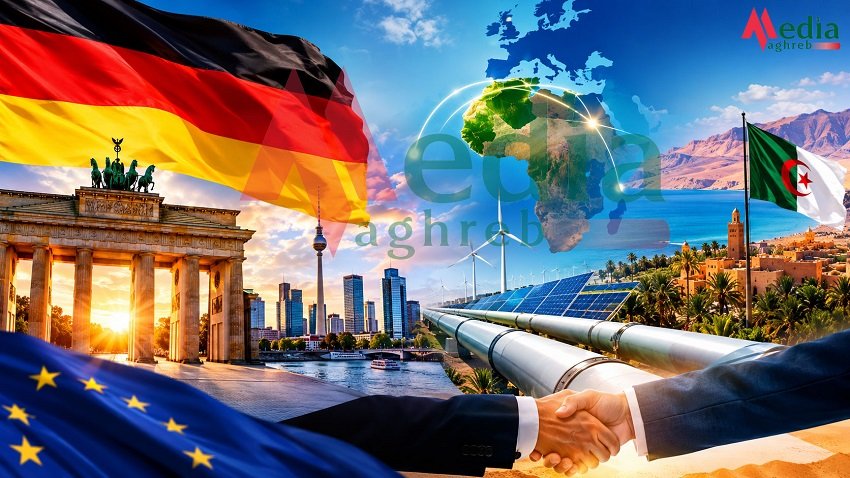
Germany’s Day of Unity: 36 Years After Reunification, a Nation Redefining Its Economic and Global Role
On October 3 every year, Germany celebrates a national occasion unlike the traditional independence days observed in many countries. The Day of German Unity commemorates the reunification of a country that had been divided for more than four decades, making the occasion one of the defining political milestones of modern European history. In 2026, Germany marks the 36th anniversary of reunification at a moment when the country is once again confronting profound questions about its economic model, political cohesion, European role and relationship with a rapidly changing international order.
The Origins of Germany’s Division
The story behind Germany’s national day began in the aftermath of the Second World War, when Germany was divided into occupation zones controlled by the United States, the Soviet Union, Britain and France. The division subsequently hardened as the Cold War transformed Europe into two competing political and economic blocs. In 1949, two German states emerged: the Federal Republic of Germany in the West and the German Democratic Republic in the East. For decades, the division was not merely political. It produced two different economic systems, social environments and geopolitical orientations, turning Germany into one of the clearest symbols of the Cold War.
The Berlin Wall and the Cold War Division
The construction of the Berlin Wall in August 1961 became the most powerful physical representation of that division. Families were separated, freedom of movement was sharply restricted and Berlin became a frontline of the confrontation between East and West. Yet by the late 1980s, political and economic pressures inside Eastern Europe were intensifying, while demands for reform and greater freedom were spreading across East Germany. The fall of the Berlin Wall on November 9, 1989, transformed the political landscape at extraordinary speed and opened the way toward reunification.
The International Path to Reunification
The reunification process, however, was not simply a domestic German affair. Germany’s post-war status was closely connected to the rights and interests of the four victorious Allied powers. The so-called Two Plus Four Treaty, signed in Moscow on September 12, 1990, brought together the two German states and the United States, Soviet Union, Britain and France. The agreement established the external framework for German reunification and paved the way for the restoration of Germany’s full sovereignty.
October 3, 1990: The Birth of a Reunited Germany
At midnight on October 3, 1990, the Unification Treaty entered into force. The five eastern German states — Mecklenburg-Western Pomerania, Brandenburg, Saxony-Anhalt, Saxony and Thuringia — joined the Federal Republic, while Berlin became the capital of the reunited country. The German government describes the achievement as the result of the peaceful revolution in East Germany, democratic decisions and international agreements. Since then, October 3 has served as Germany’s national holiday, officially known as the Day of German Unity.
Why October 3 Became the National Day
The symbolism of the date is also significant. November 9, the day the Berlin Wall fell, might initially appear to be the natural date for a national celebration. Yet November 9 is associated with several events in German history, including the 1938 Kristallnacht pogroms against Jews. October 3 therefore became the official national day, separating the celebration of reunification from one of the darkest chapters of Germany’s modern history.
Thirty-Six Years of an Unfinished Integration Process
Thirty-six years later, the process of unification remains an unfinished social and economic story in some respects. The transition from East Germany’s centrally planned economy to a market economy generated enormous structural disruption. Industrial enterprises were closed, restructured or privatised, unemployment increased sharply in many eastern regions, and large numbers of younger and highly qualified people moved westward in search of opportunities. Although the economic and social differences between eastern and western Germany have narrowed considerably over the decades, disparities in wealth, population trends and representation in senior positions continue to influence the national debate.
Bremen Hosts the 2026 Celebrations
The 2026 celebrations are being hosted by Bremen under the theme **“Many Strengths – One Nation.”** The three-day national festival is expected to attract up to 450,000 people, with around 800 events planned across the city. The choice of Bremen also offers a symbolic connection to Germany’s industrial, maritime, technological and international economic identity. Among the striking elements of the opening celebrations was a 17-metre replica of an Ariane rocket, reflecting Bremen’s role in the European aerospace industry.
A New Set of Challenges for Germany
Yet behind the celebrations lies a Germany facing a very different set of challenges from those of 1990. The country remains Europe’s largest economy and one of the world’s major industrial powers, but its traditional economic model has come under pressure. German manufacturing has faced growing competition from China, while Russia’s invasion of Ukraine fundamentally altered Europe’s energy and security environment. The disruption of Germany’s previous dependence on relatively cheap Russian energy has forced businesses and policymakers to rethink energy security, industrial competitiveness and long-term investment.
Political Cohesion and the Meaning of Unity
The political dimension of the anniversary is equally important. In his 2026 Unity Day address, President Frank-Walter Steinmeier warned about growing political divisions and the spread of disinformation by extremist forces. His remarks came after recent regional elections in eastern Germany in which the Alternative for Germany, or AfD, secured the largest share of the vote in two eastern states, while the Left won in Berlin. Steinmeier argued that Germany’s democratic debate was being weakened by increasingly aggressive political rhetoric and disinformation campaigns.
From National Reunification to Social Cohesion
These developments have made the concept of “unity” relevant once again, although in a completely different sense from the reunification debate of 1990. Germany is no longer divided into two states. Instead, the current challenge concerns maintaining social cohesion amid disagreements over immigration, economic policy, energy prices, European security, foreign policy and the future direction of the country’s industrial base.
Germany’s Economic Transformation
The economic question is particularly important. Germany’s industrial strength remains central to its influence in Europe, but companies face high energy costs, regulatory pressures, demographic challenges and intense global competition. The transition toward electric mobility, digitalisation, artificial intelligence and renewable energy is forcing German industry to invest heavily while simultaneously protecting its traditional manufacturing strengths.
Energy, Supply Chains and Emerging Markets
This economic transformation also has a growing international dimension. Germany’s future competitiveness is increasingly linked to secure and diversified supplies of energy and raw materials, reliable international supply chains and access to emerging markets. These priorities have brought Africa and particularly North Africa closer to the centre of Germany’s economic and strategic calculations.
North Africa’s Growing Strategic Importance
For Germany, North Africa is geographically close, economically relevant and increasingly important in discussions about Europe’s future energy security. Algeria occupies a particularly significant position in this equation. Diplomatic relations between Germany and Algeria date back to July 1962, and bilateral economic relations include German exports of machinery, motor vehicles and components, chemical products and foodstuffs, while Algeria’s principal exports to Germany include oil, gas and petrochemical products. The German-Algerian Chamber of Industry and Commerce has more than 450 members.
Germany and Algeria Deepen Energy Cooperation
Energy cooperation has become one of the most important pillars of the relationship. Germany and Algeria established an energy partnership in 2015, creating a framework for cooperation in the energy sector. Both countries are also participating in the **Southern Hydrogen Corridor**, an ambitious initiative designed to connect North African renewable-energy potential with European demand for green hydrogen.
The Southern Hydrogen Corridor Gains Momentum
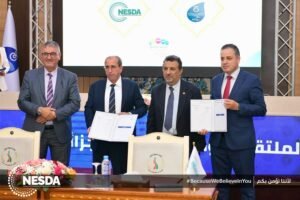
The importance of that corridor became even more visible immediately before Germany’s 2026 Unity Day. On October 1, energy representatives from Germany, Algeria, Austria, Italy and Tunisia met in Algiers and signed a joint political declaration supporting the Southern Hydrogen Corridor. The initiative is intended to strengthen Euro-Mediterranean cooperation in green hydrogen, support industrial competitiveness and create a framework for developing renewable hydrogen production in North Africa and connecting it with European markets.
Algeria’s Role in Europe’s Future Energy Landscape
For Algeria, the project represents an opportunity to build on its existing position as a major energy supplier while expanding into renewable energy and green hydrogen. For Germany and Europe, it offers the prospect of diversifying energy supplies and developing a closer energy relationship with a geographically proximate region. The emerging partnership therefore extends beyond traditional gas trade and points toward a broader industrial and energy relationship linking North Africa with the European economy.
Germany, Tunisia and the Stability of the Sahel
The wider German approach to North Africa also includes Tunisia and broader regional security concerns. During a visit to Tunisia and Algeria in August 2026, German Foreign Minister Johann Wadephul described closer cooperation with Germany’s North African neighbours as increasingly important against the background of global instability. He also highlighted cooperation with Algeria and Tunisia on the long-term stabilisation of the Sahel, linking regional security with European supply routes and wider geopolitical stability.
North Africa, Europe and the Sahel
This connection between Germany, North Africa and the Sahel is increasingly significant. For Europe, instability in the Sahel can have implications for migration, security, energy infrastructure, trade routes and investment. For North African states, deeper engagement with European industrial economies can create opportunities in energy, infrastructure, manufacturing, technology and skills development. Germany’s growing interest in these areas therefore reflects a broader shift from a relationship focused primarily on development assistance toward partnerships involving investment, energy security, industrial cooperation and strategic connectivity.
Germany’s Wider Economic Ties with North Africa
The economic relationship is not limited to Algeria. Germany has developed extensive commercial and industrial ties across North Africa, with German companies active in sectors ranging from automotive components and machinery to information technology, manufacturing and vocational training. These relationships provide a potential platform for expanding cooperation in renewable energy, digital transformation, advanced manufacturing and workforce development.
The Changing Geography of European Energy
For Germany, this approach also reflects the changing geography of European energy. The continent’s energy security calculations have been transformed since Russia’s invasion of Ukraine, making reliable partnerships with neighbouring energy-producing regions increasingly important. North Africa’s solar resources, existing energy infrastructure and geographical proximity to Europe give the region a potentially significant role in Europe’s long-term transition toward cleaner energy.
The Broader Meaning of Germany’s 2026 National Day
The significance of Germany’s Day of Unity in 2026 therefore extends well beyond the historical anniversary. The country is simultaneously looking backward at the achievement of reunification and forward toward a period defined by industrial transformation, geopolitical uncertainty, energy restructuring, technological competition and changing international partnerships.
Germany in 2026: A Different Task
The Germany that reunited in 1990 was primarily concerned with rebuilding a divided nation and integrating two economic and political systems. The Germany of 2026 faces a different task: maintaining cohesion within a unified state while adapting to a world in which its economic advantages can no longer be taken for granted.
Germany’s Relationship with Africa
That transformation is particularly relevant to Europe’s relationship with Africa. As Germany searches for new energy partnerships, resilient supply chains, skilled labour, investment opportunities and new markets, North Africa is becoming increasingly important. Algeria’s role in the Southern Hydrogen Corridor is one of the clearest examples of how energy cooperation can evolve into a broader economic partnership between Europe and Africa.
The Continuing Evolution of German Unity
Ultimately, the story of German Unity is not simply a story about the collapse of a wall. It is a story about the long-term process of rebuilding political institutions, integrating economies, addressing regional disparities and redefining a country’s role in a changing world. Thirty-six years after October 3, 1990, Germany remains united as a state, but the meaning of unity continues to evolve.
Economic Resilience, Democratic Cohesion and International Cooperation
In 2026, that meaning is increasingly connected to economic resilience, democratic cohesion, energy security and international cooperation. From Berlin and Bremen to Algiers and the wider North African region, Germany’s next chapter will be shaped not only by the legacy of reunification, but also by its ability to build new partnerships across Europe, the Mediterranean and Africa.
From Unity to Resilience
For a country whose modern history was once defined by division, the challenge today is different: how to turn unity into resilience, economic strength and international cooperation in an increasingly fragmented global economy.
Share this content:



إرسال التعليق