
The Southern Hydrogen Corridor: Algeria Opens a New Gateway from the Maghreb to Europe and Redraws Africa’s Energy Map
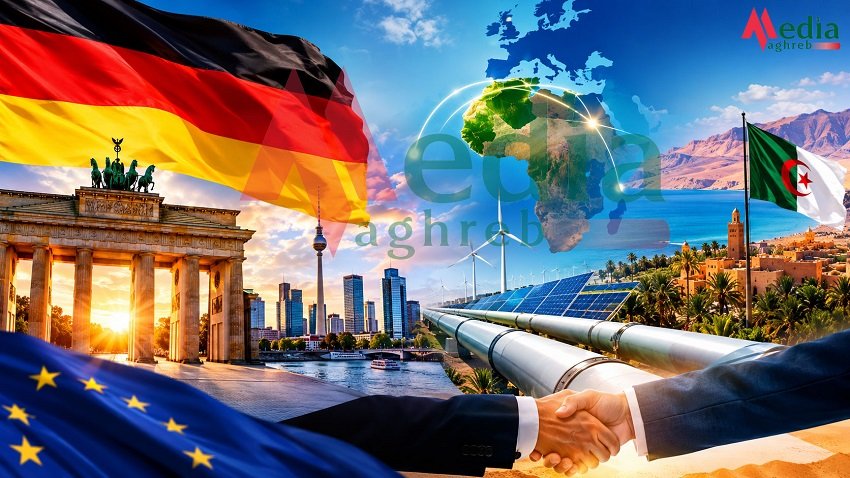
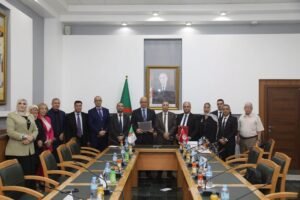
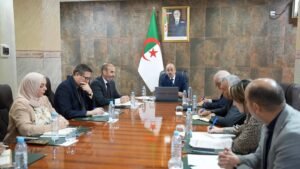
The Southern Hydrogen Corridor (SoutH2 Corridor) is no longer simply part of Europe’s discussion about future fuels. In recent months, it has evolved into a major project where energy security, industrial policy, geography and the political economy of the Mediterranean converge. On October 1, 2026, Algiers hosted the second ministerial meeting of the countries involved in the initiative, bringing together Algeria, Tunisia, Italy, Austria and Germany. The meeting concluded with the signing of the “Algiers Ministerial Declaration”, a move that signaled a shift from political support toward a more structured framework for implementation.
The strategic importance of the initiative lies in the fact that it is not based solely on building an entirely new pipeline. To a significant extent, the project is designed to rely on existing gas infrastructure after it has been adapted and upgraded to transport hydrogen. Under the announced design, the corridor extends for roughly 3,300 kilometers, linking production sources in North Africa to transmission networks in Italy and then onward to Austria and Germany. This makes it one of the clearest attempts to build a hydrogen bridge between the Maghreb and Europe. A substantial share of the proposed infrastructure would reuse existing pipelines, a factor of major economic and engineering significance.
The Algiers Declaration: Moving from Political Commitment to Implementation
The significance of the Algiers Declaration goes beyond renewed political support for the project. It also includes the establishment of a dedicated secretariat to provide technical support for the corridor, with assistance from the United Nations Industrial Development Organization (UNIDO). This is important because cross-border energy projects often face delays in the space between political decisions and the completion of technical studies, financing arrangements, licensing procedures and commercial commitments. The creation of a structure to coordinate technical work among the five countries could therefore help narrow that gap, particularly for a project requiring synchronized planning across production, pressure management, transmission, storage, technical standards and certification of clean energy.
Statements emerging from the ministerial meeting in Algiers also showed a clear effort to position the project within a framework broader than simply exporting clean fuel to Europe. The participating governments emphasized that the corridor could serve as a lever for regional integration and Euro-Mediterranean cooperation, while the development of green hydrogen is increasingly tied to supply security, industrial competitiveness and investment. This broader approach places the Maghreb within Europe’s new energy equation not merely as a geographic transit area, but as a potential production hub for renewable energy, hydrogen-related industries, engineering services, transportation and storage.
Algeria: The Producer at the Heart of the Corridor
For Algeria, the Southern Hydrogen Corridor carries a different strategic weight from traditional energy projects. The country has a key position on the Mediterranean, a major energy infrastructure network, extensive experience in gas production, transportation and exports, and a vast geography extending deep into the Sahara, where solar energy is increasingly central to the discussion about hydrogen’s future. This explains why the corridor, in its current conception, is closely associated with Algerian production transported through Tunisia toward Italy, Austria and Germany.
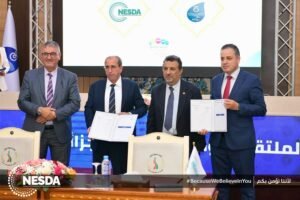
Algeria’s involvement in the project gained concrete momentum in Oran in October 2024, when Sonatrach and Sonelgaz, together with European partners, signed a memorandum of understanding to conduct the necessary studies across the hydrogen value chain, from production to transport and export. The objective was to assess the feasibility of an integrated green hydrogen project in Algeria capable of supplying the European market through the Southern Corridor. The Rome ministerial meeting in January 2025 subsequently provided political backing at the governmental level, while technical studies and coordination continued throughout 2025 and 2026.
During 2026, Algeria’s track within the project gained further momentum. In February, the initiative was discussed within the framework of the high-level energy dialogue between Algeria and the European Union, with particular attention to regulatory and investment barriers, the need to create a transparent hydrogen market, and the development of future purchase agreements capable of giving investors greater certainty. In June, Sonatrach signed a memorandum of understanding with Germany’s VNG to explore cooperation in green hydrogen and methane-emissions reduction, reflecting an effort to broaden Algerian-German energy cooperation beyond the corridor’s conceptual framework.
In July 2026, the project returned strongly to the political spotlight as Algerian and German officials reiterated their intention to advance it in the next phase. European assessments and media reports also stressed that technical studies were underway, but that long-term offtake agreements and clearer commercial commitments remained necessary before political momentum could be converted into final investment decisions. This is one of the most sensitive issues in the global hydrogen economy: access to sunlight, wind resources and pipelines is not enough unless buyers are prepared to purchase the product under long-term contracts.
Tunisia: From Transit Country to a Stakeholder in the Hydrogen Equation
If Algeria is emerging as a major production center in the current concept, Tunisia has a no less strategic role within the Southern Hydrogen Corridor. The proposed route crosses Tunisian territory before reaching Italy, making Tunisia a critical link whose infrastructure could either facilitate or constrain the project. At the same time, Tunisia is developing its own national green hydrogen strategy, seeking not to remain merely a transit territory but to build domestic production, develop related industries and strengthen a national transmission network capable of serving both domestic demand and exports.
Tunisia’s vision suggests that hydrogen could become part of a broader restructuring of the energy system, whether through its use in heavy industry and chemicals, the development of hydrogen derivatives, or the integration of hydrogen with renewable energy, transportation and storage projects. This has particular significance for the Maghreb, because hydrogen introduces a model of energy cooperation that goes beyond the traditional export of gas or electricity toward industrial value chains encompassing electrolyzers, storage systems, equipment, chemicals, ammonia, synthetic fuels and engineering services.
Alongside the hydrogen corridor, the electricity interconnection network between Tunisia and Italy is also advancing, including the ELMED project and efforts to strengthen the domestic grid. This adds another layer to the energy integration developing across the Mediterranean. Green hydrogen fundamentally depends on renewable electricity, meaning the success of any hydrogen-export system requires robust power grids, flexible production systems, storage capacity and efficient transport infrastructure rather than electrolyzers alone. In this sense, the connection between the Maghreb and Europe is gradually becoming a multi-layered energy system rather than a single pipeline project.
Why the Sahel Is Entering the Equation Even Though It Is Not Part of the Corridor
Officially, the Southern Hydrogen Corridor does not include the countries of the African Sahel among its five participating states. The current project focuses on Algeria and Tunisia in North Africa, alongside Italy, Austria and Germany in Europe. Yet from a broader strategic perspective, the Sahel is indirectly entering the equation because the energy transition in North Africa is increasingly linked to its southern African depth and the countries stretching beyond Algeria’s borders, particularly as cross-border African energy infrastructure expands and new routes seek to connect African resources to Mediterranean markets.
Developments surrounding the Trans-Saharan Gas Pipeline offer a useful example of this wider connectivity. Algeria officially launched work in June 2026 on its segment of the project linking Nigerian gas to Europe through Niger and Algeria, creating a major energy connection between production zones in West Africa and Mediterranean infrastructure. This is a gas project, not a hydrogen project, and the two routes should not be conflated. Nevertheless, it illustrates a broader strategic direction in Africa: positioning Algeria as a connection point between energy resources in the south and European markets in the north. From this perspective, hydrogen can be viewed as a potential next stage in a wider African energy network.
Mauritania provides another example of the transformation underway across the desert and Sahelian space. In September 2026, the Mauritanian government signed a comprehensive agreement to develop the “AMAN” green hydrogen project, describing the move as an advanced stage in a major renewable-energy and hydrogen initiative. This does not mean Mauritania has joined the Southern Hydrogen Corridor; it has not in the project’s current official structure. It does, however, demonstrate that the African Sahel is gradually appearing on the global hydrogen map, raising the possibility that the broader desert belt stretching between North and West Africa could become an increasingly important field for production, investment and competition over value chains.
The Sahara: A Major Resource and an Even Greater Challenge
North Africa — and particularly Algeria’s vast Saharan territory — possesses several fundamentals that make the region attractive to the emerging hydrogen economy: abundant solar and wind resources, geographic proximity to Europe, existing energy infrastructure, ports and accumulated expertise in the energy industry. Yet converting these advantages into competitive green hydrogen production requires large investments in renewable electricity, electrolyzers, pipelines, storage systems, water supply, cooling systems, control technologies and certification schemes that allow the product to enter the European market. In other words, hydrogen is not simply a new resource to extract and export; it is an entirely new industrial ecosystem that must be built around clean energy.
Water is emerging as one of the most sensitive challenges, particularly in the arid and semi-arid environments stretching across the Maghreb and Sahel. Electrolysis requires water, and as projects expand to industrial scale, the issue of water availability, treatment, desalination and the management of industrial water systems becomes part of the economic and environmental equation. This is why discussions in Algeria and Tunisia increasingly link hydrogen with desalination and water-resource management rather than treating hydrogen as a stand-alone energy project.
Can Hydrogen Create Value Inside Africa?
The most important question for Africa is not only how much hydrogen the continent can sell to Europe, but how much economic value can remain within African economies. If the continent remains primarily a supplier of a raw energy product, hydrogen could reproduce the old energy-export model in a new form. But if hydrogen projects are linked to equipment manufacturing, grid development, workforce training, ammonia production, green steel, sustainable fuels and engineering services, the economic impact could be considerably deeper and more sustainable. This issue has increasingly become central to international discussions about the future of hydrogen in Africa.
Algeria’s strategy is particularly significant in this context. The authorities have spoken of building a national hydrogen value chain rather than limiting the sector to exports. Hydrogen is increasingly linked to ammonia production, green steel, sustainable fuels and the development of expertise in production, storage, transportation, certification and equipment. If this approach succeeds, the importance of the project will not be measured only by what flows through pipelines toward Europe, but also by the industrial and technological base created inside Algeria and potentially scalable across Africa, the Sahel and the Maghreb.
Europe Needs Hydrogen — but the Market Is Still Searching for the Right Price
Europe has a growing need for low-emission hydrogen to decarbonize sectors where direct electrification remains difficult, including parts of heavy industry, chemicals, iron and steel, shipping and synthetic-fuel applications. At the same time, the hydrogen industry itself continues to face challenges related to high production costs, uncertain demand and delays affecting some projects. This makes transport corridors such as the SoutH2 Corridor closely dependent on the ability of European consumers and North African producers to secure long-term offtake agreements. The corridor’s success will therefore depend on both sides of the Mediterranean: the ability of the Maghreb to produce competitive hydrogen and Europe’s ability to create a durable market for it.
At the same time, European institutions are working to build a broader framework for cooperation in renewable energy and hydrogen through the T-MED initiative, which aims to accelerate investment in clean energy, grids and hydrogen-related technologies on both sides of the Mediterranean. This broader architecture is important because it gives the Southern Hydrogen Corridor an opportunity to operate within a wider package of initiatives covering financing, regulatory reform, skills development, manufacturing supply chains, electricity interconnections and hydrogen infrastructure. The corridor could therefore become part of a broader Euro-Mediterranean energy strategy rather than remaining a stand-alone infrastructure project.
Algeria Between the Mediterranean and the Sahel: A New Energy Role
The geopolitical importance of the project for Algeria extends beyond hydrogen exports themselves. The country is simultaneously strengthening its energy ties with Europe, expanding trans-Saharan infrastructure and deepening cooperation with African countries south of the Sahara. This places Algeria in a position to combine roles that were previously treated separately: energy producer, transit hub, industrial base and connector between the African Sahel and Europe. Hydrogen adds a new potential layer to this economic influence, provided that the project evolves from an export route into an integrated industrial platform.
Politically, the corridor also conveys a message distinct from the one traditionally associated with fossil fuels. Rather than relying on a single resource and a single route, the emerging concept combines solar, wind, electricity, hydrogen, gas and cross-border infrastructure within a more diversified energy network. Such diversification could give Algeria and Tunisia a different position in Europe’s energy negotiations at a time when supply security, resilient supply chains and protection against geopolitical disruptions have become increasingly important to European energy policy.
What Still Stands Between the Project and Full-Scale Implementation?
Despite growing political momentum, the Southern Hydrogen Corridor still faces several major tests. The first concerns the technical challenges involved in adapting sections of the gas network to transport hydrogen safely and efficiently. Then come financing, licensing, grid integration, access to European infrastructure and, above all, the commercial challenge of securing buyers committed to long-term contracts. European assessments have acknowledged that the project still requires further work to reduce investment risks at a time when Europe’s hydrogen market itself remains in an early stage of development.
The coming years will therefore be decisive in answering a fundamental question: will the SoutH2 Corridor become a functioning infrastructure system transporting renewable energy from North Africa into the industrial heart of Europe, or will it remain for years a strategic project in which political declarations and feasibility studies advance faster than actual investment? The current timetable points toward operation in the early 2030s, but reaching that stage requires a transition from studies to investment decisions, from political support to binding commercial commitments, and from pilot-scale production projects to a system capable of operating at industrial scale.
The Southern Hydrogen Corridor: A European Project with an Increasingly African Dimension
Ultimately, the Southern Hydrogen Corridor is larger than a new energy pipeline. It is a test of a new economic model that could redefine the relationship between Europe, the Maghreb and the African Sahel, while opening a broader strategic role for Africa in the global energy system. Algeria has the opportunity to transform its solar resources, geographic location, energy networks and accumulated expertise into a production and transit platform. Tunisia can evolve from a geographic transit point into a partner in production and infrastructure. Meanwhile, other countries across Africa are developing their own hydrogen projects, potentially creating a wider network of African production hubs in the years ahead.
If the project succeeds, its impact will extend far beyond hydrogen exports to Italy, Austria and Germany. Its real economic significance could lie in the development of new industries in Algeria and Tunisia, the expansion of skills and technology, stronger power grids, new port and logistics services, and the integration of Europe’s green economy with the resources of the Maghreb and the African continent. But if production projects remain disconnected from local industry, while offtake contracts, financing structures and certification systems remain unresolved, the ambition will continue to exceed implementation capacity. The Algiers Declaration is therefore an important milestone, but not the finish line. It marks the beginning of the decisive phase in which capital, technology, market demand and water availability will determine whether hydrogen truly becomes the fuel of a new era in relations between Africa and Europe.
Share this content:





إرسال التعليق