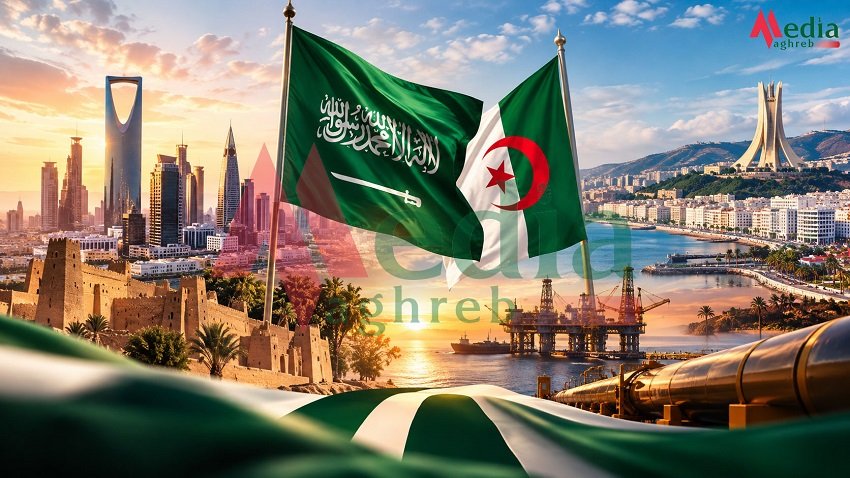
Saudi National Day in Algeria: A Legacy of Unification, a Path of Transformation, and a Partnership Moving Toward a Broader Horizon
On September 23 each year, Saudi Arabia commemorates more than simply the founding of a state. It recalls a pivotal moment in the history of the Arabian Peninsula and the region, when a royal decree was issued in 1932 declaring the unification of the country’s territories under the name of the Kingdom of Saudi Arabia, following a long process led by King Abdulaziz bin Abdulrahman Al Saud, which began with the recapture of Riyadh in 1902 and continued for more than three decades until the establishment of the Kingdom in its modern form. In 2026, the occasion marks its 96th anniversary, with the Kingdom now facing a stage entirely different from that of its founding, whether in terms of the size of its economy, the expansion of its regional and international role, or the nature of the social and development transformations it is undergoing.
Saudi National Day in Algeria: An Occasion Beyond Protocol
From Algeria, the occasion carries additional significance this year, as the Saudi Embassy’s celebration of National Day in the Algerian capital comes at a time when Algerian-Saudi relations are undergoing a phase of reprioritization and expansion of cooperation, particularly in the areas of economics, investment, and political coordination. National occasions hosted by diplomatic missions are not limited to recalling national symbols; by their very nature, they become spaces for political, diplomatic, economic, and cultural engagement, as well as an opportunity to assess the nature of relations between the celebrating state and the host country within their current context.
From the Memory of Unification to the Building of the State
What is particularly notable in the Saudi case is that the concept of National Day has evolved alongside the development of the state itself. September 23 is historically linked to the proclamation of the Kingdom’s unification, but in contemporary Saudi consciousness it has become an occasion to highlight an extended journey from institution-building to economic and social development, and then to the wide-ranging transformation taking place under Saudi Vision 2030. Official data indicate that the founding phase was not merely a process of geographical unification; it was accompanied by the gradual establishment of state institutions and administrative bodies, from the Royal Court and the Private Council to the creation of the Ministry of Foreign Affairs and other institutions that formed the initial structure of the modern state.
The Challenges of Founding and the Questions of Transformation
This is where the importance of viewing Saudi National Day as an occasion that goes beyond symbolic celebration becomes evident. Modern states are measured by their ability to endure through what they build upon the founding moment. If the historic challenge during the reign of King Abdulaziz was to unite geographically dispersed regions under a single central authority and establish state institutions, the Saudi challenge in recent decades has become linked to reshaping the economy, diversifying sources of income, developing infrastructure, investing in human capital, and strengthening the Kingdom’s presence in the global economy. These issues have become an essential part of the image Saudi Arabia presents of itself domestically and internationally.
Saudi Vision 2030 and the Reshaping of the Economy
Saudi Vision 2030 lies at the heart of this new phase, serving as the broader framework for the economic and social transformation through which the Kingdom seeks to reduce its relative dependence on oil-related activity and expand the contribution of non-oil sectors. According to the annual Vision 2030 report for 2025, the non-oil economy accounted for approximately 55% of gross domestic product, while non-oil activities recorded growth of 4.9% during the same year. These indicators reflect the scale of the transformation the Kingdom is seeking to consolidate at the level of the economic structure, rather than merely through major projects.
Oil Between the Economy and Energy Security
However, these figures need to be viewed within a broader context. Saudi Arabia remains a major oil-producing country, and energy revenues continue to represent a central component of public finances and the state’s capacity to fund its projects and investments. In 2026, the Saudi economy also came under pressure from fluctuations in energy markets and regional security tensions, while Riyadh continued to seek a balance between investment spending associated with economic transformation projects and the preservation of financial stability. Previous fiscal estimates have pointed to the continuation of budget deficits, alongside expectations of growth in non-oil activities.
Saudi Energy and the Dynamics of Global Markets
This equation becomes even more apparent in the energy sector, without which it is difficult to understand either the Saudi economy or the Kingdom’s international standing. In September 2026, Saudi oil facilities and transportation routes were targeted in attacks that caused temporary disruptions to some export routes, before sources announced the resumption of operations on the East-West oil pipeline, while Saudi Aramco moved to reorganize export flows through Gulf ports. These developments demonstrate that the Kingdom does not view oil merely as a source of revenue, but also as part of the global energy security system, making the security of Saudi supply routes an issue extending beyond the Kingdom’s borders to Asian and European markets and the global economy.
Algeria and Saudi Arabia: Converging Energy Interests
Against this backdrop, Saudi National Day in Algeria becomes more than a protocol occasion, as Algeria itself is a pivotal player in the regional and international energy market, with a geographical position and natural resources that make it a key actor in the energy equations of North Africa and the Mediterranean. The two countries also share membership in the Organization of the Petroleum Exporting Countries (OPEC), as well as membership in the Arab League, placing their relations within a broader network of economic, political, and strategic interests that extend beyond direct bilateral relations.
A Political Path Toward More Regular Coordination
At the political level, Algerian-Saudi relations witnessed steps during 2026 toward strengthening institutional coordination mechanisms. The Algerian-Saudi Political Consultations Committee held a meeting in Riyadh at the level of senior officials from the two foreign ministries, with the participation of the two countries’ ambassadors. The meeting addressed the historic and strategic relations between the two countries, in addition to regional and international issues of common interest. This step comes as part of a broader process aimed at developing regular consultation channels rather than relying solely on contacts prompted by urgent developments.
The Algerian-Saudi Supreme Coordination Council
At a later stage, the foreign ministers of the two countries, Ahmed Attaf and Prince Faisal bin Farhan, held talks that underscored the importance of strengthening coordination and consultation on Arab and regional issues. The bilateral moves were also linked to preparations for convening the first session of the Algerian-Saudi Supreme Coordination Council. The two sides had signed an agreement to establish the council during the fourth session of the Political Consultations Committee, with the aim of raising the level of communication, strengthening cooperation in priority areas, and ensuring more regular follow-up on agreed measures.
Investment as a New Gateway for Economic Relations
The economic dimension may be among the areas offering the greatest potential for expanding Algerian-Saudi relations in the coming phase. In June 2026, the Algerian Investment Promotion Agency received a delegation of Saudi businesspeople in Algeria and presented an overview of reforms to the investment climate and opportunities available in agriculture, industry, energy, renewable energy, mining, and tourism. Such meetings reflect a transition in economic relations from a general political desire to increase cooperation toward identifying specific investment opportunities that could develop into actual projects and partnerships.
Trade Between Algeria and Saudi Arabia
Trade data indicate that there remains significant room for expanding cooperation. In May 2026, Saudi exports to Algeria reached approximately 192.1 million riyals, compared with Saudi imports from Algeria worth 74.2 million riyals during the same month. For the full year 2025, Saudi exports to Algeria reached approximately 4.4 billion riyals, while Saudi imports from Algeria amounted to around 331 million riyals. Bilateral trade included industrial, petrochemical, plastic, fuel, mineral, and pharmaceutical products. Saudi foreign direct investment stock in Algeria also increased to approximately 130.6 million riyals at the end of 2024, according to official Saudi data.
Opportunities for Economic and Investment Cooperation
The importance of these figures does not lie solely in their direct financial value, but also in the nature of the sectors that could open new avenues for partnership. Algeria is seeking to attract high-quality investment into production, industry, energy, mining, tourism, and agriculture, while Saudi Arabia has accumulated considerable experience in recent years in developing major projects, financing infrastructure, and mobilizing investment through funds, financial institutions, and national companies with a regional presence. Accordingly, the intersection between Algeria’s economic needs and Saudi capital and expertise could create areas of cooperation extending beyond traditional trade.
The Private Sector at the Heart of Economic Relations
In 2025, the Saudi-Algerian Business Forum was also held in Algeria, bringing together officials and representatives of the business community. Discussions covered tourism, agriculture, construction, and manufacturing, alongside the promotion of trade and investment. The continuation of such events indicates that economic relations between the two countries are no longer driven solely through governments, but that the private sector has become increasingly visible in shaping the agenda for future cooperation.
Algeria and Saudi Arabia in a Changing Regional Environment
From another perspective, Algeria and Saudi Arabia are operating in a highly complex regional environment. During 2026, the region witnessed rising security risks and tensions whose effects extended to energy security, maritime routes, and critical infrastructure. In this context, Algeria announced a clear position in September regarding attacks targeting Mecca, expressing solidarity with the Kingdom and support for its security and sovereignty. The position carries political and popular significance given the special place occupied by Mecca and Medina in the Islamic consciousness.
Popular and Cultural Ties Between the Two Countries
This position cannot be separated from the nature of the popular and cultural relations between the two countries. Algerian-Saudi relations are not based solely on economic and political interests, but also on religious, cultural, and historical ties, as well as continuous movement by pilgrims, Umrah performers, and visitors, in addition to academic, media, and cultural exchanges. These dimensions give bilateral relations a social depth that government agreements alone cannot provide, making any development in relations between the two countries capable of affecting broad segments of society, institutions, and businesses.
Saudi Arabia’s Presence in the Arab and African Environment
When the Saudi Embassy in Algeria celebrates National Day, it is also highlighting the Kingdom’s presence within its Arab and African surroundings. Algeria is not merely a capital hosting a Saudi diplomatic mission; it is a country with political weight in North Africa and the Sahel, as well as extensive historical experience in regional security issues and political settlements. Riyadh, meanwhile, has become increasingly active in recent years across a range of Arab, regional, and international issues. From this perspective, continued Algerian-Saudi engagement can be viewed as part of a broader Arab network of consultation on regional crises, regional security, and the future of economic relations.
Saudi Arabia and the Redefinition of Its Economy
On the other side of the picture, Saudi Arabia is working to redefine its global economic profile through new sectors, including tourism, technology, advanced industries, electric vehicles, entertainment, and logistics. One of the latest examples is the announcement by Saudi electric vehicle company Ceer, backed by the Public Investment Fund and Foxconn, of its first two electric vehicle models ahead of their planned launch for sale in 2027. The initiative forms part of a plan to build a domestic electric vehicle industry and develop an industrial supply chain within the Kingdom. This transformation reflects a broader direction toward turning the Kingdom from a consumer of energy and technology into a center for production and investment in emerging sectors.
Saudi Transformation and the Arab Environment
Saudi Arabia’s transformation is also not taking place in isolation from its Arab surroundings. The Saudi economy, given its investment scale and market size, represents an attraction for regional companies, while other Arab economies are seeking partnerships, financing, and investments capable of supporting their productive projects. In Algeria’s case specifically, the existence of an industrial base, energy and mineral resources, and a large domestic market, combined with a geographical position connecting North Africa with the Mediterranean and sub-Saharan Africa, creates multiple avenues for economic cooperation with Saudi Arabia if the necessary institutional and implementation frameworks are put in place.
From Agreements to Projects
International relations are not measured solely by the number of agreements, but by the ability of states to translate them into tangible projects and results. This is the real test for any new phase in Algerian-Saudi relations: Can joint committees, coordination councils, and business forums move from exchanging views to implementing joint projects with added value, increasing trade, expanding investment, and connecting private-sector institutions in both countries on a more regular basis? The developments witnessed during 2026 point to a stated political and economic willingness in this direction, while implementation remains the decisive factor in determining the scale of the actual transformation.
An Economic Partnership Beyond Traditional Trade
This question is particularly important for Algeria, which is working to broaden its circle of economic partners and attract investment into strategic sectors, and for Saudi Arabia, which is likewise seeking new markets and opportunities in its Arab and African surroundings. A partnership between two countries of the size of Algeria and Saudi Arabia could move beyond traditional trade toward joint projects in energy, industry, food, tourism, logistics, and technology, particularly as Saudi interest in overseas investment grows and Arab markets increasingly require more integrated supply chains.
Political Convergence and Regional Issues
Politically, closer Algerian-Saudi relations also carry significance amid the multiple crises facing the Arab region. Regular consultation between two countries with political and economic weight can provide space for exchanging views on Gulf security, Red Sea security, Sahel issues, Arab crises, and the Palestinian issue, which maintains a consistent place in the political discourse of both countries. This does not imply complete convergence on every issue; rather, the existence of institutionalized and regular channels makes the management of differences and the coordination of positions more sustainable.
The Supreme Coordination Council and the Future Course of Relations
Within this framework, the Algerian-Saudi Supreme Coordination Council represents one of the mechanisms that could provide greater continuity to bilateral relations. The existence of a follow-up mechanism at the leadership level of both countries allows relations to move from a pattern of sporadic meetings toward a more regular process in which economic, political, cultural, and security issues are subject to periodic follow-up. The two sides have already affirmed that the council aims to increase communication and accelerate cooperation, with direct attention and follow-up from the leaderships of both countries.
Saudi National Day and Public Diplomacy
Saudi National Day itself remains an occasion of deep symbolic significance for the Kingdom. Within Saudi Arabia, it brings together the memory of the founding with the present, transforming the symbols of national unity into a space for expressing the transformations the country has undergone over the decades. Abroad, National Day becomes an occasion for public diplomacy, through which embassies showcase their country’s history, culture, and achievements, while bringing together representatives of the host state, the diplomatic corps, the business community, and cultural and media circles. Previous Saudi Embassy celebrations in Algeria reflected this character, with the participation of Algerian officials, diplomats, parliamentarians, academics, media professionals, and cultural figures, alongside members of the Saudi community.
2026 Celebrations: Between Identity and the Features of the Modern State
During the 2026 celebrations inside the Kingdom, the occasion took on a broad character that included air, naval, and military displays, public events, and fireworks in a number of cities. These celebrations coincided with a visible presence of national symbols across Saudi cities, reflecting how National Day has become an occasion that combines history and identity with the manifestations of the modern state and its organizational and economic capabilities.
Saudi Arabia Faces New Questions in Its 96th Year
Perhaps the most important aspect of the picture is that Saudi Arabia enters its 96th year facing questions fundamentally different from those confronting the state during its early founding years. The Kingdom has moved from the phase of building the state and consolidating institutions to a phase of redefining its economy and global position. At the same time, it must address regional security challenges, energy volatility, technological transformation, and international competition for investment, markets, and supply chains. This makes National Day an occasion for reading the present as much as recalling the past.
Algeria and Riyadh: The Future Takes Center Stage
From Algeria in particular, the picture appears more closely connected to the future. Relations between Algeria and Riyadh have a political and historical foundation, but they now face an opportunity to transform that foundation into deeper economic and investment partnerships, more regular political coordination, and cultural and humanitarian cooperation that keeps pace with the development of official relations. The current year has already witnessed moves in this direction, from political consultations and preparations for the Supreme Coordination Council to business meetings and the exploration of investment opportunities in strategic sectors.
Saudi National Day: A Memory of the Past and a Vision for the Future
Thus, the Saudi Embassy’s celebration in Algeria of the Kingdom’s 96th National Day cannot be viewed solely within the framework of customary diplomatic protocol. Rather, it forms part of a broader context that brings together the memory of a state founded on a project of unification and institution-building, a Kingdom reshaping its economy and international position, and Algerian-Saudi relations seeking to move toward a more organized and effective level. Between the history of 1932 and the projects of Vision 2030, and between Riyadh and Algiers, the central message appears to be that states that regard their history as a foundation for the future do not merely commemorate their past; they use it to measure the distance they have traveled and identify the paths they seek to pursue in the next phase.
From the Memory of Unification to Future Partnerships
Ultimately, September 23 remains in Saudi memory a day of unification. In 2026, however, it arrives at a moment that reflects the scale of the transformation the Kingdom has undergone over the past decades. As Saudi flags fly across Riyadh and the country’s cities, and Saudi embassies around the world mark the occasion, Saudi Arabia’s presence in Algeria gains its own distinctive character from an Arab relationship that extends beyond diplomatic courtesies to encompass growing political, economic, and cultural interests. What will determine the value of the next phase will not be the number of celebrations or statements, but the ability of the two countries to translate their declared political will into partnerships, projects, and sustainable cooperation that turn the depth of their relations into tangible results on the ground.
Share this content:




إرسال التعليق