Fighting Corruption from Doha to the Sahel: Algeria Pushes for Broader Arab Institutional Cooperation
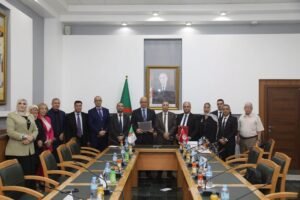
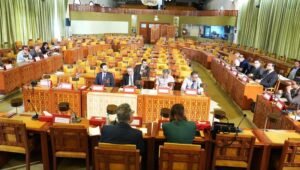
The Qatari capital, Doha, has concluded the proceedings of the Sixth Conference of States Parties to the Arab Convention against Corruption, marking a significant regional milestone at a time when combating corruption is no longer viewed as a purely legal issue, but rather as a matter directly linked to the ability of institutions to protect public funds, strengthen public trust, combat cross-border financial crimes and develop mechanisms for cooperation among specialized authorities. Algeria’s participation in the conference, headed by Mohamed Djelouai, Acting Chairman of the High Authority for Transparency, Prevention and the Fight against Corruption, combined its engagement in the conference’s proceedings with a series of bilateral meetings aimed at expanding institutional cooperation and exchanging expertise in integrity and transparency.
From this perspective, the significance of the Doha conference extends beyond the immediate Arab framework, as corruption, tax evasion, money laundering and the recovery of illicit proceeds have become increasingly interconnected issues across Africa, and particularly in Sahel Africa. These challenges form part of a complex network in which economic, security and development issues intersect. The stronger the capacity of institutions to trace financial flows, improve oversight of public procurement, exchange information and reinforce the independence of supervisory mechanisms, the greater the ability of states to protect their resources and transform them into instruments of development and stability.
Algeria at the Heart of the Debate on Transparency and Institutional Cooperation
Algeria’s presence at the sixth session was not limited to participation in conference discussions. It also assumed a clear institutional dimension through the appointment of Algerian representative Ibrahim Berkandaji as Rapporteur of the Bureau of the Sixth Session, within the organizational arrangements adopted during the conference. This reflects Algeria’s engagement in the conference’s institutional process alongside its participation in discussions concerning implementation of the Convention and the strengthening of cooperation in the fight against corruption.
The composition of the Algerian delegation, which included representatives of the High Authority for Transparency, Prevention and the Fight against Corruption, the Ministry of Justice and the Central Office for the Suppression of Corruption, also gave the participation a multi-institutional dimension. This is particularly important in cases where administrative prevention, judicial investigations and international legal cooperation intersect. In a regional environment where economic and financial crimes are increasingly transnational, no single institution can independently address the movement of funds, assets and economic interests that extend across multiple jurisdictions.
From Anti-Corruption to Building a Regional Cooperation Network
One of the key messages conveyed by the Algerian participation in Doha was its commitment to cooperation with all States Parties to the Arab Convention against Corruption through bilateral agreements, intensified contacts and exchanges of expertise, knowledge and experience. This approach takes on particular importance when viewed within the broader context of the Maghreb and Sahel Africa, where economic and geographical borders intersect with trade, investment and financial flows, creating a growing need for institutions to establish more effective channels for coordination and information exchange.
In this context, the meetings held by Mohamed Djelouai on the sidelines of the conference provided a practical example of how international and regional conferences can evolve from platforms for exchanging information into spaces for building sustainable institutional relationships. The conference provides the political and legal framework, while bilateral meetings create opportunities to identify practical areas of cooperation, ranging from training and exchange of expertise to the development of supervisory mechanisms and institutional capacity-building.
Algeria and Oman: A Cooperation Memorandum on the Horizon
Among the most notable meetings held on the sidelines of the Doha conference was the meeting between Mohamed Djelouai and the President of Oman’s State Financial and Administrative Audit Institution, Sheikh Ghصn bin Hilal bin Khalifa Al Alawi. Discussions focused on the importance of concluding a memorandum of cooperation aimed at strengthening bilateral partnership and developing coordination in the fields of corruption prevention and combating corruption, training, and the exchange of expertise, experiences and best practices.
The significance of this process extends beyond its protocol dimension. Cooperation between oversight and integrity institutions can become a practical channel for developing working methods and exchanging experience in legislation, organizational structures, prevention mechanisms and awareness programs, as well as benefiting from different national experiences in building systems capable of identifying risks before they develop into crimes or financial losses. This approach is particularly relevant in Africa, where institutions increasingly need to develop the knowledge, tools and technologies required to address rapidly changing economic and financial patterns.
Kuwait and Algeria: Exchanging Expertise in Oversight
Doha also hosted a working session between the Algerian delegation from the High Authority for Transparency, Prevention and the Fight against Corruption, headed by Mohamed Djelouai, and Rana Abdullah Al Fares, President of Kuwait’s Anti-Corruption Authority. The session provided an opportunity to review a number of projects and programs related to transparency and corruption prevention, while also exchanging views and experiences on oversight mechanisms and initiatives that have been implemented or are currently under development by both sides.
This type of meeting reflects a gradual transformation in the concept of anti-corruption cooperation. National experiences are no longer confined within state borders; instead, they have become resources from which other institutions can benefit, particularly in training, capacity-building and the development of oversight mechanisms. For the Maghreb and Sahel Africa, such exchanges offer an opportunity to build institutional knowledge and strengthen national agencies’ ability to deal with complex cases requiring specialized expertise and coordination among multiple authorities.
Broader Meetings Reflect a Move Toward Multilateral Cooperation
The Algerian delegation also held discussions with the Saudi side during the conference on prospects for strengthening cooperation and exchanging expertise and best practices in transparency, corruption prevention and anti-corruption efforts. The meeting provided an opportunity to review projects and programs undertaken by the Algerian High Authority and to learn about practices adopted to improve institutional mechanisms, reflecting a broader trend toward expanding institutional cooperation beyond traditional bilateral frameworks.
While the Arab conference provides a common platform, the practical value of these meetings lies in their ability to establish sustained communication channels among institutions. This is particularly important for the African Continent in areas such as financial crime, money laundering and asset recovery. Political borders do not prevent the movement of illicit funds; consequently, the effectiveness of enforcement increasingly depends on institutions’ ability to communicate, exchange information and respond swiftly through legal channels when a single case extends across multiple jurisdictions.
Doha Outcomes: From Prevention to Financial Tracing
At the conference level, a number of issues emerged that reflect a growing focus on the practical dimension of anti-corruption efforts. These included strengthening preventive measures, developing mechanisms for reviewing implementation of the Convention, accelerating cooperation and mutual legal assistance, and enhancing beneficial ownership transparency by identifying the real beneficiaries behind legal entities and legal arrangements.
Beneficial ownership has become increasingly important within the modern global economy because identifying the individual or entity that ultimately controls a company or legal arrangement can be essential to uncovering conflicts of interest, tracing illicit proceeds and identifying hidden assets. For African countries, greater transparency in this area can also support legitimate investment and improve the business environment by reducing the use of complex corporate structures to conceal ownership or disguise financial assets.
Financial Investigations: A Tool That Goes Beyond the Underlying Crime
Among the outcomes of the Doha session was also a move toward preparing a framework for an Arab unified guide on parallel financial investigations into financial corruption crimes. The concept involves tracing the movement of money and assets alongside the investigation of the underlying offense, allowing authorities to focus not only on proving the crime but also on tracing related proceeds and determining possibilities for recovering them.
This issue is particularly relevant to Sahel Africa, where security and economic challenges intersect with illicit financial activities and cross-border networks. United Nations assessments have highlighted how weak oversight, limited institutional capacity in some environments, political instability and corruption can create conditions exploited by criminal networks and armed groups to finance their activities, making stronger financial and supervisory systems part of a broader framework for protecting security and stability.
Sahel Africa: Anti-Corruption as Part of the Security and Development Equation
In Sahel Africa in particular, corruption cannot be viewed as an administrative issue separate from development and security. The region faces complex challenges involving institutional capacity, economic pressures, vast geographical areas, the interaction between formal and informal economic activities, as well as security threats. In such an environment, institutions capable of oversight, financial tracing and accountability become part of state-building efforts rather than merely traditional supervisory bodies.
United Nations approaches to the Sahel have increasingly emphasized the need for integrated strategies linking governance, development and institution-building. This makes cooperation in the fight against corruption part of a broader effort to rebuild trust and institutional capacity. Against this backdrop, Algeria’s participation in the Doha conference can be viewed as part of a wider process in which the Arab dimension intersects with the African space, particularly given Algeria’s geographical and political position at the intersection of the Maghreb and Sahel Africa.
The Maghreb and the Challenge of Building a More Integrated Institutional Space
For the Maghreb, transparency and corruption prevention are becoming increasingly important as economic projects, infrastructure development and regional trade and investment flows expand. The scale and complexity of public projects, supply chains and digital transactions make stronger oversight and greater transparency in procurement and public expenditure an essential component of protecting resources and strengthening confidence in the economy.
Recent international experiences indicate that digital transformation can provide new governance tools, including digital government services, electronic procurement systems and mechanisms for receiving complaints and strengthening public participation. Data-driven systems and digital technologies can also help institutions identify risk indicators more rapidly, provided that the relevant legal and institutional frameworks are capable of managing these tools effectively.
Africa and Asset Recovery: A Battle That Transcends Borders
Across the African Continent, anti-corruption efforts are closely linked to the issue of illicit financial flows and asset recovery. The African Union has made combating such flows and recovering assets important elements of its governance agenda, emphasizing the need for cooperation, capacity-building and policies that enable countries to recover assets that have been illegally transferred and redirect them toward development.
The significance of this issue extends beyond financial considerations. Funds lost through corruption and illicit financial flows ultimately represent resources that could otherwise have supported public services, investment and infrastructure. Strengthening financial integrity in Africa is therefore directly connected to states’ ability to finance development objectives and advance the ambitions of Agenda 2063, making anti-corruption efforts as much a development issue as a legal and institutional one.
Public Procurement: A Key Line of Defense for Public Funds
One of the issues most closely connected to Africa’s economic realities is public procurement. The integrity of procurement systems determines whether public funds reach the projects and services for which they were allocated, whether competition among companies takes place within transparent rules, and whether contracts are implemented according to established standards. For this reason, improving public procurement has become one of the central pillars of anti-corruption efforts and more efficient public spending.
The importance of this issue is particularly evident in Sahel Africa and other regions facing significant development needs, where roads, energy, water, healthcare and education projects form part of broader efforts to build economic and social capacity. The clearer procurement procedures become, and the easier it is to trace expenditure from planning through implementation, the stronger the ability of institutions and society to detect irregularities and reduce opportunities for misuse of public funds.
From Doha to Africa: The Real Test Begins After the Conference
The conclusion of the Doha conference does not mark the end of the process. Rather, it opens a more difficult phase focused on translating its outcomes into practical measures. New principles or improved cooperation mechanisms can achieve their objectives only when they are transformed into legislation, procedures, training programs and effective information-sharing systems, supported by institutions with the human and technological resources necessary to perform their functions efficiently.
This is where the meetings held by Mohamed Djelouai on the sidelines of the conference become particularly significant. They create avenues for cooperation that can continue after the conclusion of the Doha proceedings, whether through prospective memoranda of understanding, training programs, exchanges of expertise or the development of communication channels among oversight bodies. In a region stretching from the Maghreb to Sahel Africa, such channels are increasingly important as financial crimes become more transnational in nature.
Algeria and the Maghreb in a Changing African Landscape
The transformations taking place across the African Continent are making governance increasingly interconnected with economic, political and security stability. Within this landscape, cooperation between Arab and African institutions can provide an opportunity to build professional and knowledge bridges between different national experiences, particularly in financial investigations, asset recovery, beneficial ownership, digitalization and public procurement.
While the Conference of States Parties to the Arab Convention against Corruption focused in its latest session on developing Arab cooperation mechanisms, the broader process can extend into Sahel Africa and the Maghreb through institutions, agreements and partnerships that facilitate the exchange of knowledge and expertise. The challenges confronting the region do not stop at national borders; therefore, institutional responses must also increasingly operate across borders.
Beyond Doha: Institutional Cooperation as a Path to Stability
Ultimately, the outcome of Algeria’s participation in the Sixth Conference of States Parties to the Arab Convention against Corruption reflects a process combining engagement within the Arab framework with active bilateral diplomacy. From Doha, discussions moved beyond general concepts of integrity and transparency toward practical issues involving legal cooperation, financial investigations, beneficial ownership, asset recovery, training and the exchange of expertise.
For Sahel Africa, the Maghreb and the African Continent, the most important value of this process lies in recognizing that combating corruption is not an isolated issue separate from development, security or investment. It is part of building institutions capable of protecting public resources, strengthening confidence and improving economic governance. The decisive step, however, remains the transformation of agreements reached in conference halls and bilateral meetings into sustained cooperation, measurable procedures, shared expertise and institutions capable of confronting emerging forms of financial crime with the speed and efficiency required by Africa’s rapidly changing environment.
Share this content:





إرسال التعليق