Senegal’s Economy: Growth Prospects, Economic Reforms and Promising Sectors at the Heart of the Sahel
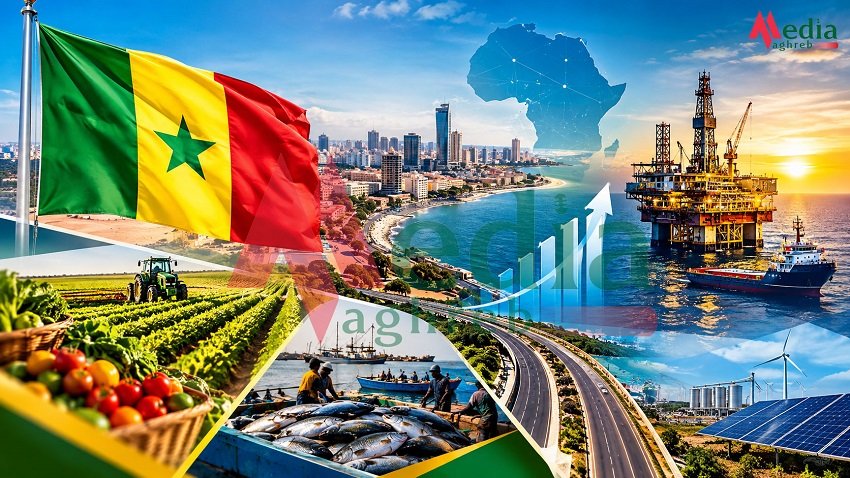
Senegal’s economy is entering a new phase that extends beyond the traditional performance of agriculture and services, as oil and gas production has become an increasingly influential factor in the country’s economic and fiscal calculations. Real GDP growth reached 6.7% in 2025, driven largely by the expansion of the hydrocarbon sector, while non-hydrocarbon GDP growth stood at just 2.2%. This highlights an important economic paradox: stronger headline growth does not necessarily mean that traditional productive sectors have experienced a comparable expansion. During the first quarter of 2026, non-hydrocarbon GDP growth accelerated to 4.7% year-on-year, supported by an increase in private consumption.
These figures raise a fundamental question for Senegal’s economy, with implications extending across the Sahel and Africa as a whole: Can oil and gas wealth become the foundation for broader industrial development, higher productivity and sustainable job creation, or will it remain an additional source of export earnings and government revenue without fundamentally altering the structure of the economy? The answer will depend on the nature of fiscal and investment policies and on the government’s ability to channel resource revenues into infrastructure, education, agriculture and manufacturing, rather than focusing solely on the direct proceeds of hydrocarbons.
Public Finances and Debt: A Central Priority for Senegal’s Economic Reform
Senegal faces accumulated fiscal pressures at a time when the authorities are seeking to rebuild confidence in public financial management and improve the country’s relationship with international financial institutions. According to an IMF assessment in June 2026, the overall fiscal deficit narrowed from 13.4% of GDP in 2024 to 6.4% in 2025, largely as a result of expenditure rationalization. However, vulnerabilities associated with debt and financing remained significant. This came amid the repercussions of financial reviews that revealed irregularities in the reporting of some earlier fiscal data, placing transparency, governance and debt management at the forefront of the reform agenda
On September 1, 2026, the IMF announced that it had reached a staff-level agreement on a potential 36-month financing program for Senegal, worth approximately $2.2 billion, to support the country’s economic and fiscal reform program between 2026 and 2029. The agreement does not constitute final approval by the IMF’s Executive Board, as it remains subject to the completion of a number of corrective measures and procedures, as well as the securing of the necessary financing assurances. The proposed program aims to restore macroeconomic stability and debt sustainability, strengthen domestic revenue mobilization, protect social spending, improve the business environment and expand financial inclusion.
The Senegalese authorities are also seeking to make use of debt-restructuring mechanisms under the G20 Common Framework, in an effort to ease financing pressures and restore the government’s fiscal room for maneuver. This step is particularly important for the future of public investment in Senegal, as rising debt-servicing costs can crowd out spending on education, healthcare, utilities and productive activities. Debt restructuring, however, is not a standalone solution. Its effectiveness will remain closely tied to the government’s ability to control borrowing, improve revenue collection, strengthen non-hydrocarbon growth and maintain the credibility of its economic policies.
The 2026 Budget: An Attempt to Restore Balance and Finance Development
Senegal’s 2026 budget reveals an official approach that seeks to combine fiscal consolidation with the financing of social and productive priorities. Government budget projections put revenues at 6,188.8 billion CFA francs, against expenditure of 7,433.9 billion CFA francs, with economic growth projected at 5% and the fiscal deficit estimated at 5.37% of GDP. The government also aims to raise the tax-to-GDP ratio to 23.2%, up from 19.3% in 2025, reflecting an effort to strengthen domestic revenue mobilization rather than relying excessively on external financing.
These figures carry implications that go beyond accounting considerations. Raising tax revenues in an economy with a substantial informal sector requires broadening the tax base without placing excessive pressure on small businesses. At the same time, expenditure reductions require more efficient public spending, rather than simply cutting investment. Administrative reform, the digitalization of tax collection, performance reviews of public institutions and the linking of expenditure to clear economic and social outcomes will therefore be critical.
The 2026 spending priorities include funding for agriculture and food security, the expansion of healthcare and education infrastructure, improvements in water and sanitation services, and the development of transport and communications. The government has also allocated resources to community-based agricultural cooperatives, agricultural mechanization and agricultural hubs, alongside road, aviation and water projects. These priorities offer an opportunity to strengthen connections between domestic production and markets, provided that budgetary allocations translate into completed and operational projects rather than remaining vulnerable to delays or cost overruns.
Oil and Gas: A New Growth Engine and a Test of Economic Governance
The energy sector has become one of the most significant drivers of change in Senegal’s economy in recent years. Oil production began at the Sangomar field in 2024, while the Greater Tortue Ahmeyim, or GTA, liquefied natural gas project entered production in 2025. These developments have enhanced Senegal’s position on the West African energy map, creating the potential for increased exports and improved domestic energy supplies. At the same time, they have introduced challenges related to revenue management, contractual transparency and the balance between public interests and foreign investment.
The government is seeking to expand the domestic use of natural gas by increasing reliance on locally produced gas for electricity generation and reducing the cost of imported fuel. Senegal’s energy minister has stated that developing domestic gas resources, alongside the expansion of renewable energy and improvements in operational efficiency, is central to efforts to reduce electricity costs. These efforts come as rising global energy prices have increased the burden of fuel subsidies. The authorities are seeking a gradual transition from universal subsidies to more targeted support for vulnerable groups and selected productive sectors, while setting a stated objective of reducing energy costs by approximately 30% over the period associated with the implementation of the reforms.
The greatest economic value of natural gas lies in its potential to support industry, rather than simply in its export potential. Access to more reliable and affordable energy could help food-processing plants, fertilizer producers, chemical manufacturers and digital service centers reduce production costs. However, achieving this outcome will require investment in transmission and distribution networks, clear contracts that establish domestic market priorities, and policies ensuring that energy revenues do not become a separate rent-based stream disconnected from the wider economy.
In September 2026, Senegal signed a memorandum of understanding with Italian energy company Eni to conduct technical, geological and geophysical studies covering five offshore blocks, as part of efforts to reinvigorate exploration in the sedimentary basin. The authorities have also announced plans to offer 109 oil and gas blocks to domestic and international investors. These measures do not necessarily imply the discovery of new commercially viable reserves, but they reflect an effort to expand exploration and attract capital and technical expertise amid reviews of hydrocarbon contracts and resource-management mechanisms.
Agriculture and Food Security: Senegal’s Bet on the Real Economy
Despite the growing prominence of hydrocarbons in headline growth figures, agriculture remains one of the main pillars of Senegal’s economic transformation, particularly in rural areas where livelihoods depend on crops and livestock. Climate volatility and rising food-import costs have given food security strategic importance across the Sahel, where climate pressures intersect with supply-chain challenges and constraints on purchasing power. Developing Senegal’s agricultural sector is therefore not simply a matter of increasing output; it requires the construction of an integrated system encompassing irrigation, storage, processing, distribution and marketing.
The government is moving to support community-based agricultural cooperatives, farm mechanization and agricultural hubs, allocating funding to these programs within the 2026 budget. Such projects could raise productivity, reduce post-harvest losses and create employment opportunities for young people, provided that they are linked to agricultural extension services, financing and insurance, and that farmers can access equipment through financially sustainable models. Agro-processing also offers an opportunity to increase domestic value added, rather than exporting crops in their raw form and importing processed food products at higher prices.
Senegal’s experience in this area holds particular relevance for the Sahel, where countries face shared challenges involving food security, water management and the development of agricultural value chains. Regional cooperation on improved seeds, logistics, storage and irrigation expertise could strengthen intra-regional trade and reduce the impact of climate shocks. Improving connections between agricultural production zones, ports and urban markets could also give Senegal an opportunity to develop into a regional hub for food products, leveraging its Atlantic coastline and its trade relationships across West Africa.
Industry and Mining: Opportunities to Diversify Beyond Oil
Senegal’s economic future is not limited to energy, agriculture and services. Opportunities also exist in manufacturing, mining and related industrial services. The country has longstanding experience in phosphate production, fertilizer manufacturing and selected food-processing, chemical and construction-material industries. This industrial base offers opportunities to expand value chains, particularly if competitive energy supplies, efficient transport infrastructure and a regulatory framework conducive to long-term investment are secured. The central challenge lies in moving from resource extraction toward domestic processing and the creation of higher-productivity jobs.
The mining sector, meanwhile, requires an approach that combines investment attraction with environmental protection and transparent revenue management. Global competition for minerals and raw materials used in manufacturing and energy production is creating new opportunities for African economies, but it also highlights the need to build local processing, refining and engineering capabilities. For Senegal, improvements in industrial infrastructure and technical skills could provide a foundation for expanding resource-related industries while reducing exposure to fluctuations in global commodity prices.
The Digital Economy and Services: An Opportunity to Broaden the Employment Base
The digital economy represents another area capable of supporting Senegal’s economic diversification, particularly given Dakar’s role as an administrative, financial and commercial center in West Africa. Potential growth areas include software development, business-process outsourcing, e-commerce, digital payments, financial technology and the development of digital solutions for businesses and government institutions. Benefiting from these opportunities, however, will require broader internet access, improved telecommunications infrastructure, stronger skills development and a regulatory environment that protects consumers while encouraging innovation.
Digitalization is particularly important in the Sahel, where digital services can reduce the cost of accessing finance, markets and agricultural information, while helping small businesses manage their operations and reach customers beyond their immediate geographic areas. Yet the economic returns of digital investment will not materialize automatically through the expansion of technological infrastructure alone. They will depend on the ability of education and training systems to produce qualified professionals, the willingness of small and medium-sized enterprises to adopt digital tools, and the quality of electricity, connectivity and data protection.
Transport and Logistics: Senegal as an Economic Gateway Between the Sahel and the Atlantic
Senegal’s geography gives it an important position in regional trade flows. The country borders the Atlantic Ocean and shares land borders with Mauritania, Mali, Guinea and Guinea-Bissau, while geographically surrounding Gambia. Dakar serves as a center for financial institutions, commercial services and transport operations in West Africa, creating opportunities to develop logistics, port infrastructure and overland transport. This role is particularly significant for Mali, a landlocked country that relies on regional corridors to access international markets.
These advantages position Senegal to benefit from efforts to strengthen intra-African trade, particularly within the framework of the African Continental Free Trade Area. More efficient ports, roads and customs procedures can reduce the cost of transporting goods and enable Senegalese businesses to expand into markets across the Sahel, the Maghreb and West Africa. However, the success of this role will depend on investment in infrastructure, improved customs coordination, the smooth movement of goods across borders and the evolving security situation along regional trade corridors.
Senegal’s 2026 budget includes transport and regional connectivity projects, including the highway linking Dakar, Tivaouane and Saint-Louis, alongside allocations to develop the fleet of Senegal Airlines. These priorities illustrate the connection between infrastructure development and broader goals involving regional integration and the movement of people and goods. The actual economic impact of these projects, however, will depend on implementation efficiency, cost management and the ability to operate them through financially sustainable models.
Fisheries and Tourism: Traditional Assets in Need of Protection and Modernization
Fisheries are a longstanding component of Senegal’s economy, supporting food supplies, employment and export earnings. However, pressures on fish stocks, including illegal fishing and the overexploitation of certain resources, are prompting calls for a reassessment of sector management. Senegal needs to develop cold-chain infrastructure, seafood processing and logistics services while strengthening fisheries oversight and protecting the rights of artisanal fishing communities. Such efforts could increase domestic value added rather than relying primarily on the export of raw marine products.
Tourism, meanwhile, draws on the country’s natural, cultural and historical assets, including Dakar, Gorée Island, coastal resorts and heritage sites. Investment in sustainable tourism, improved transport and services, and the diversification of tourism products could support employment and foreign-exchange earnings. The sector’s growth prospects, however, remain linked to the quality of infrastructure, the stability of the investment environment and the ability of tourism businesses to compete regionally, alongside the need to protect coastal areas from environmental pressures.
Senegal and the Sahel: An Economy Shaped by Its Regional Environment
Senegal’s economic future cannot be analyzed in isolation from the transformations taking place across the Sahel. Security and political instability in several countries in the region affect trade and investment flows, increase transport and insurance costs, and place additional pressure on governments seeking to expand social spending and improve public services. At the same time, countries with maritime access, logistics infrastructure and developed financial services may benefit from the reshaping of regional trade routes, provided that suitable conditions are in place.
Senegal’s position gives it the potential to play an important economic role in West Africa. Realizing this potential will require practical regional cooperation in transport, energy, food security, payments and trade. The country’s economic relations within the West African regional framework, including the institutions of the West African Economic and Monetary Union, also make regional monetary and financial stability an important factor in attracting investment and strengthening trade.
For the Maghreb, the expansion of economic ties between North and West Africa offers opportunities for cooperation in food processing, fertilizers, renewable energy, logistics and vocational training. These opportunities are not guaranteed, however, nor will they automatically translate into investment. They require effective trade agreements, appropriate transport networks, private-sector partnerships and the capacity to overcome regulatory and geographic barriers.
Senegal’s Growth Outlook: What Lies Ahead for the Economy?
Available indicators present a complex picture of Senegal’s growth prospects. On the one hand, IMF data show that the Senegalese economy recorded strong growth in 2025, driven by the hydrocarbon sector, while non-hydrocarbon growth improved during the first quarter of 2026. On the other hand, the government’s 2026 budget projects growth of 5%, reflecting differences in time frames and forecasting methodologies between government projections and international assessments. A single figure should therefore not be treated as a definitive outcome, particularly amid fluctuations in energy prices and ongoing financing challenges.
Senegal’s future economic trajectory will depend on several interconnected factors, foremost among them the government’s ability to restore fiscal sustainability, implement debt and governance reforms, channel oil and gas revenues into productive investment and improve the business environment. Performance will also depend on whether non-hydrocarbon sectors, including agriculture, manufacturing and services, can sustain steady growth, and on the government’s ability to shield vulnerable groups from the impact of subsidy and pricing reforms.
If these reforms succeed, Senegal could strengthen its capacity to expand its productive base and enhance its appeal to long-term investors, particularly in energy, manufacturing, agriculture and digital services. If debt consolidation falters, governance weaknesses persist or productive investment remains limited, growth could remain heavily dependent on the hydrocarbon cycle, leaving the economy more exposed to fluctuations in oil and gas prices and global financial conditions. These are not definitive predictions, but scenarios shaped by the course of policy implementation and external conditions.
Conclusion: A Defining Test for Building a Diversified Senegalese Economy
Senegal’s economy stands before a historic opportunity to reshape its growth model, drawing on its emerging energy resources, geographic position and agricultural and service-sector potential. Yet oil and gas wealth alone cannot build a strong and sustainable economy. Genuine transformation requires more transparent financial institutions, responsible debt management, investment in human capital and infrastructure, and policies that support domestic production, manufacturing and trade.
The significance of this phase extends beyond Senegal to the Sahel and Africa as a whole, where numerous economies are seeking growth pathways suited to security, climate and financing challenges. If Senegal succeeds in directing its new resources toward productive sectors, it could strengthen its economic role in West Africa and expand its links with markets across the continent and the Maghreb. The final outcome, however, will depend on the quality of implementation and the ability of reforms to turn positive economic indicators into jobs, income and broader development opportunities.
Senegal’s economy is entering a new phase that extends beyond the traditional performance of agriculture and services, as oil and gas production has become an increasingly influential factor in the country’s economic and fiscal calculations. Real GDP growth reached 6.7% in 2025, driven largely by the expansion of the hydrocarbon sector, while non-hydrocarbon GDP growth stood at just 2.2%. This highlights an important economic paradox: stronger headline growth does not necessarily mean that traditional productive sectors have experienced a comparable expansion. During the first quarter of 2026, non-hydrocarbon GDP growth accelerated to 4.7% year-on-year, supported by an increase in private consumption.
These figures raise a fundamental question for Senegal’s economy, with implications extending across the Sahel and Africa as a whole: Can oil and gas wealth become the foundation for broader industrial development, higher productivity and sustainable job creation, or will it remain an additional source of export earnings and government revenue without fundamentally altering the structure of the economy? The answer will depend on the nature of fiscal and investment policies and on the government’s ability to channel resource revenues into infrastructure, education, agriculture and manufacturing, rather than focusing solely on the direct proceeds of hydrocarbons.
Public Finances and Debt: A Central Priority for Senegal’s Economic Reform
Senegal faces accumulated fiscal pressures at a time when the authorities are seeking to rebuild confidence in public financial management and improve the country’s relationship with international financial institutions. According to an IMF assessment in June 2026, the overall fiscal deficit narrowed from 13.4% of GDP in 2024 to 6.4% in 2025, largely as a result of expenditure rationalization. However, vulnerabilities associated with debt and financing remained significant. This came amid the repercussions of financial reviews that revealed irregularities in the reporting of some earlier fiscal data, placing transparency, governance and debt management at the forefront of the reform agenda
On September 1, 2026, the IMF announced that it had reached a staff-level agreement on a potential 36-month financing program for Senegal, worth approximately $2.2 billion, to support the country’s economic and fiscal reform program between 2026 and 2029. The agreement does not constitute final approval by the IMF’s Executive Board, as it remains subject to the completion of a number of corrective measures and procedures, as well as the securing of the necessary financing assurances. The proposed program aims to restore macroeconomic stability and debt sustainability, strengthen domestic revenue mobilization, protect social spending, improve the business environment and expand financial inclusion.
The Senegalese authorities are also seeking to make use of debt-restructuring mechanisms under the G20 Common Framework, in an effort to ease financing pressures and restore the government’s fiscal room for maneuver. This step is particularly important for the future of public investment in Senegal, as rising debt-servicing costs can crowd out spending on education, healthcare, utilities and productive activities. Debt restructuring, however, is not a standalone solution. Its effectiveness will remain closely tied to the government’s ability to control borrowing, improve revenue collection, strengthen non-hydrocarbon growth and maintain the credibility of its economic policies.
The 2026 Budget: An Attempt to Restore Balance and Finance Development
Senegal’s 2026 budget reveals an official approach that seeks to combine fiscal consolidation with the financing of social and productive priorities. Government budget projections put revenues at 6,188.8 billion CFA francs, against expenditure of 7,433.9 billion CFA francs, with economic growth projected at 5% and the fiscal deficit estimated at 5.37% of GDP. The government also aims to raise the tax-to-GDP ratio to 23.2%, up from 19.3% in 2025, reflecting an effort to strengthen domestic revenue mobilization rather than relying excessively on external financing.
These figures carry implications that go beyond accounting considerations. Raising tax revenues in an economy with a substantial informal sector requires broadening the tax base without placing excessive pressure on small businesses. At the same time, expenditure reductions require more efficient public spending, rather than simply cutting investment. Administrative reform, the digitalization of tax collection, performance reviews of public institutions and the linking of expenditure to clear economic and social outcomes will therefore be critical.
The 2026 spending priorities include funding for agriculture and food security, the expansion of healthcare and education infrastructure, improvements in water and sanitation services, and the development of transport and communications. The government has also allocated resources to community-based agricultural cooperatives, agricultural mechanization and agricultural hubs, alongside road, aviation and water projects. These priorities offer an opportunity to strengthen connections between domestic production and markets, provided that budgetary allocations translate into completed and operational projects rather than remaining vulnerable to delays or cost overruns.
Oil and Gas: A New Growth Engine and a Test of Economic Governance
The energy sector has become one of the most significant drivers of change in Senegal’s economy in recent years. Oil production began at the Sangomar field in 2024, while the Greater Tortue Ahmeyim, or GTA, liquefied natural gas project entered production in 2025. These developments have enhanced Senegal’s position on the West African energy map, creating the potential for increased exports and improved domestic energy supplies. At the same time, they have introduced challenges related to revenue management, contractual transparency and the balance between public interests and foreign investment.
The government is seeking to expand the domestic use of natural gas by increasing reliance on locally produced gas for electricity generation and reducing the cost of imported fuel. Senegal’s energy minister has stated that developing domestic gas resources, alongside the expansion of renewable energy and improvements in operational efficiency, is central to efforts to reduce electricity costs. These efforts come as rising global energy prices have increased the burden of fuel subsidies. The authorities are seeking a gradual transition from universal subsidies to more targeted support for vulnerable groups and selected productive sectors, while setting a stated objective of reducing energy costs by approximately 30% over the period associated with the implementation of the reforms.
The greatest economic value of natural gas lies in its potential to support industry, rather than simply in its export potential. Access to more reliable and affordable energy could help food-processing plants, fertilizer producers, chemical manufacturers and digital service centers reduce production costs. However, achieving this outcome will require investment in transmission and distribution networks, clear contracts that establish domestic market priorities, and policies ensuring that energy revenues do not become a separate rent-based stream disconnected from the wider economy.
In September 2026, Senegal signed a memorandum of understanding with Italian energy company Eni to conduct technical, geological and geophysical studies covering five offshore blocks, as part of efforts to reinvigorate exploration in the sedimentary basin. The authorities have also announced plans to offer 109 oil and gas blocks to domestic and international investors. These measures do not necessarily imply the discovery of new commercially viable reserves, but they reflect an effort to expand exploration and attract capital and technical expertise amid reviews of hydrocarbon contracts and resource-management mechanisms.
Agriculture and Food Security: Senegal’s Bet on the Real Economy
Despite the growing prominence of hydrocarbons in headline growth figures, agriculture remains one of the main pillars of Senegal’s economic transformation, particularly in rural areas where livelihoods depend on crops and livestock. Climate volatility and rising food-import costs have given food security strategic importance across the Sahel, where climate pressures intersect with supply-chain challenges and constraints on purchasing power. Developing Senegal’s agricultural sector is therefore not simply a matter of increasing output; it requires the construction of an integrated system encompassing irrigation, storage, processing, distribution and marketing.
The government is moving to support community-based agricultural cooperatives, farm mechanization and agricultural hubs, allocating funding to these programs within the 2026 budget. Such projects could raise productivity, reduce post-harvest losses and create employment opportunities for young people, provided that they are linked to agricultural extension services, financing and insurance, and that farmers can access equipment through financially sustainable models. Agro-processing also offers an opportunity to increase domestic value added, rather than exporting crops in their raw form and importing processed food products at higher prices.
Senegal’s experience in this area holds particular relevance for the Sahel, where countries face shared challenges involving food security, water management and the development of agricultural value chains. Regional cooperation on improved seeds, logistics, storage and irrigation expertise could strengthen intra-regional trade and reduce the impact of climate shocks. Improving connections between agricultural production zones, ports and urban markets could also give Senegal an opportunity to develop into a regional hub for food products, leveraging its Atlantic coastline and its trade relationships across West Africa.
Industry and Mining: Opportunities to Diversify Beyond Oil
Senegal’s economic future is not limited to energy, agriculture and services. Opportunities also exist in manufacturing, mining and related industrial services. The country has longstanding experience in phosphate production, fertilizer manufacturing and selected food-processing, chemical and construction-material industries. This industrial base offers opportunities to expand value chains, particularly if competitive energy supplies, efficient transport infrastructure and a regulatory framework conducive to long-term investment are secured. The central challenge lies in moving from resource extraction toward domestic processing and the creation of higher-productivity jobs.
The mining sector, meanwhile, requires an approach that combines investment attraction with environmental protection and transparent revenue management. Global competition for minerals and raw materials used in manufacturing and energy production is creating new opportunities for African economies, but it also highlights the need to build local processing, refining and engineering capabilities. For Senegal, improvements in industrial infrastructure and technical skills could provide a foundation for expanding resource-related industries while reducing exposure to fluctuations in global commodity prices.
The Digital Economy and Services: An Opportunity to Broaden the Employment Base
The digital economy represents another area capable of supporting Senegal’s economic diversification, particularly given Dakar’s role as an administrative, financial and commercial center in West Africa. Potential growth areas include software development, business-process outsourcing, e-commerce, digital payments, financial technology and the development of digital solutions for businesses and government institutions. Benefiting from these opportunities, however, will require broader internet access, improved telecommunications infrastructure, stronger skills development and a regulatory environment that protects consumers while encouraging innovation.
Digitalization is particularly important in the Sahel, where digital services can reduce the cost of accessing finance, markets and agricultural information, while helping small businesses manage their operations and reach customers beyond their immediate geographic areas. Yet the economic returns of digital investment will not materialize automatically through the expansion of technological infrastructure alone. They will depend on the ability of education and training systems to produce qualified professionals, the willingness of small and medium-sized enterprises to adopt digital tools, and the quality of electricity, connectivity and data protection.
Transport and Logistics: Senegal as an Economic Gateway Between the Sahel and the Atlantic
Senegal’s geography gives it an important position in regional trade flows. The country borders the Atlantic Ocean and shares land borders with Mauritania, Mali, Guinea and Guinea-Bissau, while geographically surrounding Gambia. Dakar serves as a center for financial institutions, commercial services and transport operations in West Africa, creating opportunities to develop logistics, port infrastructure and overland transport. This role is particularly significant for Mali, a landlocked country that relies on regional corridors to access international markets.
These advantages position Senegal to benefit from efforts to strengthen intra-African trade, particularly within the framework of the African Continental Free Trade Area. More efficient ports, roads and customs procedures can reduce the cost of transporting goods and enable Senegalese businesses to expand into markets across the Sahel, the Maghreb and West Africa. However, the success of this role will depend on investment in infrastructure, improved customs coordination, the smooth movement of goods across borders and the evolving security situation along regional trade corridors.
Senegal’s 2026 budget includes transport and regional connectivity projects, including the highway linking Dakar, Tivaouane and Saint-Louis, alongside allocations to develop the fleet of Senegal Airlines. These priorities illustrate the connection between infrastructure development and broader goals involving regional integration and the movement of people and goods. The actual economic impact of these projects, however, will depend on implementation efficiency, cost management and the ability to operate them through financially sustainable models.
Fisheries and Tourism: Traditional Assets in Need of Protection and Modernization
Fisheries are a longstanding component of Senegal’s economy, supporting food supplies, employment and export earnings. However, pressures on fish stocks, including illegal fishing and the overexploitation of certain resources, are prompting calls for a reassessment of sector management. Senegal needs to develop cold-chain infrastructure, seafood processing and logistics services while strengthening fisheries oversight and protecting the rights of artisanal fishing communities. Such efforts could increase domestic value added rather than relying primarily on the export of raw marine products.
Tourism, meanwhile, draws on the country’s natural, cultural and historical assets, including Dakar, Gorée Island, coastal resorts and heritage sites. Investment in sustainable tourism, improved transport and services, and the diversification of tourism products could support employment and foreign-exchange earnings. The sector’s growth prospects, however, remain linked to the quality of infrastructure, the stability of the investment environment and the ability of tourism businesses to compete regionally, alongside the need to protect coastal areas from environmental pressures.
Senegal and the Sahel: An Economy Shaped by Its Regional Environment
Senegal’s economic future cannot be analyzed in isolation from the transformations taking place across the Sahel. Security and political instability in several countries in the region affect trade and investment flows, increase transport and insurance costs, and place additional pressure on governments seeking to expand social spending and improve public services. At the same time, countries with maritime access, logistics infrastructure and developed financial services may benefit from the reshaping of regional trade routes, provided that suitable conditions are in place.
Senegal’s position gives it the potential to play an important economic role in West Africa. Realizing this potential will require practical regional cooperation in transport, energy, food security, payments and trade. The country’s economic relations within the West African regional framework, including the institutions of the West African Economic and Monetary Union, also make regional monetary and financial stability an important factor in attracting investment and strengthening trade.
For the Maghreb, the expansion of economic ties between North and West Africa offers opportunities for cooperation in food processing, fertilizers, renewable energy, logistics and vocational training. These opportunities are not guaranteed, however, nor will they automatically translate into investment. They require effective trade agreements, appropriate transport networks, private-sector partnerships and the capacity to overcome regulatory and geographic barriers.
Senegal’s Growth Outlook: What Lies Ahead for the Economy?
Available indicators present a complex picture of Senegal’s growth prospects. On the one hand, IMF data show that the Senegalese economy recorded strong growth in 2025, driven by the hydrocarbon sector, while non-hydrocarbon growth improved during the first quarter of 2026. On the other hand, the government’s 2026 budget projects growth of 5%, reflecting differences in time frames and forecasting methodologies between government projections and international assessments. A single figure should therefore not be treated as a definitive outcome, particularly amid fluctuations in energy prices and ongoing financing challenges.
Senegal’s future economic trajectory will depend on several interconnected factors, foremost among them the government’s ability to restore fiscal sustainability, implement debt and governance reforms, channel oil and gas revenues into productive investment and improve the business environment. Performance will also depend on whether non-hydrocarbon sectors, including agriculture, manufacturing and services, can sustain steady growth, and on the government’s ability to shield vulnerable groups from the impact of subsidy and pricing reforms.
If these reforms succeed, Senegal could strengthen its capacity to expand its productive base and enhance its appeal to long-term investors, particularly in energy, manufacturing, agriculture and digital services. If debt consolidation falters, governance weaknesses persist or productive investment remains limited, growth could remain heavily dependent on the hydrocarbon cycle, leaving the economy more exposed to fluctuations in oil and gas prices and global financial conditions. These are not definitive predictions, but scenarios shaped by the course of policy implementation and external conditions.
Conclusion: A Defining Test for Building a Diversified Senegalese Economy
Senegal’s economy stands before a historic opportunity to reshape its growth model, drawing on its emerging energy resources, geographic position and agricultural and service-sector potential. Yet oil and gas wealth alone cannot build a strong and sustainable economy. Genuine transformation requires more transparent financial institutions, responsible debt management, investment in human capital and infrastructure, and policies that support domestic production, manufacturing and trade.
The significance of this phase extends beyond Senegal to the Sahel and Africa as a whole, where numerous economies are seeking growth pathways suited to security, climate and financing challenges. If Senegal succeeds in directing its new resources toward productive sectors, it could strengthen its economic role in West Africa and expand its links with markets across the continent and the Maghreb. The final outcome, however, will depend on the quality of implementation and the ability of reforms to turn positive economic indicators into jobs, income and broader development opportunities.
Share this content:




إرسال التعليق