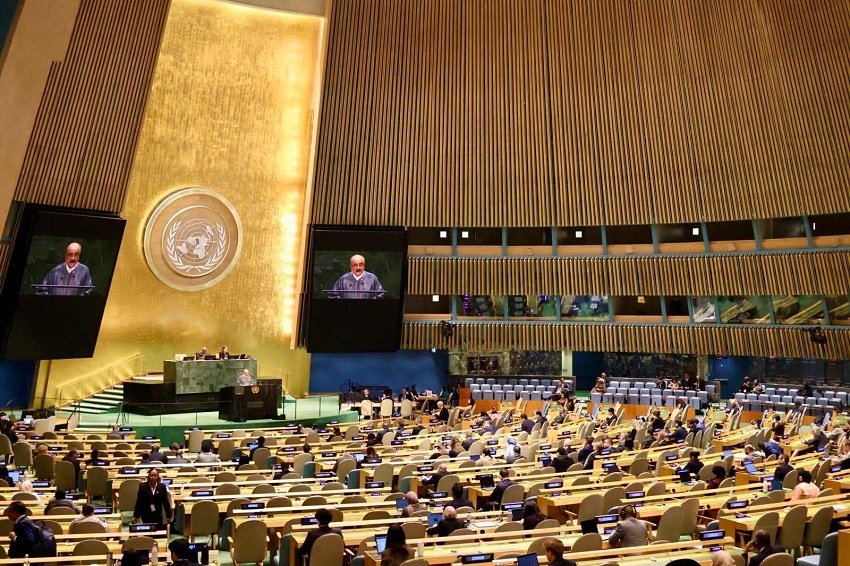
Tunisia at UN General Assembly Calls for Reform, Peace and Stronger Multilateral Action
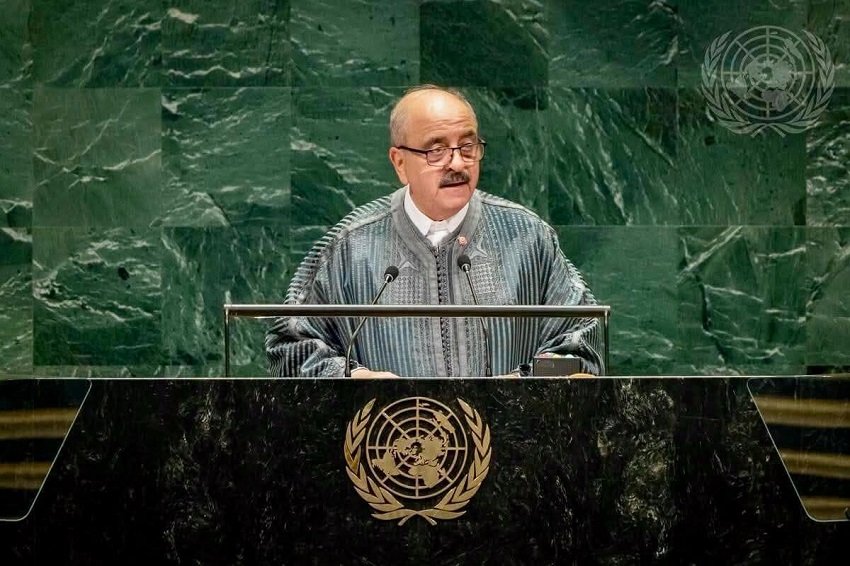
Tunisia used its address during the General Debate of the High-Level Segment of the 81st Session of the United Nations General Assembly in New York to present a broad vision for restoring confidence in multilateral action, reforming the United Nations system, strengthening international law and addressing conflicts and development challenges across Africa and the wider international community.
The Tunisian statement, delivered on September 26, 2026, placed the principle of restoring trust in international institutions at the centre of the country’s position. Tunisia linked this objective to two essential requirements: genuine commitment by states to international law and a comprehensive reform process capable of adapting the United Nations to the transformations of the contemporary world.
Tunisia Calls for Renewed Confidence in the United Nations
At the opening of its statement, Tunisia congratulated Khalil Al-Rahman on his election as President of the United Nations General Assembly for its 81st session. It also expressed appreciation to UN Secretary-General António Guterres as he approaches the end of his tenure, highlighting his efforts in the fields of peace, security, development and justice, as well as his role during a period marked by profound international crises.
Tunisia said the next phase requires the selection of a Secretary-General capable of providing a strategic vision and practical solutions to regions affected by conflict, instability, inequality and war. According to the Tunisian position, the United Nations must remain capable of restoring hope and contributing to a future in which people can enjoy dignified living conditions.
The statement connected Tunisia’s current position on multilateralism to the country’s own history. It recalled that even before independence, the Tunisian national movement had brought the issue of the Tunisian people’s right to self-determination and restoration of sovereignty before the United Nations. Following independence, Tunisia joined the international community as part of its efforts to consolidate sovereignty and build the modern state.
UN Reform and the Need for Effective Multilateralism
Tunisia identified sincere commitment and effective reform as the two central conditions for restoring confidence in the United Nations.
The first condition, according to the statement, is a genuine commitment by all states to respect international law, sovereign equality and the principles of the UN Charter. Tunisia specifically highlighted the prohibition of the use of force, the peaceful settlement of disputes and the fulfilment of international obligations in good faith.
The second condition is an accelerated and comprehensive reform of the United Nations. Tunisia called for reconsidering decision-making mechanisms in order to achieve more balanced geographical representation and establish stronger mechanisms for transparency and accountability.
The Tunisian position warned that without progress on both fronts, collective international action could remain constrained by geopolitical calculations, while the gap between agreed principles and practices on the ground could continue to grow.
Tunisia also welcomed the UN80 Initiative, describing it as an opportunity for further reform rather than a final destination. It expressed support for the initiative’s three reform tracks, provided that they remain inclusive, consultative and respectful of the intergovernmental nature of the organisation and the negotiating mandates of member states.
On the financial side, Tunisia called on states to meet their financial obligations to the United Nations and stressed that reforms should not reduce support for developing countries, humanitarian activities or development programmes.
Palestine at the Centre of Tunisia’s Statement
A significant part of Tunisia’s intervention focused on the Palestinian issue and the role of international law.
Tunisia questioned how confidence in the United Nations could be restored while Palestinians continue to face what the statement described as serious violations and humanitarian suffering, including restrictions on their rights to life, security, freedom and self-determination.
The statement condemned settlement policies in the West Bank and what Tunisia described as persecution, starvation and isolation in the Gaza Strip. It called on the international community to assume its legal, moral and humanitarian responsibilities toward the Palestinian people.
Tunisia also referred to the International Court of Justice advisory opinion of July 19, 2024, highlighting its conclusions concerning the legality of the occupying entity’s presence in the occupied Palestinian territory and the obligations of United Nations member states in relation to that situation.
The Tunisian statement further rejected unilateral measures aimed at changing the historical, legal and demographic reality of Al-Quds Al-Sharif. It specifically referred to forced displacement, home demolitions and attacks against Islamic and Christian holy sites.
The humanitarian situation in Gaza was also highlighted, particularly the loss of life, displacement, destruction of homes and infrastructure and the deterioration of the healthcare system. Tunisia called for safe, urgent and sustained humanitarian access and emphasized the role of the United Nations and its specialised agencies, particularly UNRWA.
Middle East Escalation and Regional Stability
Tunisia expressed deep concern over the continuing escalation in the Middle East and its potential security, political and economic consequences for countries in the region and beyond.
The country renewed its call for an immediate cessation of military operations and urged a return to dialogue and negotiations, stressing political and peaceful solutions as the means of addressing existing disputes and strengthening regional security and stability.
Tunisia also reaffirmed its commitment to freedom of navigation and maritime security in accordance with the United Nations Convention on the Law of the Sea and customary international law. It linked maritime stability to global energy security, international supply chains and the economic rights of states.
Libya, Lebanon, Syria, Sudan and Yemen
The Tunisian statement addressed a number of regional crises, beginning with Libya, where Tunisia stressed the bonds of fraternity, good-neighbourliness and shared interests between the two countries.
Tunisia expressed support for Libyan efforts and United Nations initiatives aimed at ending the crisis, while emphasizing that the solution should be Libyan-led and based on dialogue and consensus. It also stressed the importance of preserving Libya’s unity, sovereignty and territorial integrity.
Regarding Lebanon, Tunisia reaffirmed its solidarity with the Lebanese Republic and support for its sovereignty and independence. It condemned repeated violations of the ceasefire and called for the United Nations to be enabled to fully carry out its mandate.
Tunisia also rejected attacks targeting Syrian territory and Syrian resources, expressing support for the unity, independence and sovereignty of Syria.
On Sudan, Tunisia expressed deep concern over the continuing war and renewed its solidarity with the Sudanese people. It called for international support for efforts to achieve an immediate and permanent cessation of hostilities, restore stability and allow Sudan to focus on reconstruction and rebuilding.
The statement also expressed support for efforts to achieve a comprehensive and lasting political settlement in Yemen while preserving the country’s territorial unity.
Africa and the Principle of African Solutions
Africa occupied an important position in Tunisia’s vision of international cooperation.
The Tunisian statement described Africa’s human and natural resources and its development potential as making the continent an essential partner in achieving international development. At the same time, it noted the interconnected security and economic challenges facing African countries.
Tunisia reaffirmed its support for the principle of “African solutions to African problems,” emphasizing the ownership of African states and peoples over efforts to resolve their crises and the importance of strengthening African mechanisms and institutions responsible for peace and security.
Tunisia also expressed support for reforming the African Union to strengthen its capacity to respond to contemporary challenges. It highlighted the importance of closer cooperation between the United Nations and the African Union in conflict prevention, mediation, peacekeeping, peacebuilding and sustainable development.
The country further reaffirmed its continued contribution to peacekeeping efforts in Africa and its commitment to strengthening economic integration across the continent, particularly through COMESA and the African Continental Free Trade Area.
Development, Migration and Climate Justice
Tunisia presented peace, security and inclusive development as interconnected objectives. It argued that the United Nations should provide support according to the needs and challenges faced by states and peoples, with greater attention to countries affected by war, poverty, marginalisation and global crises.
Migration was another major issue in the statement. Tunisia called for a comprehensive and balanced approach that recognises the humanitarian and historical dimensions of migration rather than reducing it to a security issue.
According to the Tunisian position, addressing the root causes of irregular migration requires confronting conflicts, poverty, economic and social inequalities, limited employment and development opportunities, as well as human trafficking networks.
Tunisia said its authorities continue efforts to save the lives of irregular migrants on land and at sea, provide care and facilitate voluntary returns in coordination with the International Organization for Migration, while protecting migrants’ dignity and rights and combating trafficking and smuggling.
Tunisia also reiterated its rejection of becoming a transit or settlement country for irregular migrants who are victims of human trafficking networks.
Climate change was presented as another factor directly affecting development, security and stability. Tunisia called for genuine climate justice, stressing the severe impact of climate change on developing countries despite their limited historical responsibility for emissions.
The country called on states with greater responsibility to meet their climate-finance commitments and stressed the importance of distinguishing climate finance from development finance. It also called for reforming the international financial architecture to make access to financing fairer and more inclusive, while helping developing countries address debt burdens and invest in scientific research, technology, innovation and digital transformation.
Artificial Intelligence and the Digital Divide
Tunisia also addressed the rapid development of artificial intelligence technologies, describing AI as a source of promising opportunities for accelerating development goals.
At the same time, Tunisia stressed that these opportunities require comprehensive and fair international governance to ensure responsible use and prevent the digital divide between the Global North and Global South from widening.
The Tunisian position called for capacity-building, technology transfer and appropriate financing so that developing countries can benefit from technological transformation and strengthen their ability to shape their own futures.
Tunisia’s Domestic Reform and Economic Partnerships
The statement also addressed Tunisia’s domestic reform process under President Kais Saied, reaffirming the country’s determination to continue the reform process launched on July 25, 2021.
Tunisia said the process aims to consolidate a democracy that guarantees rights and freedoms and responds to the aspirations of the Tunisian people for development and prosperity.
The country said it primarily relies on its own resources and human potential while remaining committed to attracting investment and expanding and diversifying economic partnerships based on mutual benefit, equality and mutual respect.
Tunisia further reaffirmed its commitment to human rights and public and individual freedoms in accordance with its Constitution of July 25, 2022, international commitments and the choices of its people. It highlighted economic, social, climate, scientific, cultural and educational rights, with the right to development identified as a central component.
Women and youth were also highlighted as important elements of Tunisia’s development agenda. The country reaffirmed its commitment to strengthening women’s participation in public life and decision-making and combating violence and discrimination against women.
Tunisia also stressed the importance of empowering young people politically, economically and socially and encouraging their participation in public affairs and decision-making.
The statement additionally praised the Tunisian community abroad for its contribution to the country’s image and development efforts and reaffirmed the presidential commitment to strengthening programmes and communication channels serving Tunisian communities overseas.
Peacekeeping and Protection of Civilians
Tunisia concluded its substantive agenda by addressing United Nations peacekeeping operations.
The country argued that peace operations should extend beyond crisis management and conflict containment and contribute to creating the conditions required for sustainable peace. This includes strengthening state institutions, the rule of law, local communities and development.
Tunisia reaffirmed its readiness to contribute to the development of the peacekeeping system and stressed the need to invest in human and institutional capacities and strengthen civilian protection as a collective responsibility and humanitarian priority.
The statement also referred to an international conference hosted by Tunisia in July 2025 in cooperation with the United Nations Department of Peace Operations on the role of armed forces in protecting civilians. Tunisia called for building on the conference’s outcomes through an international platform for exchanging expertise and information, a unified operational guide, stronger training and capacity-building and improved civil-military coordination.
Tunisia Reaffirms Commitment to Multilateralism
In concluding its statement at the 81st United Nations General Assembly, Tunisia reaffirmed its view of the United Nations as the principal home of international legitimacy and a unique forum for addressing global challenges.
The Tunisian position connected the future of the organisation with the aspirations of future generations for a more just and equitable international order. It also stressed the importance of finding practical solutions that bring together peace, security and comprehensive and sustainable development in line with the United Nations 2030 Agenda.
Through its intervention, Tunisia placed UN reform, international law, the Palestinian issue, African peace and security, regional conflicts, migration, climate justice, technological transformation and peacekeeping within a single broader framework: strengthening multilateral action and ensuring that international institutions remain capable of responding to the needs and aspirations of states and peoples.
Share this content:




إرسال التعليق